

The real estate market in 2026 demands more than quality properties. It requires compelling visual narratives that help prospective buyers envision themselves living in a space. Virtual home staging services have emerged as the definitive solution for agents and sellers who need to showcase properties without the expense, logistics, and time constraints of traditional physical staging. By digitally furnishing vacant rooms with photorealistic furniture and decor, these services create powerful first impressions that drive engagement and accelerate sales while maintaining cost efficiency.
Understanding Virtual Home Staging Services
Virtual home staging services utilize advanced software and design expertise to digitally furnish photographs of empty or poorly furnished rooms. This technology-driven approach has revolutionized how real estate professionals market properties, offering unprecedented flexibility and speed compared to traditional methods.
The process begins with high-quality photographs of empty rooms. Professional designers or AI-powered platforms then add furniture, artwork, lighting fixtures, and decorative elements that complement the space's architecture and appeal to target demographics. The result is photorealistic images that showcase a property's full potential without moving a single physical item.
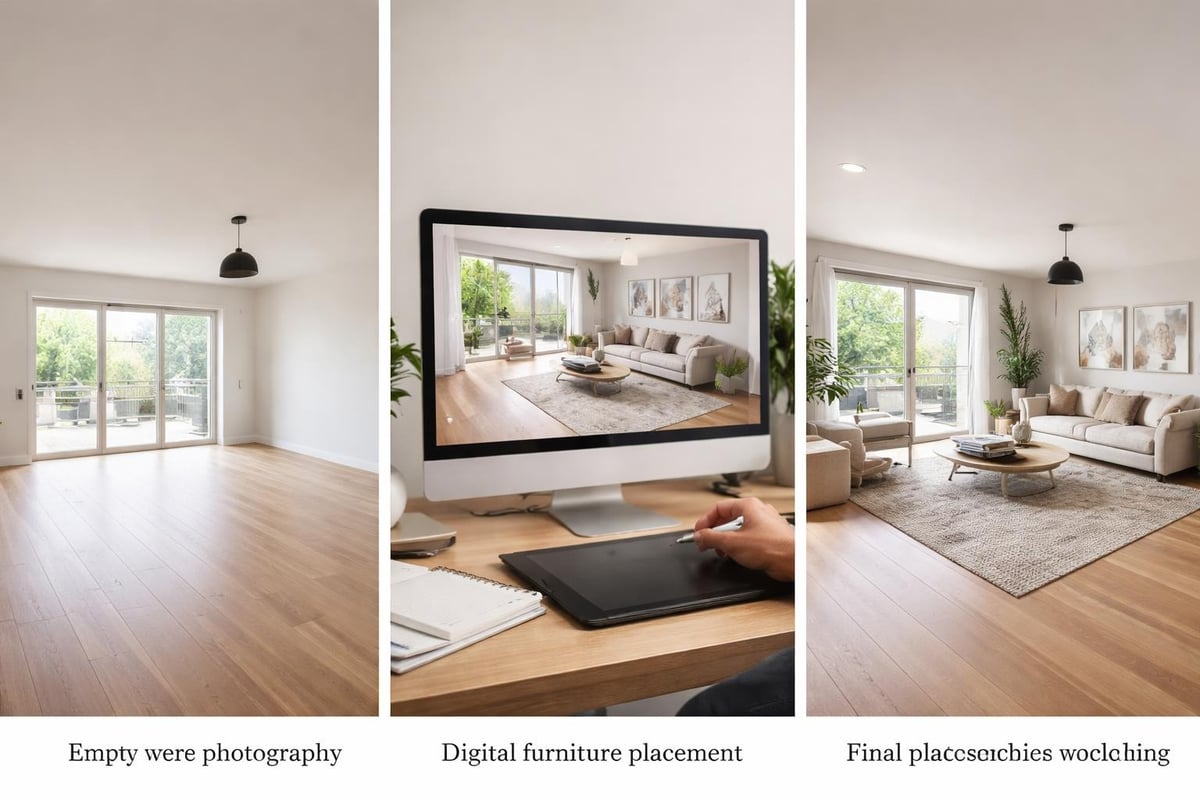
The Technology Behind Modern Virtual Staging
Modern virtual home staging services leverage cutting-edge technology that has evolved dramatically over the past few years. AI-powered platforms now process images in seconds rather than hours, applying sophisticated algorithms that understand spatial relationships, lighting conditions, and design principles.
Key technological components include:
- Advanced rendering engines that create photorealistic shadows and reflections
- AI-driven furniture placement that respects room dimensions and flow
- Machine learning models trained on thousands of professional interior designs
- Automated perspective correction for accurate spatial representation
- Color matching algorithms that harmonize furniture with existing room elements
The integration of artificial intelligence has particularly transformed the industry. What once required skilled designers hours to complete can now be accomplished in moments, with virtual home staging becoming accessible to agents at every price point and experience level.
Benefits of Virtual Home Staging Services for Real Estate Professionals
The advantages of virtual home staging services extend far beyond simple cost savings. Real estate professionals who incorporate these services into their marketing strategy experience measurable improvements across multiple performance metrics.
Time efficiency stands as perhaps the most immediate benefit. Traditional staging requires coordinating with furniture rental companies, scheduling delivery and installation, and later arranging removal. Virtual staging eliminates these logistical challenges entirely. Properties can be staged within hours of photography, allowing listings to go live faster and capture market momentum.
Financial Impact and ROI
The financial case for virtual home staging services proves compelling when examining both direct costs and opportunity costs.
| Staging Method | Average Cost | Time Required | Flexibility |
|---|---|---|---|
| Traditional Physical | $2,000-$5,000 | 2-4 weeks | Limited to one style |
| Virtual Staging | $25-$150 per room | 24-48 hours | Unlimited variations |
| Hybrid Approach | $1,500-$3,000 | 1-2 weeks | Moderate flexibility |
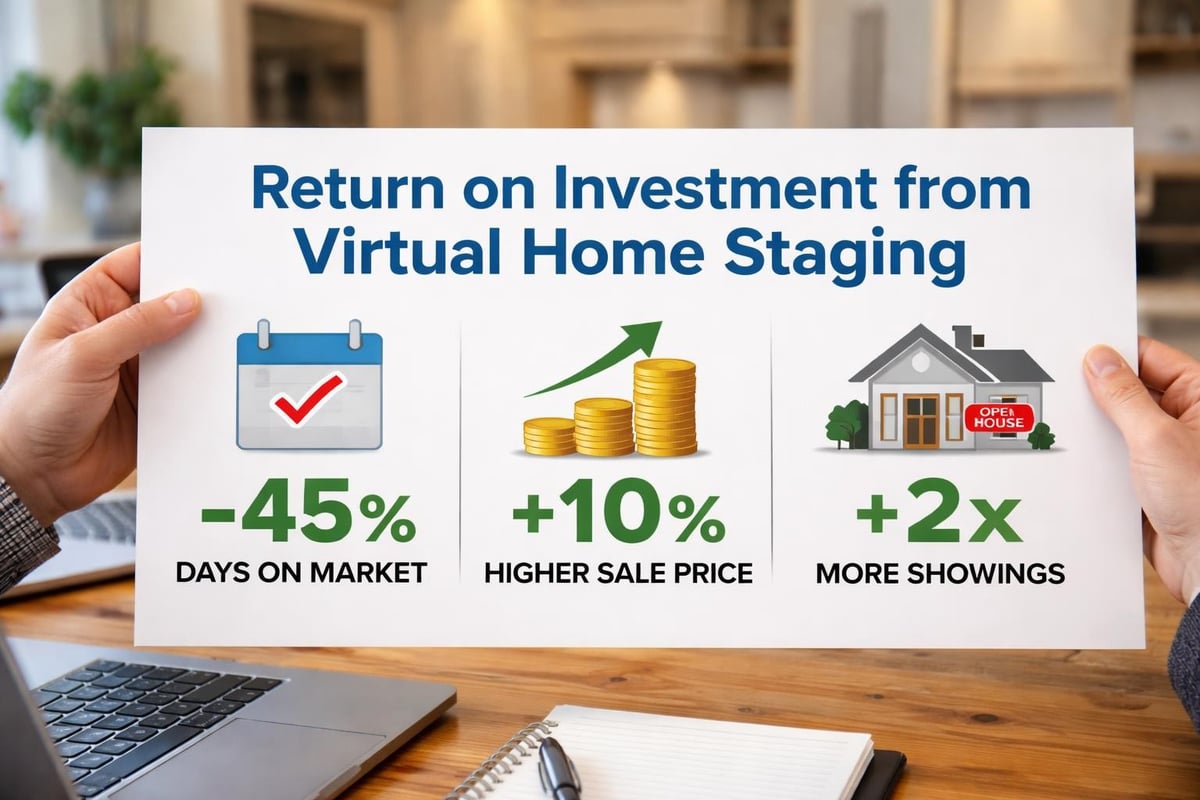
Properties staged virtually typically sell 73% faster than unstaged properties and command 5-15% higher prices, according to industry research. When a property sells even one week faster, the savings in carrying costs often exceed the entire virtual staging investment multiple times over.
Virtual staging also enables agents to test multiple design approaches simultaneously. The Try Furnishly gallery demonstrates how a single room can be rendered in contemporary, traditional, or minimalist styles, allowing agents to target different buyer demographics or test market preferences.
Competitive Advantage in Crowded Markets
In competitive real estate markets, listings must capture attention within seconds. Buyers scrolling through dozens of properties on mobile devices will skip past empty rooms without a second thought. Virtual home staging services ensure every listing makes a powerful first impression.
Professional staging signals to buyers that the property is well-maintained and move-in ready. It also helps buyers overcome the common challenge of visualizing furniture placement in empty spaces, particularly in rooms with unusual dimensions or layouts.
Choosing the Right Virtual Staging Service Provider
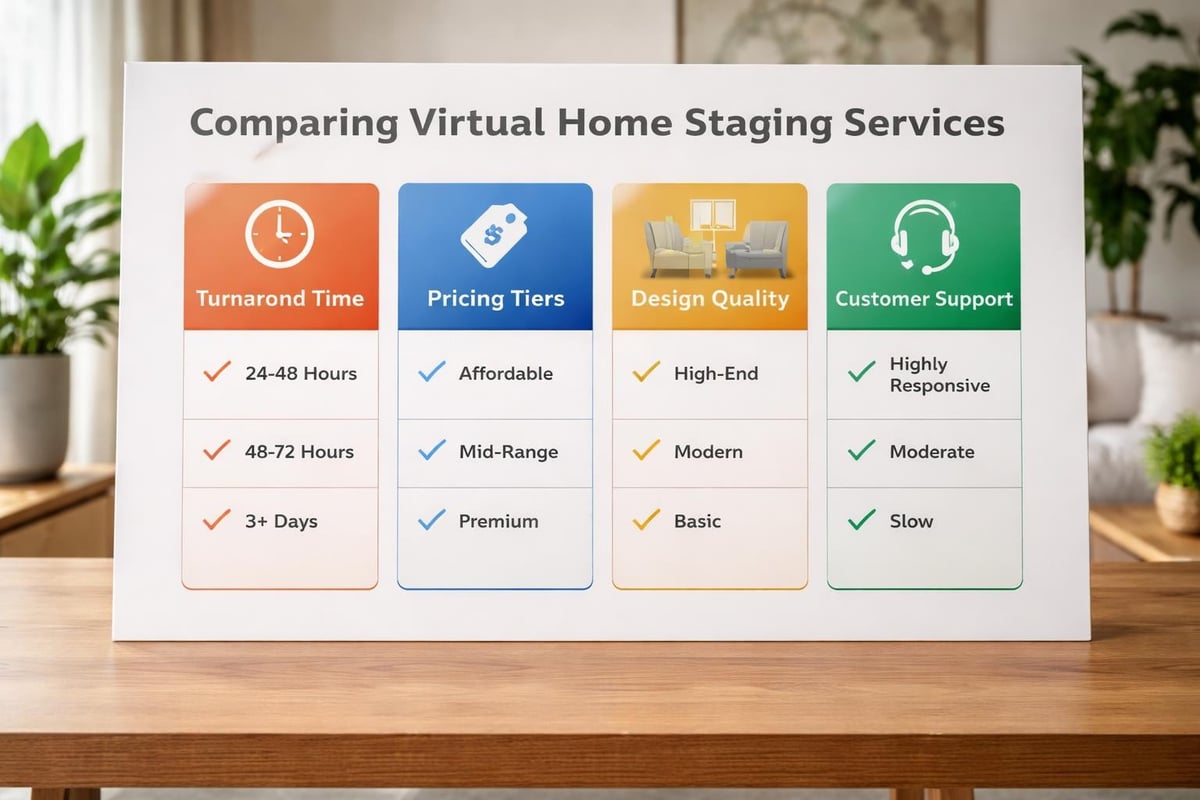
The virtual staging market has expanded rapidly, with numerous providers offering varying levels of quality, turnaround time, and pricing structures. Understanding how to evaluate these services ensures you select a partner that aligns with your business needs.
Quality Assessment Criteria
Design expertise separates exceptional virtual staging from mediocre results. Examine provider portfolios carefully, looking for:
- Photorealistic lighting that matches the original photograph
- Appropriate scale and perspective for furniture placement
- Design choices that complement the property's style and target market
- Natural shadows and reflections that integrate furniture seamlessly
- Attention to details like baseboard visibility and floor texture consistency
When selecting the best virtual staging company, request sample images of properties similar to yours. A provider who excels at luxury condominiums may not deliver equally strong results for suburban family homes.
Turnaround Time and Workflow Integration
Speed matters in real estate. Markets move quickly, and delayed listings mean missed opportunities. Evaluate how each provider's turnaround time fits your typical workflow.
Standard turnaround options include:
- Rush service (4-8 hours) for time-sensitive listings
- Standard delivery (24-48 hours) for typical marketing needs
- Economy options (3-5 days) for pre-market preparation
Advanced platforms offering AI-powered staging can deliver results in minutes rather than hours. This ultra-fast turnaround enables agents to stage properties during showings, respond to buyer feedback with alternative styles, or quickly refresh listings that have stalled.
Implementing Virtual Staging in Your Marketing Strategy
Successful implementation of virtual home staging services requires more than simply ordering staged photos. Strategic integration into your overall marketing approach maximizes impact and return on investment.
Photography Best Practices
Virtual staging quality depends heavily on source photograph quality. Poor lighting, unflattering angles, or low resolution images will limit even the most sophisticated staging software.
Essential photography requirements:
- High resolution (minimum 2000 pixels on the longest edge)
- Proper exposure with balanced lighting throughout the room
- Straight angles with corrected vertical lines
- Wide enough framing to show complete room context
- Clean, decluttered spaces free of personal items or existing furniture
Many successful agents schedule professional photography specifically for virtual staging purposes, understanding that this foundation determines final result quality. The investment in professional photography combined with affordable staging pricing delivers exceptional value compared to traditional staging costs.
Disclosure and Ethical Considerations
Transparency regarding virtual staging remains essential for maintaining trust with buyers and complying with real estate regulations. Multiple listing services and local regulations often require clear disclosure when images have been digitally enhanced.
Best practices for disclosure include:
- Adding "Virtually Staged" watermarks directly on images
- Including explicit statements in listing descriptions
- Providing both staged and unstaged versions in photo galleries
- Educating buyers during showings about which elements are virtual
This transparency actually enhances credibility rather than diminishing it. Buyers appreciate the visualization help while understanding the property's actual condition.
Advanced Applications of Virtual Home Staging Services
Beyond basic room furnishing, sophisticated virtual home staging services offer expanded capabilities that address specific marketing challenges and opportunities.
Renovation Visualization
Properties requiring updates often struggle to attract buyers who cannot visualize the potential. Virtual staging can demonstrate what spaces could become after renovations, helping buyers see past dated finishes or awkward layouts.
This approach works particularly well for:
- Outdated kitchens shown with modern cabinetry and appliances
- Bathrooms transformed from builder-grade to spa-like retreats
- Basements converted from storage areas to functional living spaces
- Awkward floor plans reimagined with better furniture arrangement
Seasonal and Lifestyle Staging Variations
Virtual home staging services enable agents to adapt property presentations to seasonal markets or specific lifestyle appeals without physical changes.
| Season/Lifestyle | Staging Focus | Target Buyer |
|---|---|---|
| Summer | Outdoor living spaces, bright colors | Families, entertainers |
| Winter | Cozy fireplaces, warm textures | Empty nesters, professionals |
| Home Office Focus | Dedicated workspace staging | Remote workers |
| Multigenerational | Flexible room configurations | Extended families |
This flexibility allows the same property to be marketed differently across platforms or adjusted based on market feedback without additional photography or physical staging costs.
Integration with Comprehensive Marketing Campaigns
Virtual home staging services deliver maximum impact when integrated thoughtfully into comprehensive property marketing campaigns rather than treated as standalone elements.
Multi-Channel Distribution Strategy
Staged images should appear consistently across all marketing channels, from MLS listings to social media advertising. However, each platform may benefit from different staging approaches or emphasis.
Platform-specific considerations:
- MLS listings: Traditional, broadly appealing staging that highlights space functionality
- Instagram and Pinterest: Bold, design-forward staging that generates shares and saves
- Facebook advertising: Lifestyle-focused staging targeting specific demographic preferences
- Email campaigns: Multiple staging options showing versatility and potential
Professional virtual staging services provide sufficient image variations to support this multi-platform approach without additional costs, unlike physical staging which locks properties into a single design direction.
Combining Virtual and Physical Staging
Some high-value properties benefit from a hybrid approach that uses physical staging for main living areas while employing virtual staging for secondary spaces, unfinished areas, or renovation visualization.
This strategy optimizes budget allocation by focusing physical staging investment where it creates the most impact during in-person showings, while virtual staging ensures every photograph in the online listing looks exceptional.
Cost Structure and Budget Planning
Understanding the pricing models for virtual home staging services enables real estate professionals to budget effectively and maximize return on investment across their listings portfolio.
Typical Pricing Models
Most virtual staging providers use one of several common pricing structures:
- Per-room pricing ($25-$150 per room depending on complexity and turnaround)
- Package deals (5-10 rooms at discounted rates for whole-home staging)
- Subscription models (monthly fee for unlimited staging, popular with high-volume agents)
- À la carte services (base staging plus premium add-ons like renovation visualization)
AI-powered platforms generally offer lower per-room costs due to automation efficiencies. When evaluating comparing virtual staging services, consider both immediate costs and long-term value based on your listing volume and typical property types.
Budget Allocation Recommendations
Strategic budget allocation varies based on property value, market conditions, and listing challenges. Consider these guidelines:
Luxury properties ($1M+): Invest in premium virtual staging with custom design consultation, multiple style options, and both interior and exterior staging. Budget 0.05-0.1% of listing price.
Mid-market properties ($300K-$1M): Standard virtual staging for all main rooms plus one or two secondary spaces. Budget $300-$800 per property.
Entry-level properties (under $300K): Focus staging budget on living room and master bedroom, with optional additional rooms based on specific selling challenges. Budget $150-$400 per property.
Quality Control and Revision Processes
Even with advanced AI technology, virtual home staging services occasionally require revisions to achieve optimal results. Understanding quality control processes and revision policies helps ensure satisfactory outcomes.
Common Revision Scenarios
Professional virtual staging providers should offer at least one round of revisions to address concerns such as:
- Furniture scale adjustments if pieces appear too large or small for the space
- Style modifications to better match target buyer demographics
- Color palette changes to complement existing finishes
- Additional or fewer furniture pieces to optimize room flow
- Lighting adjustments to better match original photograph conditions
Clearly communicating your vision and target market during initial ordering minimizes revision needs. Providing reference images of desired styles or specific furniture preferences helps designers or AI systems deliver results aligned with your expectations.
Maintaining Consistency Across Listings
For agents managing multiple listings simultaneously, maintaining consistent quality and style coherence across properties builds brand recognition and professional reputation. When exploring top staging companies for real estate, prioritize providers who can maintain consistent quality and accommodate specific style preferences.
Establishing a preferred provider relationship enables faster ordering, consistent quality expectations, and often preferential pricing for volume business.
Training Your Team on Virtual Staging Integration
Successful adoption of virtual home staging services requires team-wide understanding and buy-in, particularly in larger brokerages or teams with multiple agents and marketing coordinators.
Essential Training Components
Technical proficiency training should cover:
- Ordering processes and platform navigation
- Photography requirements and quality standards
- File management and organization systems
- Disclosure requirements and legal compliance
- Integration with existing marketing workflows
Strategic application training addresses when and how to deploy virtual staging most effectively:
- Property type assessment (which listings benefit most)
- Budget allocation across listing portfolios
- Style selection based on target demographics
- Combining virtual staging with other marketing tools
- Measuring and tracking performance metrics
Creating standardized processes documented in team playbooks ensures consistent application and quality control regardless of which team member handles listing preparation.
Measuring Virtual Staging Performance and ROI
Data-driven real estate professionals track virtual staging performance metrics to validate investment and optimize future applications.
Key Performance Indicators
Track these metrics to assess virtual staging effectiveness:
| Metric | Measurement Method | Target Improvement |
|---|---|---|
| Days on Market | Compare staged vs unstaged listings | 20-40% reduction |
| Online Engagement | Click-through rates, saves, shares | 50-100% increase |
| Showing Requests | Number of showings per listing | 30-60% increase |
| Sale Price | Compare to list price and comps | 3-7% premium |
| Buyer Feedback | Post-showing surveys and comments | Improved perception |
Advanced agents maintain spreadsheets tracking these metrics across all listings, identifying which staging styles perform best for specific property types and price points. The FAQ section at many virtual staging platforms provides guidance on tracking and measuring these performance indicators.
A/B Testing Staging Approaches
Digital marketing's advantage lies in testing capabilities. Virtual staging enables A/B testing different design approaches to identify what resonates most with your market.
Test variations might include:
- Contemporary versus traditional furniture styles
- Minimalist versus fully furnished approaches
- Different color palettes or seasonal themes
- Various furniture arrangements in challenging spaces
This data-driven approach to staging decisions replaces guesswork with evidence, continuously improving marketing effectiveness.
Future Trends in Virtual Home Staging Services
The virtual staging industry continues evolving rapidly, with emerging technologies and changing buyer expectations shaping service offerings and capabilities.
Artificial Intelligence Advancement
AI-powered virtual staging platforms now deliver results approaching or exceeding human designer quality while processing images in seconds rather than hours. Machine learning models trained on millions of interior design images understand spatial relationships, design principles, and style conventions with increasing sophistication.
Future developments will likely include:
- Real-time staging during virtual property tours
- Augmented reality applications allowing buyers to visualize furniture changes instantly
- Personalization engines that stage properties based on individual buyer preferences
- Automated style matching to neighborhood and property characteristics
Virtual Reality Integration
As virtual reality headsets become more affordable and widespread, virtual home staging services will increasingly provide VR-compatible outputs. Buyers could tour virtually staged properties wearing VR headsets, experiencing furnished spaces with realistic depth perception and the ability to move freely through rooms.
This immersive experience bridges the gap between photographs and in-person showings, particularly valuable for remote buyers or investment properties.
Sustainability and Environmental Considerations
Virtual home staging services align perfectly with growing environmental consciousness in real estate. By eliminating furniture transportation, reducing storage needs, and preventing waste from disposable staging materials, virtual approaches offer clear sustainability advantages over traditional methods.
Forward-thinking brokerages increasingly highlight these environmental benefits in their marketing messaging, appealing to eco-conscious buyers and sellers while demonstrating corporate responsibility.
Virtual home staging services have fundamentally transformed real estate marketing by combining cost efficiency, speed, and visual impact in ways traditional staging cannot match. The technology empowers agents to present every property at its absolute best while maintaining budget flexibility and rapid market response. If you're ready to elevate your property listings with photorealistic, designer-quality staging in seconds, Try Furnishly offers AI-powered virtual staging that transforms empty spaces into compelling, market-ready showcases that drive engagement and accelerate sales.
Leave a Comment