

The real estate market has undergone a dramatic transformation in recent years, with technology reshaping how properties are marketed and sold. Among the most impactful innovations is the virtual staging solution, a digital approach that replaces traditional furniture rental and physical staging with photorealistic, computer-generated furnishings. This technology enables real estate professionals to showcase vacant properties in their best light without the substantial costs, logistical challenges, and time constraints associated with conventional staging methods. As buyers increasingly begin their property search online, the quality of listing photos has become paramount, making virtual staging an essential tool for competitive real estate marketing.
Understanding Virtual Staging Technology
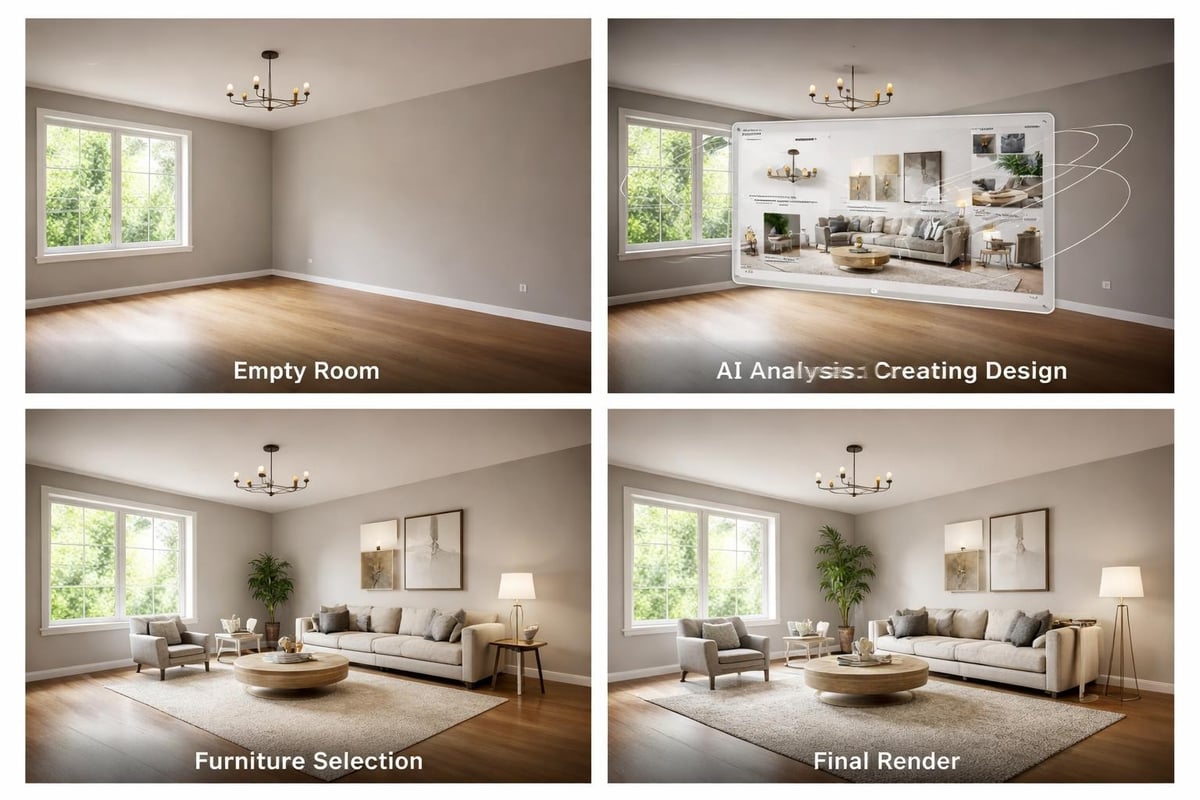
A virtual staging solution operates through sophisticated image editing and rendering software that digitally places furniture, decor, and design elements into photographs of empty rooms. The technology has evolved significantly since its introduction, moving from basic photo manipulation to advanced AI-powered virtual staging that produces remarkably realistic results.
Modern virtual staging platforms leverage artificial intelligence to analyze room dimensions, lighting conditions, and architectural features. This analysis enables the software to place furniture with accurate perspective, appropriate shadows, and realistic reflections that match the existing environment. The result is imagery that closely resembles professionally photographed, physically staged properties.
Key Components of Effective Virtual Staging
The foundation of any quality virtual staging solution rests on several critical elements that determine the final output quality:
- High-resolution furniture libraries with diverse styles ranging from modern minimalist to traditional elegance
- Advanced rendering engines that calculate lighting, shadows, and reflections with precision
- Perspective correction algorithms ensuring furniture placement looks natural within the room's dimensions
- Color matching technology that harmonizes digital elements with existing wall colors and flooring
- Texture realism that captures the subtle details of fabrics, wood grains, and surface materials
The technical sophistication behind these platforms continues to advance, with machine learning algorithms improving their ability to understand spatial relationships and design principles. This progression has made virtual staging increasingly indistinguishable from traditional staging photography.
Business Benefits for Real Estate Professionals
Implementing a virtual staging solution delivers measurable advantages across multiple aspects of real estate operations. The financial impact alone makes it an attractive option for agents, brokers, and property developers seeking to maximize their marketing budgets.
Cost Efficiency and ROI
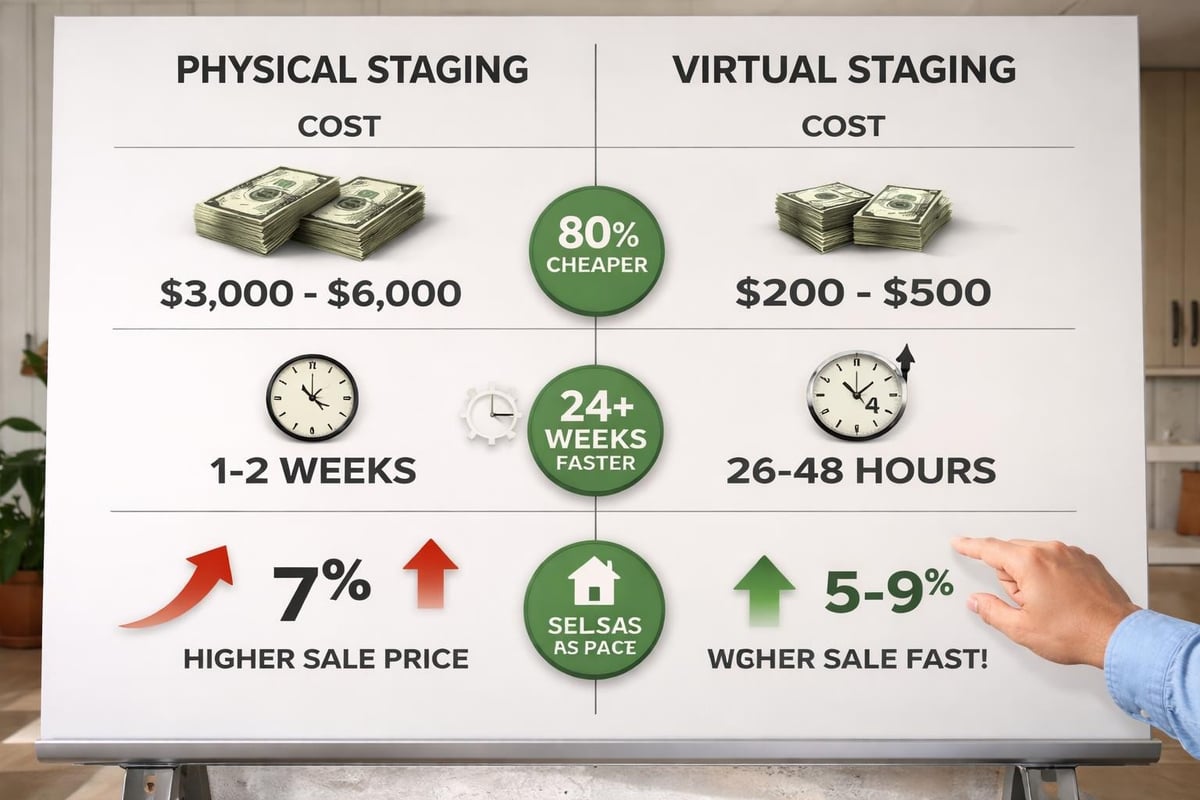
Traditional physical staging typically costs between $3,000 and $10,000 per property, depending on home size and rental duration. In contrast, virtual staging services generally range from $25 to $150 per room, representing savings of 90-95% compared to conventional methods.
| Staging Method | Average Cost per Room | Typical Timeline | Flexibility |
|---|---|---|---|
| Physical Staging | $500-$1,500 | 5-10 days | Limited after setup |
| Virtual Staging | $25-$150 | 24-48 hours | Unlimited variations |
| No Staging | $0 | N/A | Complete (but ineffective) |
The return on investment extends beyond direct cost savings. Properties with professionally staged photos sell faster and often command higher prices, with studies showing staged homes sell 73% faster than unstaged properties and can achieve sale prices 5-10% above market value.
Speed and Scalability
Time efficiency represents another compelling advantage. A virtual staging solution can process multiple rooms across numerous properties simultaneously, something physically impossible with traditional staging. Real estate professionals working with developers or managing multiple listings can stage entire portfolios within days rather than weeks.
This scalability becomes particularly valuable during market fluctuations when inventory levels change rapidly. Agents can quickly adapt their marketing strategies without coordinating furniture deliveries, installer schedules, or warehouse logistics.
Selecting the Right Virtual Staging Solution
The market offers numerous virtual staging platforms, each with distinct features, pricing structures, and quality levels. Making an informed selection requires evaluating several critical factors that impact both immediate usability and long-term value.
When choosing the best virtual staging company, real estate professionals should prioritize vendors with proven track records, transparent pricing, and portfolios demonstrating consistent quality across various property types and design styles.
Essential Evaluation Criteria
Quality and Realism: Review sample galleries extensively. Examine shadow accuracy, perspective consistency, and overall photorealism. Poor quality virtual staging can damage credibility and reduce buyer interest rather than enhance it.
Furniture Style Variety: The platform should offer comprehensive style options to match different property types and target demographics. A luxury penthouse requires different staging aesthetics than a family suburban home.
Turnaround Time: Business operations depend on predictable timelines. Solutions promising 24-hour delivery should consistently meet those commitments, even during peak seasons.
User Experience: Interface simplicity matters, especially for professionals managing multiple listings. Platforms requiring extensive technical knowledge or complex upload processes create unnecessary friction.
Customer Support: Responsive technical assistance and revision policies ensure projects stay on schedule when adjustments are needed.
Several top virtual staging software options offer varying combinations of these features, with pricing models ranging from pay-per-image to monthly subscriptions.
Implementation Best Practices
Successfully integrating a virtual staging solution into real estate marketing operations requires more than simply uploading photos and selecting furniture. Strategic implementation ensures maximum impact while maintaining ethical standards and client trust.
Photography Quality Standards
Virtual staging quality depends entirely on the source photography. Blurry, poorly lit, or distorted images will produce subpar results regardless of the platform's capabilities. Professional photography following these guidelines yields optimal results:
- Use wide-angle lenses appropriate for interior photography (typically 16-24mm)
- Ensure even, natural lighting with minimal harsh shadows
- Capture images at proper vertical and horizontal alignment to minimize distortion
- Photograph from standard viewer height (approximately 5 feet) for natural perspective
- Include multiple angles of each room to provide staging variety
Many platforms, including the Try Furnishly staging service, provide detailed photography guidelines to help users capture images that maximize rendering quality.
Disclosure and Transparency
Ethical considerations play a crucial role in virtual staging implementation. The real estate guide to virtual staging emphasizes that transparency builds trust while non-disclosure can create legal complications and damage professional reputations.
Best practices include:
- Clear labeling of virtually staged images in all marketing materials
- Providing unstaged photos alongside staged versions in listings
- Verbal disclosure during property showings and conversations with potential buyers
- MLS compliance ensuring virtual staging disclosure meets local association requirements
- Written acknowledgment in offer documents confirming buyers understand staging is digital
These practices protect both real estate professionals and buyers while maintaining the marketing benefits virtual staging provides.
Advanced Applications and Creative Strategies
Beyond basic room furnishing, sophisticated virtual staging solutions enable creative marketing approaches that differentiate properties in competitive markets. Real estate professionals leveraging these advanced applications gain significant competitive advantages.
Multi-Style Presentations
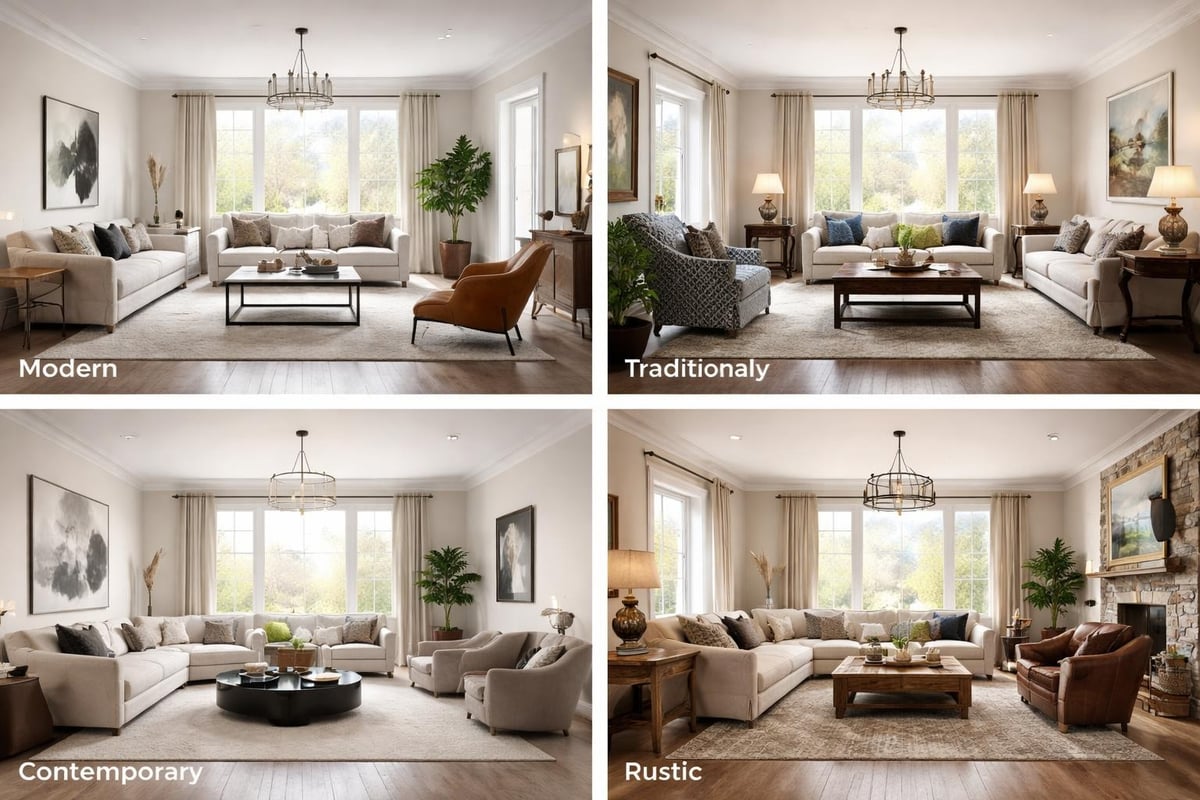
Forward-thinking agents create multiple staging versions of the same space, showcasing different design aesthetics to appeal to diverse buyer preferences. A single living room might be staged in contemporary, traditional, and transitional styles, allowing potential buyers to envision various possibilities.
This approach works particularly well for vacant new construction or properties appealing to broad demographics. Buyers browsing online can view their preferred aesthetic without requiring multiple physical staging setups.
Seasonal and Holiday Staging
Virtual staging allows cost-effective seasonal variations impossible with physical staging. Properties listed during holidays can feature festive decor that creates emotional connections without the expense of purchasing and installing seasonal items.
Similarly, outdoor spaces can be staged to show summer entertaining potential even when photographed during winter months, helping buyers envision year-round usage.
Before-and-After Renovation Marketing
Developers and flippers use virtual staging to showcase both current condition and post-renovation potential. This dual presentation helps buyers understand the value proposition of fixer-upper properties while visualizing the finished product.
The Try Furnishly gallery demonstrates various staging applications across property types, providing inspiration for creative marketing approaches.
Market Trends and Future Developments
The virtual staging industry continues evolving rapidly, with emerging technologies promising even more sophisticated capabilities. Understanding these trends helps real estate professionals anticipate future opportunities and prepare for shifting market expectations.
Artificial Intelligence Integration
Machine learning algorithms are becoming increasingly sophisticated at understanding design principles, spatial relationships, and buyer preferences. Future virtual staging solutions will likely offer automated style recommendations based on property characteristics and target demographic data.
AI-powered platforms will analyze successful listing patterns to suggest furniture arrangements and color schemes statistically proven to generate buyer interest for specific property types and price ranges.
Augmented Reality Experiences
The convergence of virtual staging with augmented reality technology enables potential buyers to experience staged spaces through smartphone apps during in-person showings. This technology overlays digital furniture onto the real environment viewed through device cameras, creating interactive exploration opportunities.
While still emerging, AR-enhanced virtual staging represents a logical evolution as mobile device capabilities expand and buyer expectations for immersive experiences increase.
Integration with 3D Tours and Virtual Walkthroughs
Modern buyers expect comprehensive online property experiences. Virtual staging is increasingly integrated with 3D walkthrough platforms, allowing buyers to navigate digitally furnished spaces as though physically present. This integration creates cohesive, immersive marketing packages that drive higher engagement rates.
Platform Features and Technical Considerations
Evaluating virtual staging platforms requires understanding both user-facing features and underlying technical capabilities. The most effective solutions balance accessibility with professional-grade output quality.
Rendering Speed and Capacity
Processing time varies significantly across platforms. Enterprise-level services handling high volumes require infrastructure capable of rendering multiple rooms simultaneously without quality degradation. Individual agents may prioritize immediate turnaround for single listings over bulk processing capabilities.
Cloud-based rendering offers advantages over software requiring local processing power, enabling consistent performance regardless of user hardware specifications. This accessibility democratizes access to professional virtual staging regardless of technical resources.
Customization and Control
Different platforms offer varying levels of user control over the staging process:
- Fully automated: AI selects furniture and placement with minimal user input
- Template-based: Users select from pre-designed room arrangements
- Custom placement: Users manually position individual furniture pieces
- Hybrid approaches: AI suggestions with manual override capabilities
Professional designers may prefer granular control, while busy agents often value speed over customization. The optimal choice depends on specific workflow requirements and design expertise.
File Management and Organization
Real estate professionals managing multiple properties benefit from robust organizational features. Look for platforms offering:
- Project folders segregating different properties
- Revision history tracking changes across iterations
- Downloadable high-resolution files in multiple formats
- Batch processing for multi-room projects
- Cloud storage eliminating local file management
The Try Furnishly pricing structure reflects various service tiers balancing these features with cost considerations, allowing users to select packages matching their specific needs.
Measuring Success and Performance Metrics
Implementing a virtual staging solution represents an investment requiring measurement and optimization. Tracking specific metrics helps quantify return and refine strategies for maximum impact.
Key Performance Indicators
Real estate professionals should monitor several metrics when evaluating virtual staging effectiveness:
| Metric | Measurement Method | Target Improvement |
|---|---|---|
| Days on Market | Compare staged vs. unstaged listings | 20-40% reduction |
| Showing Requests | Track inquiry volume from staged photos | 50-80% increase |
| Online Engagement | Monitor listing views and time spent | 60-100% increase |
| Sale Price | Compare final price to asking price | 2-5% premium |
| Cost per Sale | Calculate staging investment vs. commission | Positive ROI |
Documenting these metrics across multiple transactions builds data-driven insights supporting continued virtual staging investment and helping refine implementation strategies.
A/B Testing Strategies
Sophisticated agents test different staging approaches to identify what resonates with their specific market. This might include comparing modern versus traditional styles, minimalist versus fully furnished presentations, or different color palettes for similar properties.
Digital marketing platforms enable precise tracking of which images generate the most engagement, providing valuable feedback for future staging decisions. This empirical approach removes guesswork and optimizes marketing effectiveness over time.
Industry Adoption and Market Penetration
Virtual staging has transitioned from novelty to standard practice across many real estate markets. Understanding adoption patterns helps professionals benchmark their practices against industry trends and competitive positioning.
The technology gained initial traction in high-cost markets where traditional staging expenses were particularly burdensome. Metropolitan areas with competitive inventory and sophisticated buyers led early adoption, with secondary and tertiary markets following as technology became more accessible and affordable.
Current industry data suggests approximately 45-50% of real estate professionals regularly use some form of virtual staging, with adoption rates highest among agents specializing in vacant properties, new construction, and luxury markets. This penetration continues accelerating as quality improves and costs decline.
Demographic and Generational Considerations
Younger buyers demonstrate higher acceptance of virtually staged imagery, having grown up with digital media and sophisticated image manipulation. This demographic comfort level influences marketing strategies, with properties targeting millennial and Gen Z buyers particularly suited for virtual staging approaches.
Conversely, properties marketed toward older demographics may require more conservative application, with greater emphasis on disclosure and access to unstaged photos. Understanding target buyer preferences ensures virtual staging enhances rather than undermines marketing effectiveness.
Virtual staging solutions have fundamentally transformed real estate marketing by delivering professional results at a fraction of traditional staging costs while dramatically reducing timelines. The technology enables agents and brokers to compete effectively in visually-driven markets where presentation quality directly impacts sales outcomes. Whether you're managing a single listing or an entire portfolio, Try Furnishly provides the AI-powered tools to transform empty spaces into compelling, photorealistic presentations that capture buyer attention and accelerate sales.
Leave a Comment