

The real estate industry has witnessed a dramatic transformation in how properties are marketed to potential buyers. Empty rooms and vacant spaces no longer need to remain bare in listing photographs, thanks to innovative digital solutions that bring these spaces to life. Virtual staging for real estate has emerged as a powerful marketing tool that enables agents and sellers to showcase a property's full potential without the expense and logistics of traditional physical staging. This technology-driven approach creates photorealistic, fully furnished rooms from empty space photographs, helping buyers visualize themselves living in the property while significantly reducing marketing costs.
Understanding Virtual Staging Technology
Virtual staging for real estate uses advanced software and artificial intelligence to digitally furnish vacant properties. The process begins with high-quality photographs of empty rooms, which are then enhanced with computer-generated furniture, artwork, lighting fixtures, and decorative elements. Modern platforms leverage AI algorithms to ensure proper perspective, lighting consistency, and realistic shadows that make the staged images nearly indistinguishable from traditionally staged spaces.
The technology has evolved considerably since its introduction. Early virtual staging required manual placement of each furniture piece by skilled graphic designers, a time-consuming process that could take hours per room. Today's AI-powered solutions analyze room dimensions, architectural features, and lighting conditions automatically, placing appropriately scaled furniture in seconds while maintaining photorealistic quality.
How the Process Works
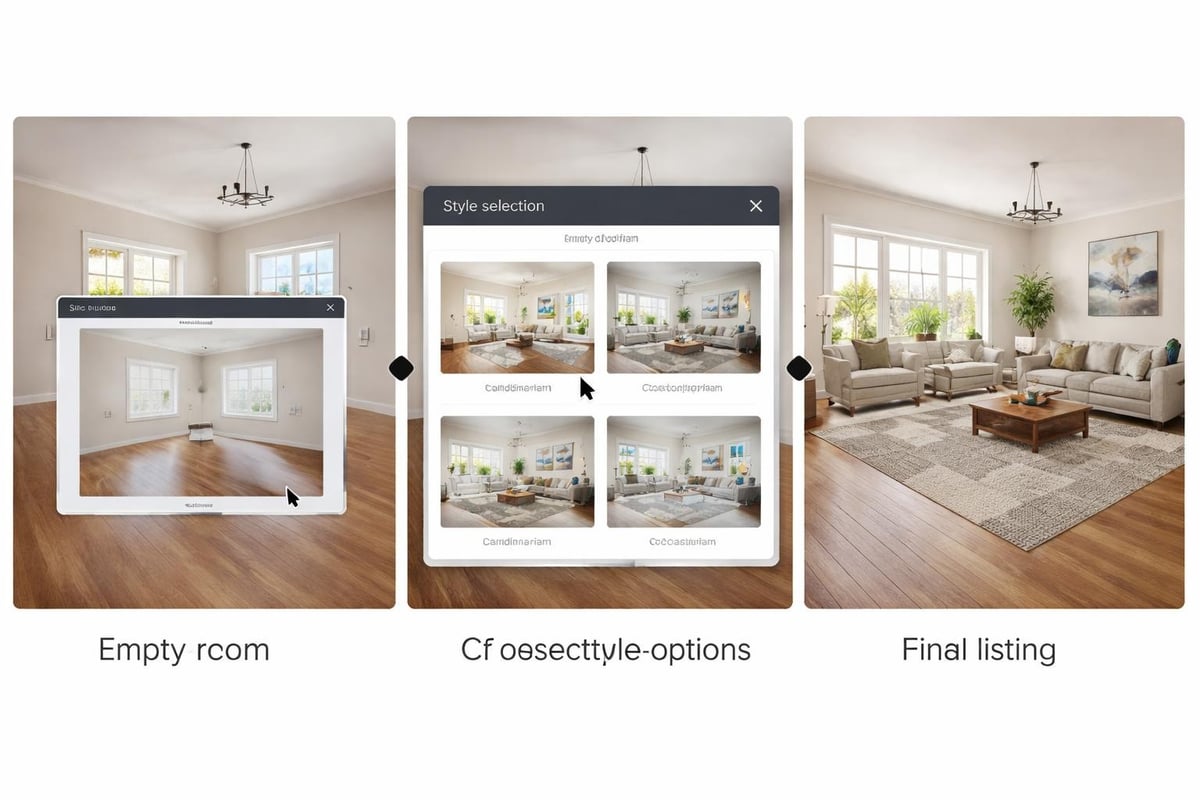
Real estate professionals upload photographs of empty rooms to a virtual staging platform. The software identifies key elements including wall positions, windows, flooring type, and room dimensions. Users then select from various furniture styles ranging from modern minimalist to traditional elegant designs.
The typical workflow includes:
- Uploading high-resolution photographs of vacant rooms
- Selecting desired furniture styles and room purposes
- AI automatically placing and scaling furniture appropriately
- Reviewing and adjusting placements if needed
- Downloading final staged images for listing materials
Processing times vary by provider, but leading platforms now deliver results in under 60 seconds per image. This speed advantage allows agents to stage entire properties quickly, even making last-minute changes before marketing campaigns launch.
Cost Comparison and ROI Analysis
One of the most compelling advantages of virtual staging for real estate is the dramatic cost savings compared to traditional physical staging. Physical staging typically requires furniture rental, professional stager fees, delivery, setup, and monthly rental costs that quickly accumulate.
| Staging Method | Cost Per Room | Setup Time | Flexibility | Duration Limits |
|---|---|---|---|---|
| Physical Staging | $500-$2,000 | 2-5 days | Limited | Monthly fees apply |
| Virtual Staging | $25-$99 | Minutes | Unlimited | No time constraints |
| Hybrid Approach | $300-$1,200 | 1-3 days | Moderate | Varies |
According to research from the National Association of Realtors, staged homes sell faster and often for higher prices than unstaged properties. Virtual staging delivers similar benefits at a fraction of the cost, making it accessible for properties at all price points.
The return on investment extends beyond direct cost savings. Properties with professionally staged photographs receive more online views, generate more showings, and spend less time on the market. When a property sells just one week faster, the seller saves on mortgage payments, utilities, insurance, and opportunity costs that often exceed the entire virtual staging investment.
Budget Allocation Strategies
Smart real estate professionals allocate their staging budgets strategically. High-value properties might benefit from physical staging of key rooms like the living room and master bedroom, while using virtual staging for secondary spaces. Vacant investment properties and foreclosures, where physical staging is impractical, represent ideal candidates for fully virtual approaches.
Many agents find that dedicating 1-2% of the listing price to virtual staging yields optimal results. For a $400,000 property, this means a $4,000-$8,000 budget that could virtually stage every room multiple times in different styles to appeal to various buyer demographics.
Best Practices and Compliance Requirements
While virtual staging for real estate offers tremendous advantages, proper implementation requires adherence to ethical guidelines and disclosure requirements. The National Association of Realtors provides clear guidance on how agents should use virtual staging responsibly in their marketing materials.
Essential compliance practices include:
- Clearly labeling all virtually staged images as "virtually staged" or "digitally furnished"
- Providing unstaged photographs alongside staged versions when requested
- Never misrepresenting the actual condition or features of the property
- Maintaining realistic staging that reflects appropriate room usage
- Ensuring furniture scale and placement match room dimensions accurately
Transparency builds trust with potential buyers. Rather than viewing virtual staging as deceptive, most buyers appreciate the visualization help when clearly disclosed. Best practices for real estate agents emphasize that disclosure should be prominent and unambiguous in all marketing channels.
Style Selection and Target Demographics
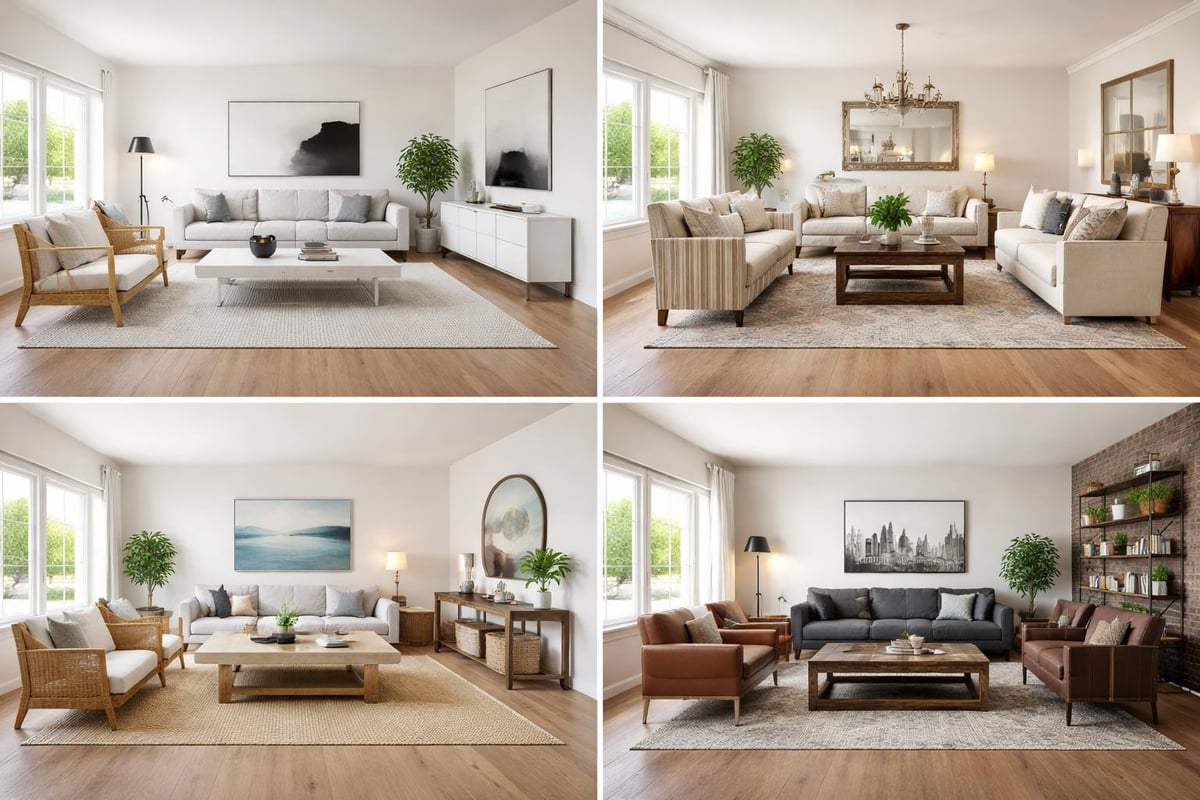
Choosing appropriate furniture styles significantly impacts buyer engagement. Modern minimalist staging appeals to younger, urban professionals, while traditional elegant styles resonate with established families seeking classic aesthetics. Coastal properties benefit from light, airy designs featuring natural materials and neutral palettes.
Demographic research guides effective style selection. Properties in tech-forward cities perform well with contemporary staging featuring clean lines and smart home integration suggestions. Suburban family homes should showcase functional layouts with designated homework areas, playrooms, and family gathering spaces.
Technical Considerations for Professional Results
Image quality directly impacts virtual staging effectiveness. Source photographs must meet specific technical requirements to ensure realistic results. Professional real estate photographers understand these requirements, but agents shooting their own listing photos should master the fundamentals.
Critical technical requirements:
- Resolution of at least 4000 pixels on the longest edge
- Proper exposure without blown highlights or blocked shadows
- Straight vertical lines without wide-angle distortion
- Consistent white balance across all room images
- Shot from standard eye level (approximately 5 feet high)
Wide-angle lenses are standard in real estate photography, but excessive distortion creates challenges for virtual staging software. Rooms photographed with extreme wide angles appear stretched, making furniture placement look unnatural. Focal lengths between 16mm and 24mm on full-frame cameras provide ideal perspectives that balance room coverage with natural proportions.
Lighting Consistency Matters
Virtual staging software analyzes existing lighting in photographs to match furniture shadows, highlights, and ambient illumination. Mixed lighting sources create challenges. A room with both warm tungsten lights and cool daylight through windows presents color temperature inconsistencies that sophisticated staging software can address but less advanced tools cannot.
The comprehensive guide on virtual staging strategies recommends shooting during optimal natural light hours when rooms receive balanced illumination. This approach minimizes harsh shadows and creates even lighting that enhances virtual staging realism.
Platform Selection and Service Comparison
The virtual staging market has expanded rapidly, offering real estate professionals numerous options at varying price points and quality levels. Selecting the right platform depends on volume requirements, desired turnaround time, style variety, and budget constraints.
Entry-level platforms charge $15-$30 per image and deliver results within 24-48 hours. These services typically offer limited style options and may use semi-automated processes with manual quality control. Mid-tier solutions range from $35-$75 per image with faster turnaround and expanded style libraries. Premium platforms commanding $80-$150 per image provide the highest quality renderings, extensive customization options, and rush delivery.
AI-powered platforms have disrupted traditional pricing models by offering instant results at competitive rates. These solutions analyze millions of reference images to understand proper furniture placement, scale, and lighting integration. The quality gap between AI-generated staging and manually created versions has narrowed considerably, making automated solutions increasingly attractive.
| Feature | Manual Services | AI-Powered Platforms | Hybrid Approach |
|---|---|---|---|
| Turnaround | 24-72 hours | Seconds to minutes | 4-12 hours |
| Cost | $50-$150 | $20-$75 | $40-$100 |
| Customization | High | Moderate | High |
| Consistency | Variable | Excellent | Good |
When evaluating virtual staging providers, request sample galleries showing their work across different property types and styles. Pay attention to furniture scale accuracy, shadow realism, and lighting integration. The best providers offer unlimited revisions and satisfaction guarantees.
Impact on Property Marketing Performance
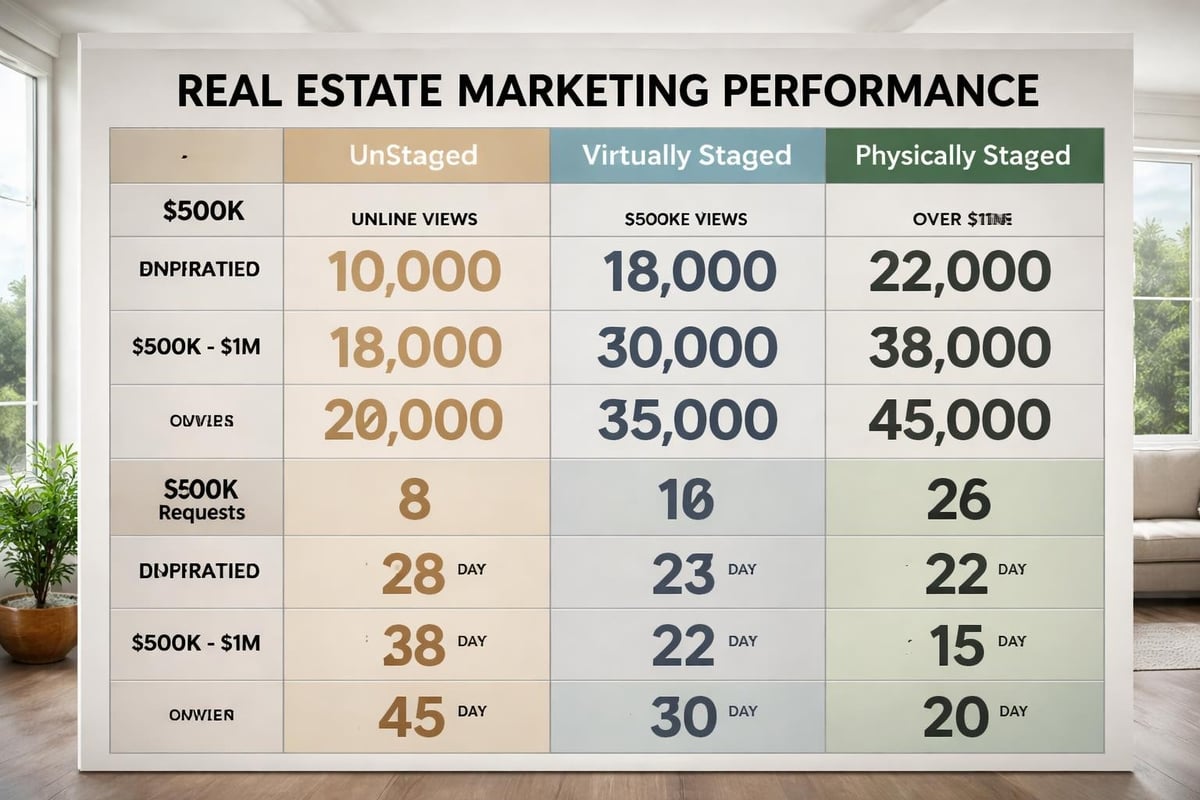
Data consistently demonstrates that virtual staging for real estate significantly improves marketing performance metrics. Properties with professionally staged photographs receive 40-60% more online views compared to unstaged listings. This increased visibility translates directly into more showing requests and qualified buyer inquiries.
Online property portals prioritize listings with high engagement rates in their search algorithms. More views, longer time spent on listing pages, and frequent return visits signal quality content, pushing those listings higher in search results. Virtual staging initiates this positive feedback loop by creating visually compelling images that capture attention in crowded listing feeds.
Reducing Days on Market
Time on market represents a critical metric for sellers and agents alike. Extended listing periods often necessitate price reductions and create buyer skepticism about potential property issues. Staged properties consistently sell faster than unstaged equivalents, with virtually staged homes performing comparably to physically staged properties at a fraction of the cost.
Properties priced below $300,000 see particularly strong benefits from virtual staging. At this price point, physical staging often represents a prohibitive percentage of sale price, yet buyers still struggle to visualize potential in empty spaces. Virtual staging democratizes access to professional presentation regardless of property value.
Advanced Applications and Creative Uses
Beyond standard room furnishing, virtual staging for real estate enables creative applications that physical staging cannot match. Agents can stage the same space multiple ways, showing a bedroom as both a nursery and home office to appeal to different buyer needs. This flexibility allows targeted marketing campaigns for specific buyer demographics.
Outdoor spaces present unique staging opportunities. Virtual staging can add patio furniture, outdoor kitchens, fire pits, and landscaping elements that help buyers envision exterior entertainment possibilities. Pool areas, balconies, and yards transform from empty concrete or grass into lifestyle destinations.
Creative virtual staging applications include:
- Showing unfinished basements as completed rec rooms or home theaters
- Demonstrating layout flexibility with multiple furniture arrangements
- Adding seasonal decorations for holiday marketing campaigns
- Visualizing renovation potential in fixer-upper properties
- Creating comparison images showing before and after scenarios
Some platforms now offer virtual renovation capabilities that extend beyond staging. These tools can update outdated finishes, change wall colors, replace flooring, and modernize fixtures digitally. This approach helps buyers see past cosmetic issues to recognize underlying value.
Quality Control and Common Pitfalls
Despite technological advances, virtual staging quality varies significantly across providers and implementations. Understanding common pitfalls helps real estate professionals avoid amateur-looking results that undermine credibility rather than enhance it.
Furniture scale errors represent the most frequent quality issue. Oversized sofas that dwarf rooms or tiny dining tables that look like dollhouse furniture immediately signal artificial staging. Professional platforms use room measurements and architectural reference points to ensure proper proportions, but verification remains important.
Lighting mismatches create another telltale sign of poor virtual staging. Furniture that appears illuminated differently than the surrounding room breaks visual realism. Shadows should align with existing light sources, and furniture highlights must match ambient lighting direction and intensity.
Avoiding Overdone Staging
While virtual staging removes space constraints present in physical staging, restraint produces better results than maximalist approaches. Overfilled rooms with excessive furniture and accessories appear cluttered rather than inviting. The goal is helping buyers visualize living in the space, not showcasing a furniture showroom.
Professional stagers, whether physical or virtual, understand traffic flow principles. Furniture arrangements should suggest natural movement through spaces without blocking pathways or creating awkward navigation. Virtual staging that ignores these fundamentals produces visually appealing but practically implausible room layouts.
Integration with Comprehensive Marketing Strategies
Virtual staging for real estate works most effectively as part of a comprehensive property marketing strategy rather than a standalone tactic. Combining virtually staged images with professional copywriting, detailed property descriptions, virtual tours, and targeted digital advertising creates synergistic effects that maximize listing performance.
Social media marketing particularly benefits from high-quality staged images. Instagram, Facebook, and Pinterest audiences engage heavily with visually striking home imagery. Staged photographs generate significantly more shares, saves, and comments than unstaged equivalents, expanding organic reach beyond paid advertising budgets.
Email marketing campaigns featuring staged images achieve higher open rates and click-through rates. Recipients are more likely to forward property emails to friends and family when images showcase attractive, move-in-ready spaces. This word-of-mouth amplification effect extends marketing reach at zero additional cost.
The Try Furnishly gallery demonstrates how professional virtual staging creates portfolio-worthy images suitable for diverse marketing channels. Agents can confidently use these images across websites, print materials, social media, and email campaigns knowing they maintain consistent quality and professionalism.
Future Trends and Technology Evolution
The virtual staging industry continues evolving rapidly with emerging technologies promising even more sophisticated capabilities. Artificial intelligence improvements enable increasingly realistic renderings that challenge human ability to distinguish virtual from physical staging. Machine learning algorithms analyze millions of interior design examples to suggest furniture arrangements that optimize space functionality and aesthetic appeal.
Virtual reality integration represents the next frontier for property marketing. Rather than viewing static staged images, potential buyers will don VR headsets to walk through virtually staged properties, experiencing spatial relationships and furniture scale firsthand. This immersive approach combines virtual staging benefits with the experiential advantages of in-person property tours.
Augmented reality applications allow buyers to view staged furniture overlaid on empty rooms during physical walkthroughs using smartphone cameras. This hybrid approach addresses concerns about virtual staging accuracy while maintaining cost advantages over physical staging.
Emerging capabilities include:
- Real-time staging adjustments during virtual showings based on buyer preferences
- AI-powered style recommendations based on neighborhood demographics and comparable sales
- Automated staging of exterior spaces including landscaping and hardscaping
- Integration with property management systems for rental listing automation
- Blockchain verification of image authenticity and modification history
Understanding current virtual staging pricing models helps agents budget appropriately while anticipating how evolving technology may impact future costs and capabilities. As AI automation increases, pricing continues trending downward while quality and speed improve.
Measuring Success and Adjusting Strategies
Effective use of virtual staging for real estate requires ongoing performance measurement and strategy refinement. Agents should track specific metrics to evaluate return on investment and identify optimization opportunities. Online engagement analytics provide immediate feedback on image effectiveness before properties even receive showing requests.
Key performance indicators include listing view counts, time spent on listing pages, photo gallery click-through rates, showing request volumes, and ultimately days on market and final sale prices. Comparing these metrics between staged and unstaged listings reveals virtual staging impact on actual business outcomes.
A/B testing different staging styles for similar properties generates valuable insights about local market preferences. An agent might virtually stage two comparable homes differently, one with modern minimalist furniture and another with traditional designs, then compare engagement metrics to determine which approach resonates more effectively with the target demographic.
Buyer feedback during showings and after transactions provides qualitative insights that complement quantitative metrics. Many agents survey clients about which listing elements most influenced their interest, often discovering that staged photographs played decisive roles in scheduling showings they might otherwise have skipped.
Virtual staging for real estate has fundamentally transformed how properties are marketed, offering cost-effective solutions that deliver measurable results across all price points. By combining professional photography with advanced AI technology, real estate professionals can showcase properties' full potential while maintaining transparency and ethical standards. Try Furnishly provides the tools agents need to implement virtual staging efficiently, with photorealistic results delivered in seconds and a comprehensive furniture library that appeals to diverse buyer preferences. Transform your listings today and experience the competitive advantages that virtual staging delivers in today's digital-first real estate market.
Leave a Comment