

The real estate industry has witnessed a dramatic shift in how properties are presented to potential buyers. Traditional staging methods, while effective, often require significant time, financial investment, and logistical coordination. Enter staging 3d-a revolutionary approach that leverages advanced technology to create photorealistic, furnished environments from empty spaces. This digital transformation enables real estate professionals to showcase properties in their best light without the constraints of physical furniture, scheduling conflicts, or storage concerns. As the market becomes increasingly competitive in 2026, understanding and implementing staging 3d techniques has become essential for agents, brokers, and property marketers who want to reduce time on market and maximize property values.
Understanding Staging 3D Technology
Staging 3d represents the convergence of computer graphics, artificial intelligence, and real estate marketing expertise. Unlike traditional photography enhancement, this technology creates three-dimensional representations of furniture, decor, and architectural elements that integrate seamlessly with existing property photographs.
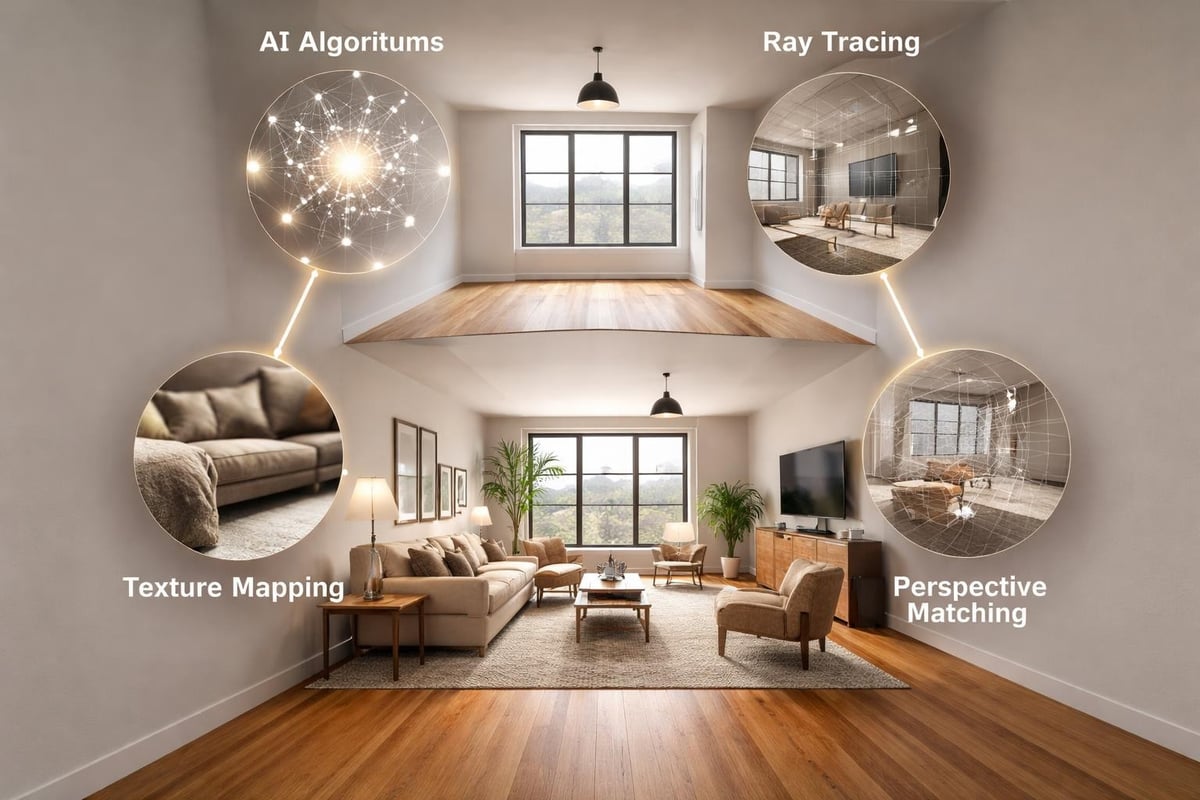
The Core Components of 3D Staging
The foundation of effective staging 3d relies on several interconnected technologies working in harmony:
- Ray tracing algorithms that simulate realistic lighting and shadows
- Texture mapping systems that apply authentic material finishes to furniture
- Perspective matching tools that align virtual objects with room dimensions
- Color correction engines that ensure consistent lighting across the entire scene
- Physics-based rendering that creates believable spatial relationships
Modern AI-powered platforms have streamlined these complex processes. Adobe Substance 3D Stager has evolved significantly, offering designers powerful tools for creating realistic staged environments, though these professional-grade solutions often require extensive training and technical expertise.
How AI Transforms the Staging Process
Artificial intelligence has dramatically accelerated staging 3d workflows. Traditional 3D rendering required manual placement of every object, adjustment of lighting, and fine-tuning of materials-a process that could take hours or even days per room.
Contemporary AI systems analyze room photographs to automatically:
- Detect room boundaries and architectural features
- Calculate proper perspective and vanishing points
- Suggest furniture arrangements based on room dimensions
- Apply appropriate lighting that matches existing conditions
- Generate shadows and reflections that integrate naturally
Research in differentiable rendering, such as systems that optimize lighting and object placement to match target images, has contributed to the photorealistic quality achievable in modern virtual staging platforms.
Business Applications for Real Estate Professionals
The practical implementation of staging 3d extends far beyond simple aesthetics. Real estate professionals leverage this technology to address specific business challenges and create measurable competitive advantages.
Accelerating Property Sales Cycles
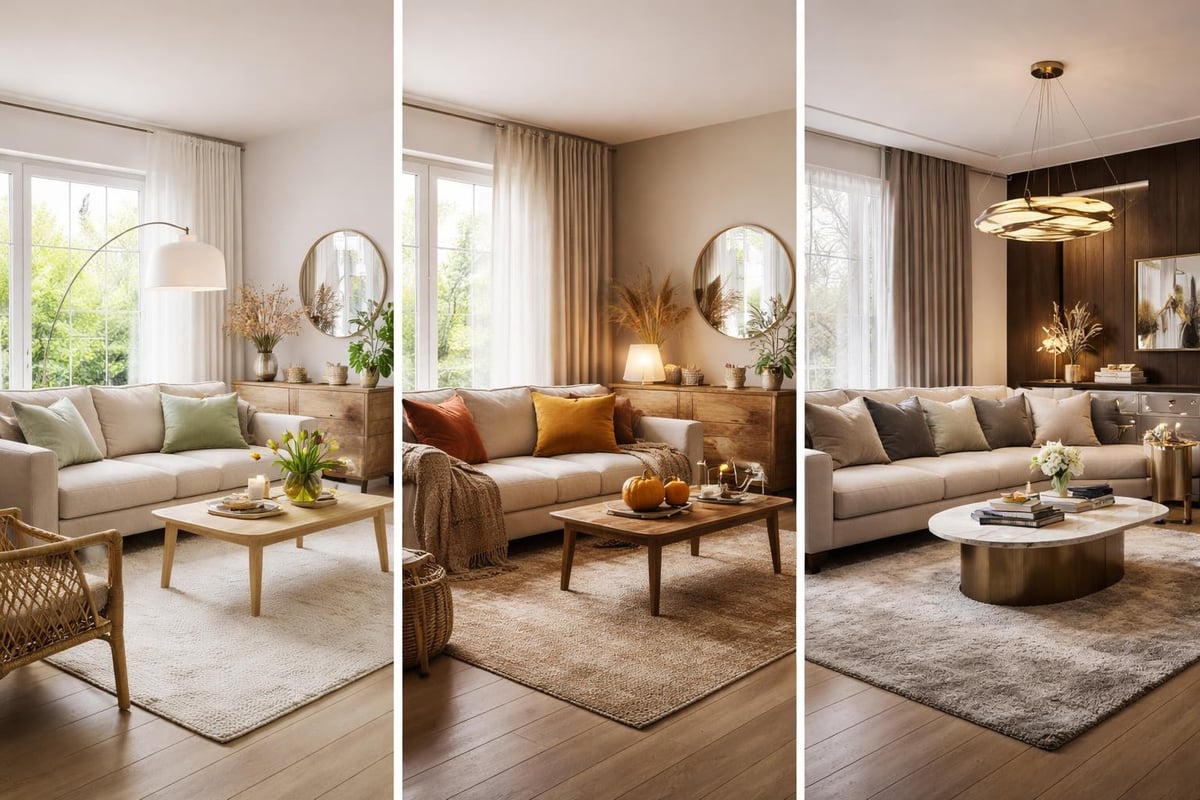
Empty properties consistently spend more time on the market than furnished ones. Staging 3d solves this challenge by allowing agents to present multiple design options instantly. A single vacant living room can be showcased in contemporary, traditional, minimalist, or luxury styles-all from one photograph.
| Staging Method | Average Time to Create | Cost per Room | Flexibility |
|---|---|---|---|
| Physical Staging | 3-7 days | $1,500-$3,000 | Limited |
| Traditional 3D Rendering | 24-48 hours | $300-$800 | Moderate |
| AI-Powered Staging 3D | Seconds to minutes | $20-$50 | Extensive |
The speed advantage becomes particularly valuable when marketing multiple properties simultaneously. Agents can preview their staging results in real-time and make immediate adjustments based on client feedback or market trends.
Cost Management and ROI
Traditional physical staging requires ongoing rental fees, delivery charges, and storage costs. Staging 3d eliminates these recurring expenses while providing unlimited revisions and style variations.
Financial benefits include:
- No furniture rental or storage fees
- Elimination of delivery and installation costs
- Reduced photography session requirements
- Lower insurance and liability expenses
- Scalability without proportional cost increases
Properties marketed with professionally staged images-whether physical or virtual-typically sell for 6-20% more than unstaged properties while reducing market time by up to 73%. The pricing structure for AI virtual staging makes these benefits accessible to agents working with properties at every price point.
Technical Quality Considerations
Achieving photorealistic results in staging 3d requires attention to several critical quality factors. The difference between amateur and professional virtual staging often comes down to how well these elements are executed.
Lighting and Shadow Accuracy
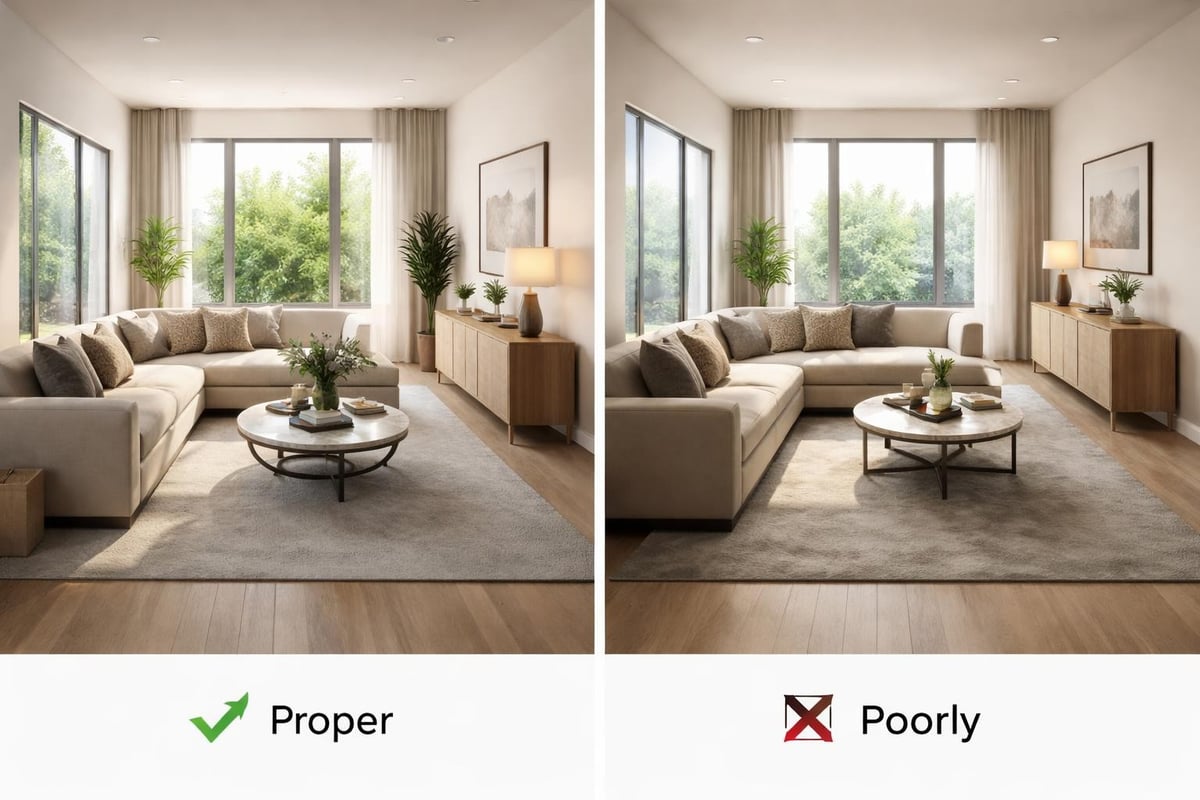
Proper lighting integration separates convincing staging 3d from obviously artificial results. Virtual furniture must cast shadows that match the direction, intensity, and color temperature of existing room lighting.
Advanced systems analyze the original photograph to determine:
- Primary light source direction and intensity
- Ambient light levels throughout the space
- Color temperature (warm vs. cool lighting)
- Time of day based on natural light
- Reflection patterns on flooring and surfaces
The principles of structured light measurement inform how sophisticated staging systems calculate depth and dimensionality, ensuring virtual objects integrate convincingly with physical spaces.
Perspective and Scale Precision
One of the most common failures in staging 3d occurs when virtual furniture appears too large, too small, or positioned at incorrect angles relative to room architecture. Professional-grade systems employ sophisticated algorithms to:
- Calculate room dimensions from photographic cues
- Establish accurate vanishing points for perspective correction
- Scale furniture proportionally to room size
- Position objects at appropriate distances from walls
- Maintain consistent perspective across multiple furniture pieces
Research in 3D scene perception and inverse graphics has advanced how systems understand spatial relationships, enabling more accurate virtual object placement.
Industry Comparisons and Platform Selection
The staging 3d marketplace has expanded considerably, offering solutions ranging from basic automated tools to sophisticated platforms with extensive customization options. Understanding the distinctions helps real estate professionals select the most appropriate solution.
Service Quality Variations
Not all virtual staging platforms deliver equivalent results. When evaluating options, consider these differentiating factors:
Quality indicators:
- Resolution of output images (minimum 4K recommended)
- Furniture library size and style variety
- Realism of textures and materials
- Accuracy of lighting integration
- Attention to architectural details
Reviews of established providers like 3D Stagers and Virtual Staging Solutions reveal significant differences in turnaround time, revision policies, and final image quality. The best virtual staging software for 2025 continues to evolve with AI advancements.
Workflow Integration
Effective staging 3d platforms integrate smoothly with existing real estate marketing workflows. Key integration considerations include:
- Upload methods (web interface, mobile app, API)
- File format compatibility (JPEG, PNG, RAW)
- Batch processing capabilities for multiple rooms
- Direct MLS integration options
- Export formats suitable for various marketing channels
The most efficient systems allow agents to manage their staging projects within a centralized dashboard, tracking revisions and organizing staged images by property.
Advanced Staging Strategies
Beyond basic room furnishing, sophisticated staging 3d techniques can address specific marketing challenges and target particular buyer demographics.
Style Customization for Target Markets
Different buyer segments respond to distinct design aesthetics. Luxury property buyers expect high-end finishes and designer furniture, while first-time homebuyers may prefer approachable, contemporary styles.
| Target Market | Preferred Staging Style | Key Elements |
|---|---|---|
| Luxury Buyers | High-end contemporary | Designer furniture, art pieces, premium finishes |
| Young Professionals | Modern minimalist | Clean lines, neutral colors, functional spaces |
| Families | Comfortable traditional | Durable furniture, family-friendly layouts |
| Investors | Budget-conscious modern | Cost-effective appeal, broad market positioning |
Advanced staging 3d platforms offer extensive style libraries that enable precise demographic targeting without requiring multiple physical staging setups.
Seasonal and Trend Adaptation
Market trends shift seasonally and annually. Virtual staging provides the flexibility to update property presentations without logistical complications:
- Spring listings can showcase bright, airy aesthetics
- Fall presentations can incorporate warmer color palettes
- Holiday marketing can include tasteful seasonal touches
- Trend updates can be implemented across entire portfolios instantly
This adaptability ensures properties always appear current and market-appropriate, regardless of when they were originally photographed.
Implementation Best Practices
Successful staging 3d implementation requires more than selecting the right platform. Strategic execution maximizes the technology's marketing impact.
Photography Foundation
High-quality virtual staging begins with excellent source photography. The original room photographs determine the ceiling for final staging quality, regardless of the platform's capabilities.
Essential photography requirements:
- Well-lit spaces with natural and artificial lighting balanced
- Straight-on angles that minimize distortion
- Clean, decluttered spaces without existing furniture or debris
- High-resolution images (minimum 3000 pixels on the longest side)
- Proper white balance and exposure
Professional real estate photographers understand these requirements, but agents shooting their own properties should invest time in proper technique or consult comprehensive staging guides for photography tips.
Disclosure and Transparency
Ethical implementation of staging 3d requires clear disclosure that images are virtually staged. This transparency builds trust with potential buyers and protects agents from legal complications.
Best practices include:
- Adding "Virtually Staged" watermarks or disclaimers to images
- Providing both staged and unstaged versions in listings
- Clearly stating in property descriptions which images are virtual
- Ensuring MLS compliance with local disclosure requirements
- Maintaining unstaged photos for in-person showing reference
Transparency doesn't diminish staging 3d effectiveness. Buyers understand the marketing purpose while still benefiting from visualization that helps them envision the property's potential.
Measuring Staging Impact
Quantifying the return on investment from staging 3d helps justify the expense and refine implementation strategies.
Key Performance Metrics
Track these specific metrics to assess staging 3d effectiveness:
- Time on market reduction: Compare staged vs. unstaged property average days listed
- Showing request volume: Monitor inquiry rates for staged versus unstaged listings
- Final sale price: Calculate percentage of asking price achieved
- Engagement metrics: Track online listing views, saves, and shares
- Cost per sale: Compare total marketing costs including staging expenses
Agents who systematically track these metrics typically discover that staging 3d investment pays for itself multiple times over through faster sales and higher prices.
A/B Testing Approaches
Sophisticated marketers conduct controlled comparisons to optimize their staging 3d strategies:
- Test different furniture styles for similar properties
- Compare staged versus unstaged performance in matched markets
- Evaluate single-room staging versus whole-home approaches
- Assess impact of staging quality levels at different price points
- Measure response to seasonal versus evergreen design choices
These insights enable continuous refinement of staging strategies based on actual market response rather than assumptions.
Future Developments in Staging Technology
The staging 3d field continues evolving rapidly. Understanding emerging trends helps real estate professionals anticipate future capabilities and opportunities.
Virtual Reality Integration
The next frontier combines staging 3d with immersive virtual reality experiences. Potential buyers will soon explore virtually staged properties through VR headsets, walking through spaces and experiencing scale and proportion in ways traditional photography cannot convey.
Early implementations already allow buyers to:
- Navigate through virtually staged rooms in 3D space
- Change furniture styles and arrangements in real-time
- Visualize different paint colors and finishes instantly
- Experience properties remotely with spatial depth perception
Augmented Reality Staging
Mobile augmented reality applications represent another emerging application. Buyers visiting properties in person use smartphone apps to overlay virtual furniture onto empty rooms, bridging the gap between digital staging and physical touring.
This technology addresses the disconnect some buyers experience when virtually staged photographs don't match the empty property they're viewing, providing real-time staging that follows them through the space.
Staging 3d has fundamentally transformed how real estate professionals market properties, combining speed, cost-effectiveness, and visual impact in ways traditional methods cannot match. By leveraging AI-powered platforms, implementing quality best practices, and maintaining transparent buyer communication, agents can significantly reduce time on market while maximizing property values. Try Furnishly delivers photorealistic virtual staging that transforms empty spaces into designer-furnished rooms in seconds, offering real estate professionals the competitive advantage they need in today's fast-paced market. Start enhancing your property listings with AI-powered staging that increases buyer interest and accelerates sales cycles.
Leave a Comment