

The real estate industry has undergone a dramatic transformation in recent years, with virtual home staging companies emerging as essential partners for agents, brokers, and property sellers. These specialized firms use advanced digital technology to furnish empty properties virtually, creating photorealistic images that help potential buyers visualize the full potential of a space. As traditional staging costs continue to rise and time-to-market pressures intensify, more real estate professionals are turning to virtual solutions that deliver comparable results at a fraction of the cost and time investment.
Understanding Virtual Home Staging Services
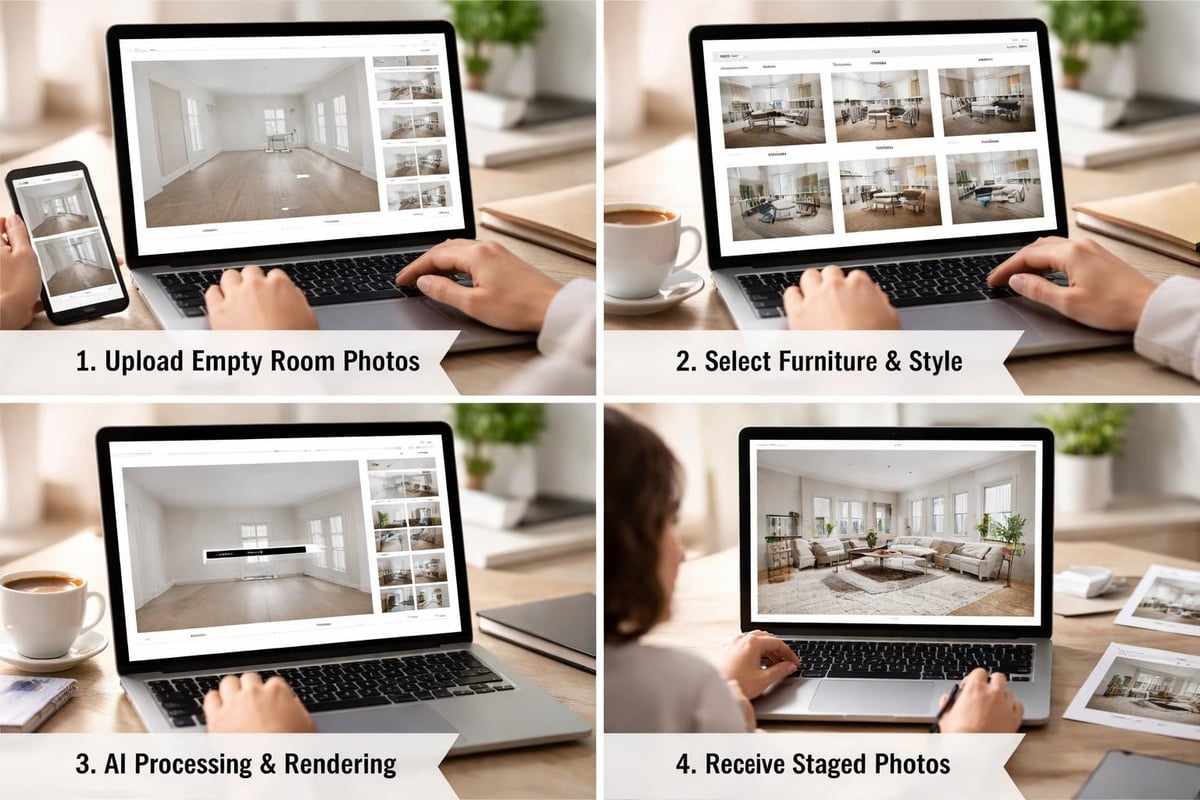
Virtual staging represents a revolutionary approach to property presentation, replacing the physical furniture and decor of traditional staging with digitally rendered alternatives. This process begins when real estate professionals submit photographs of empty or poorly furnished rooms to a staging company. Skilled designers then use specialized software to add furniture, artwork, lighting, and decorative elements that transform the space into an appealing, move-in-ready environment.
The technology behind these services has advanced significantly since 2024, with artificial intelligence now playing a crucial role in accelerating the staging process. Modern AI-powered virtual staging platforms can analyze room dimensions, lighting conditions, and architectural features to suggest appropriate furniture layouts and design styles automatically. This technological leap has reduced turnaround times from days to minutes while maintaining the photorealistic quality that buyers expect.
Key Service Features to Evaluate
When selecting from available virtual home staging companies, real estate professionals should assess several critical capabilities:
- Rendering quality and photorealism that creates believable, high-resolution images
- Style variety encompassing contemporary, traditional, minimalist, and regional design preferences
- Turnaround time from image submission to final delivery
- Revision policies allowing adjustments to furniture placement or style choices
- Volume pricing for agents managing multiple listings simultaneously
- Integration capabilities with MLS platforms and marketing tools
The most effective providers combine technical excellence with an understanding of real estate marketing psychology, knowing which design elements appeal to specific buyer demographics and property types.
Comparing Traditional and Virtual Staging Solutions
Understanding the fundamental differences between physical and digital staging helps real estate professionals make informed decisions about their marketing strategies. Both approaches aim to help buyers envision themselves in a property, but they achieve this goal through vastly different methods and resource investments.
| Aspect | Traditional Staging | Virtual Staging |
|---|---|---|
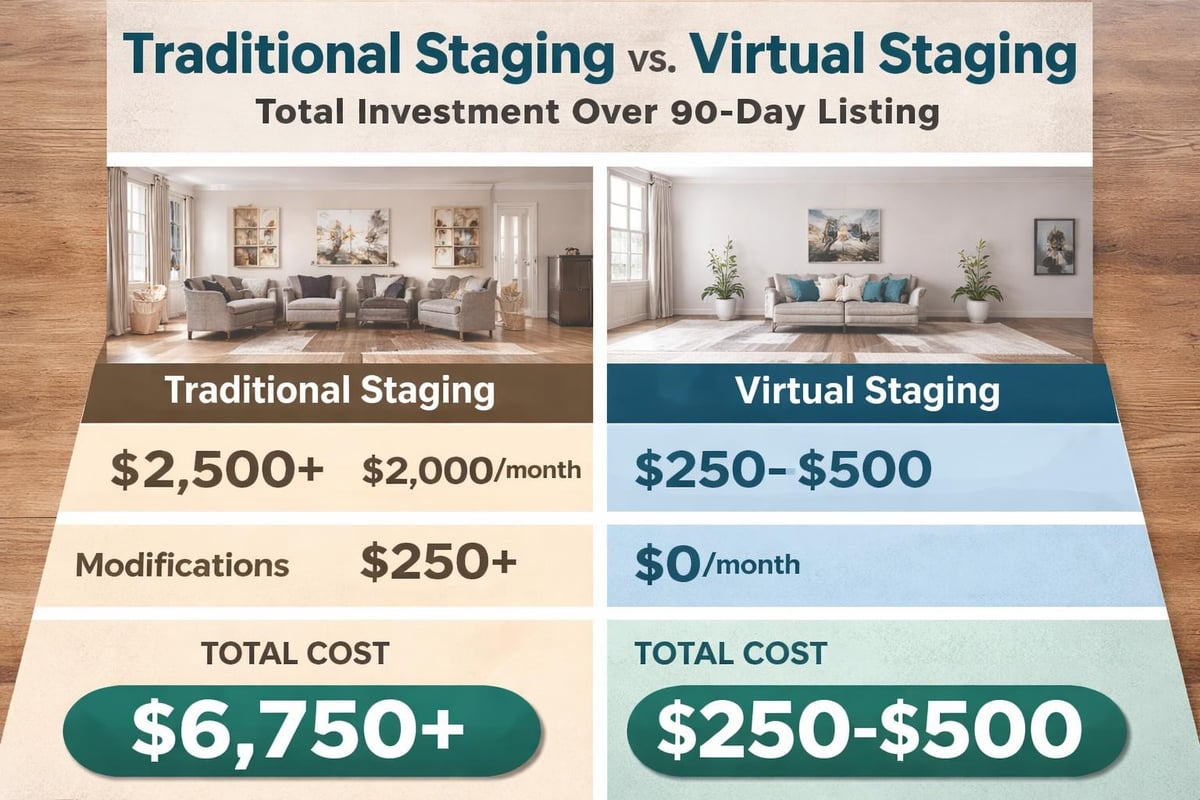
| Average Cost | $3,000-$10,000+ per property | $29-$199 per room |
| Time Required | 3-7 days setup | Minutes to 24 hours |
| Duration Limits | Monthly rental fees apply | One-time cost, unlimited use |
| Flexibility | Difficult to change once installed | Easy style modifications |
| Property Access | Required for installation | Only photos needed |
Traditional staging excels in creating tangible experiences during property showings, allowing visitors to touch fabrics and experience spatial relationships physically. However, the logistical complexities and substantial costs make it prohibitive for many listings, particularly in competitive markets where properties may need staging for extended periods.
Virtual staging eliminates these barriers by requiring only high-quality photographs of empty spaces. Companies like Phixer have demonstrated that digitally furnished images perform comparably to traditional staging in online listings, where 95% of buyers begin their property search in 2026. The cost differential is particularly significant for vacant properties, investment properties, or new construction where physical furniture placement isn't practical.
When Virtual Staging Makes the Most Sense
Real estate professionals consistently find virtual staging most effective in specific scenarios:
- Vacant properties where buyers struggle to visualize room purposes and spatial potential
- High-volume portfolios where staging multiple properties traditionally becomes cost-prohibitive
- Online-first marketing campaigns targeting buyers who conduct extensive preliminary research digitally
- New construction before furniture can be physically placed
- Expired listings requiring fresh presentation without additional traditional staging investment
Pricing Models and Budget Considerations
Virtual home staging companies employ various pricing structures designed to accommodate different client needs and usage patterns. Understanding these models helps real estate professionals optimize their marketing budgets while maintaining high-quality property presentations.
Per-Room Pricing remains the most common approach, with costs typically ranging from $29 to $99 per room depending on complexity and turnaround requirements. This model works well for agents staging occasional listings or testing virtual staging effectiveness before committing to larger volumes.
Subscription Plans offer unlimited or high-volume staging for monthly fees between $99 and $499. These packages suit busy agents managing multiple listings simultaneously or brokerages standardizing their marketing approach across team members. The pricing structure at platforms like Try Furnishly often includes tiered options balancing cost per image with rendering speed and style variety.
Enterprise Solutions cater to large brokerages and property management firms requiring hundreds of staged images monthly, with custom pricing based on volume commitments and integration requirements.
Hidden Costs and Value Factors
Beyond base pricing, savvy real estate professionals evaluate the total cost of ownership:
- Revision fees that some providers charge for style changes or furniture adjustments
- Rush processing charges for expedited 2-4 hour turnaround
- Image licensing restrictions affecting usage rights and duration
- Decluttering services preparing existing photos by removing current furniture digitally
Companies offering transparent pricing without surprise charges build stronger long-term relationships with real estate clients. Services like those from HD Estates emphasize designer-curated quality, which may command premium pricing but deliver correspondingly higher impact on buyer perception.
Technology and Quality Standards in 2026
The technological landscape for virtual home staging companies has evolved dramatically, with artificial intelligence fundamentally reshaping capabilities and expectations. Modern platforms leverage machine learning algorithms trained on millions of interior design images, enabling them to understand architectural styles, lighting physics, and design principles at sophisticated levels.
Photorealistic Rendering now represents the baseline quality standard rather than a premium feature. Advanced ray-tracing technology simulates natural light interaction with virtual furniture, creating shadows, reflections, and highlights that match the original photograph's lighting conditions. This attention to physical accuracy prevents the artificial appearance that plagued early virtual staging attempts.
AI-Powered Automation Benefits
Artificial intelligence delivers several transformative advantages:
- Instant room analysis determining optimal furniture scale and placement
- Style matching that aligns virtual furniture with architectural period and neighborhood aesthetics
- Automated perspective correction ensuring furniture angles match room geometry
- Lighting adjustment harmonizing virtual elements with existing room illumination
- Batch processing enabling simultaneous staging of entire properties
The gallery of staged properties from leading platforms demonstrates how AI-generated staging now rivals human designer output while operating at unprecedented speed. This technology democratizes access to professional-quality staging previously available only through expensive designer services.
Selecting the Right Virtual Staging Partner
Choosing among virtual home staging companies requires evaluating both technical capabilities and service reliability. The abundance of options in 2026 means real estate professionals can be selective, partnering with providers whose strengths align with their specific market positioning and client expectations.
Portfolio Review should be the first evaluation step. Examine before-and-after examples across various property types, price points, and architectural styles. Virtual staging galleries from providers like Virtually Staged Real Estate reveal their design sensibilities and technical proficiency. Look for consistent quality across projects rather than a few exceptional examples.
Turnaround Time Guarantees matter significantly in competitive markets where listing speed influences sale success. Some providers promise 24-hour delivery for standard projects, while AI-powered platforms increasingly offer near-instant results. Understand whether quoted times represent guarantees or estimates, and confirm revision timelines.
Client Support and Communication
The service relationship extends beyond image delivery:
- Consultation availability for discussing optimal room staging strategies
- Responsive revision handling when initial designs don't meet expectations
- Technical support for upload issues or file format questions
- Design guidance helping select appropriate styles for target demographics
- Portfolio management tools organizing staged images across multiple listings
Platforms offering comprehensive FAQ sections demonstrate commitment to client education and self-service support, reducing friction in the staging process.
Regional Considerations and Local Market Expertise
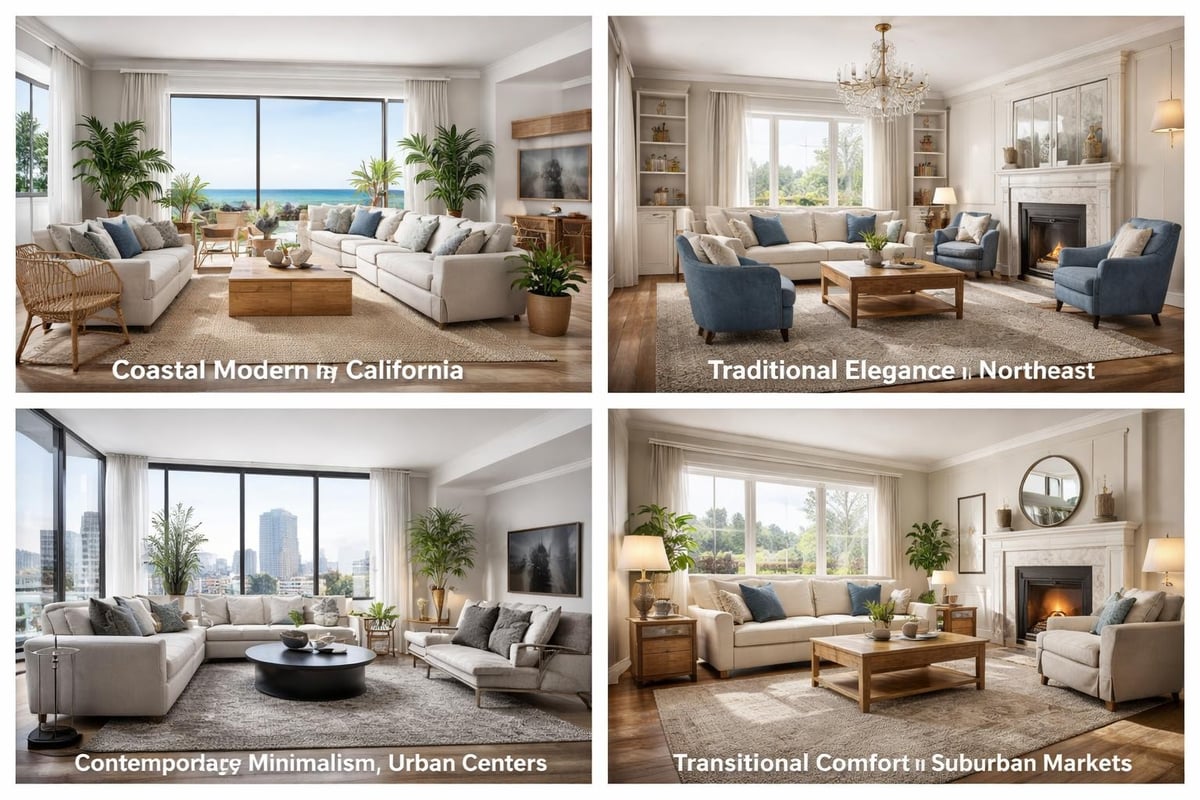
Virtual home staging companies increasingly recognize that effective staging requires understanding regional design preferences and buyer expectations. What appeals to buyers in Los Angeles differs substantially from what resonates in Atlanta or Boston, encompassing both aesthetic preferences and functional priorities.
Regional Design Expertise manifests in furniture style selection, color palette choices, and room layout approaches. Virtual staging services in Los Angeles might emphasize indoor-outdoor living connections, contemporary minimalism, and natural materials that align with Southern California lifestyle expectations. Midwest markets often prefer traditional comfort, while urban loft staging requires industrial-chic sensibilities.
Climate considerations also influence effective staging choices. Properties in warm climates benefit from staging that emphasizes cooling features and outdoor entertainment spaces, while homes in colder regions should showcase cozy gathering areas and efficient layouts that feel warm and inviting.
Marketing Integration and MLS Compliance
Successfully incorporating virtually staged images into real estate marketing requires understanding both technical requirements and ethical disclosure obligations. Multiple Listing Services and real estate associations have established clear guidelines governing virtual staging use, designed to prevent buyer deception while allowing this valuable marketing tool.
Disclosure Requirements universally mandate that listings clearly identify which images contain virtual staging or digital enhancement. Common approaches include:
- Photo captions stating "Virtually Staged" on each enhanced image
- MLS remarks sections noting virtual staging use
- Watermarks or subtle text overlays on staged photographs
- Separate image galleries distinguishing actual versus staged photos
Failure to disclose virtual staging appropriately can result in MLS violations, complaints from buyers who feel misled, and potential legal complications. Real Tour Vision’s virtual staging services emphasize compliance support, helping agents meet disclosure requirements while maximizing marketing impact.
Optimizing Online Listing Performance
Virtual staging delivers maximum value when integrated strategically into multi-channel marketing campaigns:
| Marketing Channel | Staging Strategy | Performance Impact |
|---|---|---|
| MLS Listings | Lead with staged images, include vacant photos | 3x more showings scheduled |
| Social Media | Carousel posts showing before/after transformations | 5x higher engagement rates |
| Property Websites | Interactive staging toggles | 40% longer visit duration |
| Email Campaigns | Staged imagery with clear property highlights | 2x click-through improvement |
The complete staging solutions offered by modern platforms often include multiple rendering options per room, allowing agents to A/B test different styles and determine which generates strongest buyer response.
Quality Control and Revision Processes
Even with advanced AI technology, virtual staging occasionally requires adjustments to meet specific property requirements or agent preferences. Understanding how virtual home staging companies handle revisions and quality assurance helps set appropriate expectations and ensures satisfactory outcomes.
Initial Review Protocols should include careful examination of:
- Furniture scale relative to room dimensions and ceiling heights
- Shadow direction and intensity matching natural light sources
- Color harmony between virtual elements and existing architectural features
- Style consistency across multiple rooms in the same property
- Perspective accuracy ensuring furniture angles align with room geometry
Most reputable providers offer at least one round of revisions within their base pricing, allowing adjustments to furniture placement, style changes, or minor corrections. Some premium services include unlimited revisions until client satisfaction is achieved.
Common Quality Issues and Solutions
Real estate professionals should watch for these frequent concerns:
- Oversized furniture that doesn't respect actual room dimensions
- Lighting mismatches where virtual elements appear too bright or dark
- Style inconsistencies mixing incompatible design periods or aesthetics
- Missing reflections in mirrors, windows, or glossy surfaces
- Unrealistic arrangements placing furniture in impractical configurations
Establishing clear communication with staging providers about target buyer demographics and property positioning helps prevent these issues. Services like Spotless Agency emphasize collaboration with agents to understand market positioning before beginning design work.
Impact on Property Performance Metrics
Data collected across thousands of listings in 2025-2026 demonstrates the quantifiable impact virtual staging delivers on critical real estate performance indicators. These metrics help justify staging investments and guide strategic implementation decisions.
Properties marketed with professional virtual staging consistently outperform vacant listings across multiple dimensions:
- Online viewing duration increases by 35-45% when listings include staged images
- Showing requests rise by 2-3x compared to vacant property photos
- Days on market decrease by an average of 28 days in competitive markets
- Offer probability improves by 18-25% within the first 30 days of listing
- Final sale price averages 5-8% higher relative to comparable unstaged properties
These improvements stem from virtual staging's ability to help buyers emotionally connect with properties and envision their future lives in the space. Empty rooms force buyers to work harder mentally, often resulting in lower perceived value and delayed decision-making.
ROI Calculation Framework
Real estate professionals can calculate staging return on investment using this formula:
ROI = [(Price Increase + Carrying Cost Savings) – Staging Cost] / Staging Cost × 100
For a $400,000 property where $500 in virtual staging generates a 5% price improvement ($20,000) and reduces market time by 30 days (saving $1,200 in carrying costs), the ROI exceeds 4,000%. Even conservative scenarios assuming 2% price impact and 15-day market time reduction deliver ROI above 1,000%, making virtual staging among the highest-return marketing investments available.
Future Trends Shaping Virtual Staging
Virtual home staging companies continue innovating rapidly, with several emerging trends poised to reshape service delivery and capabilities in coming years. Understanding these developments helps real estate professionals anticipate opportunities and evaluate provider roadmaps.
Interactive 3D Staging allows buyers to virtually walk through staged properties, rotating views and experiencing spaces from multiple angles. This technology bridges the gap between 2D images and physical property tours, delivering immersive experiences through standard web browsers without specialized software.
AI Style Customization enables agents to specify target buyer demographics, and algorithms automatically select furniture styles, color schemes, and accessories most likely to appeal to those segments. This personalization increases emotional resonance and accelerates buyer decision-making.
Augmented Reality Integration will allow buyers touring properties with smartphones to see virtual staging overlaid on empty rooms in real-time, combining physical presence with digital enhancement.
Instant Editing Capabilities through platforms like Try Furnishly’s creation tools empower agents to modify staging elements themselves, adjusting furniture placement or swapping styles without waiting for designer revisions.
The convergence of artificial intelligence, 3D rendering, and real-time collaboration tools promises to make virtual staging even more accessible, affordable, and effective for real estate marketing throughout 2026 and beyond.
Virtual home staging companies have fundamentally transformed real estate marketing by making professional property presentation accessible to all market segments while delivering measurable performance improvements. By carefully evaluating service quality, understanding pricing models, and strategically integrating staged imagery into comprehensive marketing campaigns, real estate professionals maximize their competitive advantage and accelerate property sales. Try Furnishly combines cutting-edge AI technology with designer-quality results, enabling real estate professionals to transform empty spaces into compelling, photorealistic environments in seconds. Experience the future of property marketing with ultra-fast rendering, extensive style options, and transparent pricing designed for today's competitive real estate landscape.
Leave a Comment