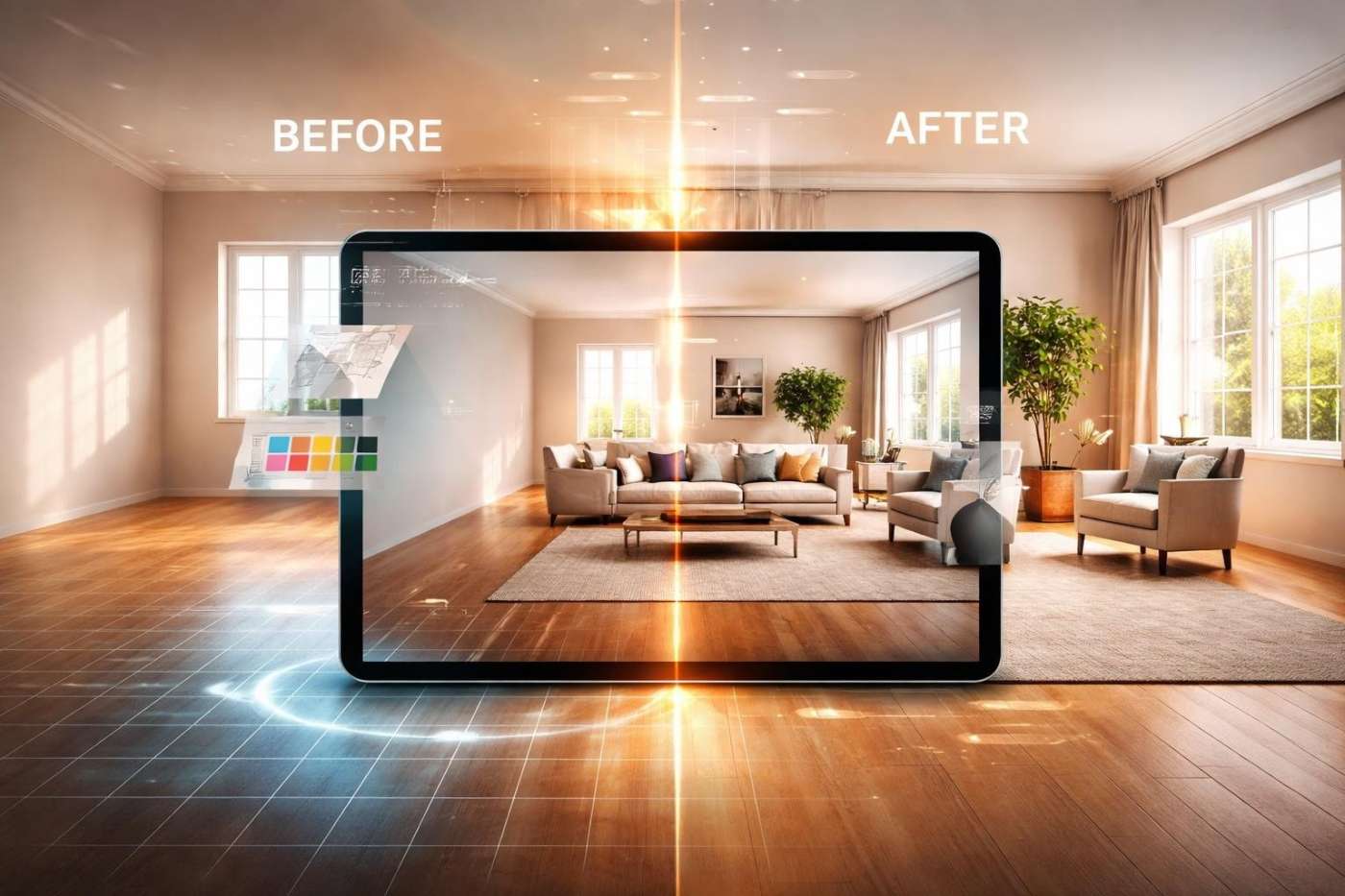

The real estate industry has undergone a dramatic transformation over the past decade, with technology reshaping how properties are marketed and sold. Among the most significant innovations is home staging digital, a revolutionary approach that combines artificial intelligence, advanced rendering techniques, and interior design expertise to create photorealistic furnished spaces from empty rooms. This technology has emerged as an essential tool for real estate professionals seeking to maximize property appeal while minimizing costs and time to market. By 2026, digital staging has evolved from a novel concept to a standard practice, with AI-powered platforms delivering results in seconds rather than days.
Understanding Home Staging Digital Technology
Home staging digital represents a fundamental shift in how properties are presented to potential buyers. Traditional physical staging requires furniture rental, delivery logistics, professional stagers, and weeks of coordination. The digital alternative eliminates these constraints entirely.
Modern platforms leverage machine learning algorithms trained on millions of interior design images to understand spatial relationships, lighting conditions, and aesthetic principles. These systems analyze room dimensions, architectural features, and natural light sources to place furniture and decor with remarkable accuracy.
Key technological components include:
- Advanced computer vision for room recognition and spatial mapping
- Neural networks that understand design principles and style coherence
- Photorealistic rendering engines that simulate lighting and materials
- Cloud computing infrastructure for rapid processing and delivery
The sophistication of virtual home staging technology has reached a point where distinguishing between digitally staged and physically staged rooms requires careful examination. Resolution quality, shadow rendering, and material textures have all achieved photorealistic standards that meet professional marketing requirements.
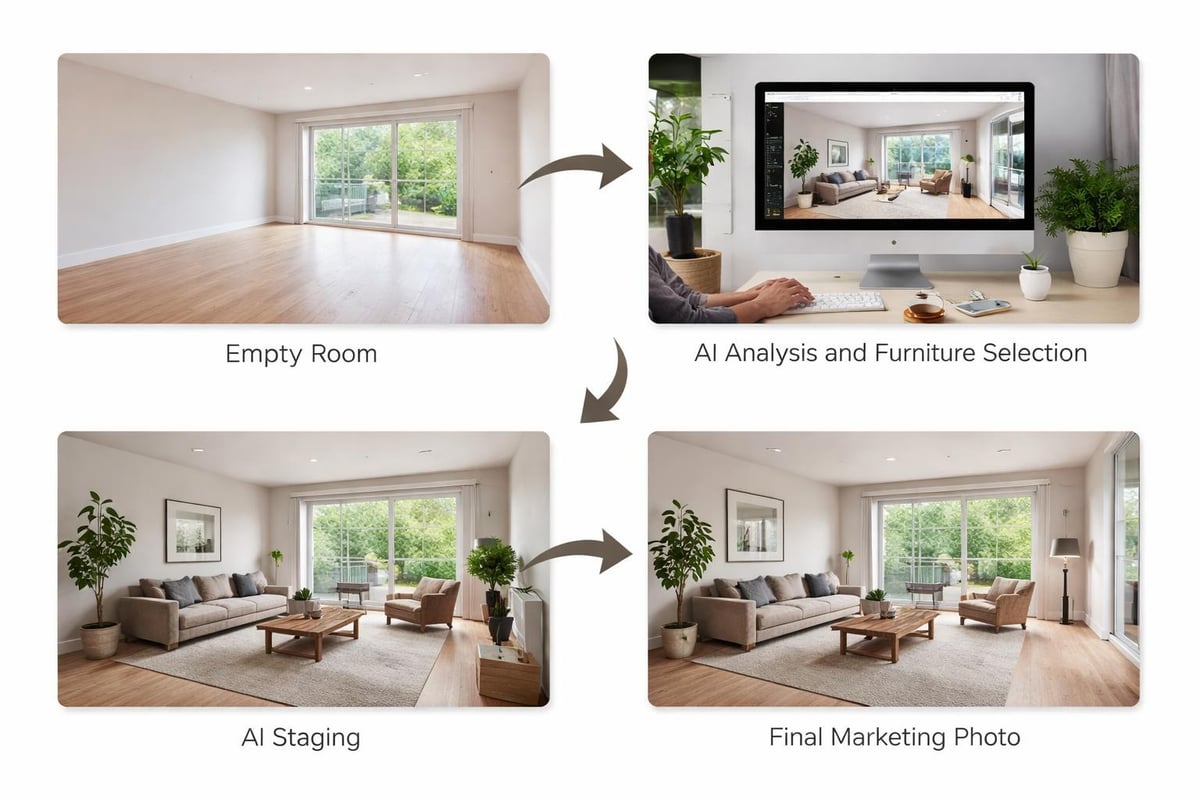
The Evolution of Digital Staging Platforms
The journey from basic image editing to sophisticated AI staging platforms has accelerated dramatically. Early digital staging required skilled graphic designers spending hours manually placing and adjusting furniture elements. Today's solutions complete the same task in seconds with superior results.
Modern platforms offer extensive furniture libraries spanning multiple design styles, from contemporary minimalism to traditional elegance. Users can select specific aesthetics that align with target demographics and local market preferences. The staging gallery showcases the breadth of possibilities available through contemporary AI systems.
| Platform Feature | 2020 Capability | 2026 Capability |
|---|---|---|
| Processing Time | 2-5 days | 5-30 seconds |
| Furniture Styles | 5-10 basic sets | 50+ curated collections |
| Image Quality | Standard definition | 8K photorealistic |
| Customization | Limited | Extensive per-room options |
Business Benefits for Real Estate Professionals
Real estate agents and brokers face intense competition in 2026, with buyers accessing hundreds of listings within minutes. Properties must capture attention immediately or risk being scrolled past without consideration. Home staging digital provides a decisive competitive advantage.
Financial advantages include:
- Cost reduction of 90-95% compared to physical staging
- Elimination of furniture rental and storage fees
- No transportation or installation labor costs
- Unlimited revisions without additional expense
Properties staged digitally sell significantly faster than unstaged alternatives. Market data from 2025 indicates digitally staged homes receive 73% more inquiries and sell 30% faster on average. The visual impact creates emotional connections that empty rooms cannot achieve, helping buyers envision their future lifestyle within the space.
The flexibility of digital approaches allows agents to stage properties multiple times with different design aesthetics. A single empty living room can be presented as a modern entertainment space, a traditional family room, or a sophisticated home office. This versatility enables targeted marketing to different buyer segments without incremental costs.
Services like HomeJab’s virtual staging and Deco’s AI-powered solutions have demonstrated the commercial viability of digital staging at scale, processing thousands of listings monthly for real estate agencies nationwide.
Speed and Scalability Advantages
Traditional staging timelines create bottlenecks in property marketing campaigns. Coordinating furniture delivery, stager schedules, and photographer availability extends listing preparation by weeks. Digital solutions compress this timeline to hours or minutes.
An agent photographing an empty property in the morning can have fully staged marketing images ready for MLS upload by afternoon. This rapid turnaround proves particularly valuable in competitive markets where first-day listing exposure generates the highest buyer interest.
Scalability represents another critical advantage. Staging companies offering photorealistic virtual solutions can process hundreds of properties simultaneously without capacity constraints. Physical staging companies face inherent limitations in furniture inventory and labor availability.
Implementing Digital Staging in Your Marketing Workflow
Integration of home staging digital into existing marketing processes requires strategic planning but minimal technical expertise. Modern platforms prioritize user-friendly interfaces that accommodate professionals without design backgrounds.
The typical workflow involves four straightforward steps:
- Photograph empty rooms using standard real estate photography techniques with proper lighting and wide-angle lenses
- Upload images to the digital staging platform through web interface or mobile application
- Select furniture styles that align with property characteristics and target buyer demographics
- Download completed images for immediate use in listings, social media, and marketing materials
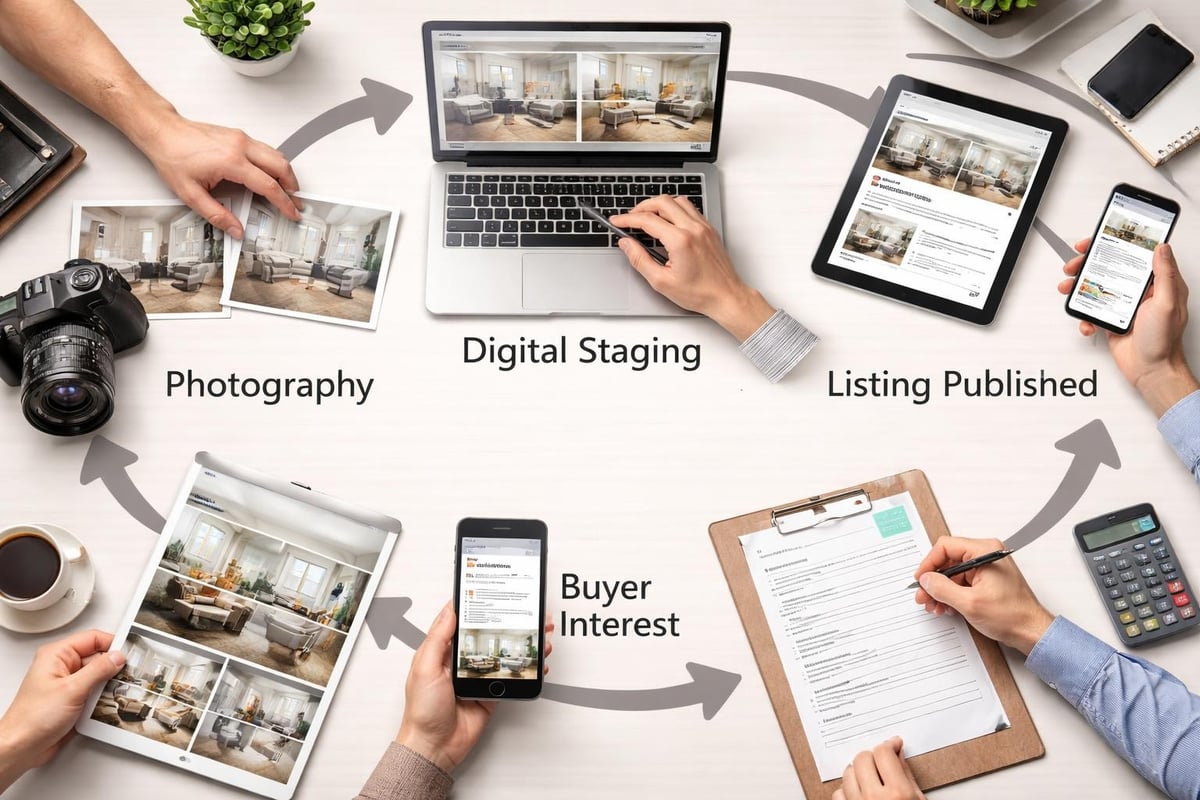
Quality input photography remains essential for optimal results. Well-lit, properly exposed images with minimal distortion produce superior staged outputs. Many platforms provide photography guidelines to ensure source materials meet technical requirements.
Selecting Appropriate Design Styles
Matching furniture aesthetics to property characteristics maximizes buyer appeal. Modern farmhouse staging suits suburban single-family homes, while sleek contemporary furniture complements urban condominiums. Understanding local market preferences informs style selection.
Consider these factors when choosing staging aesthetics:
- Property architecture and existing finishes
- Target buyer demographics and lifestyle preferences
- Neighborhood characteristics and comparable listings
- Current design trends in the local market
- Room functionality and primary use cases
Platforms offering diverse style libraries provide flexibility to experiment with different approaches. The AI virtual staging services available through advanced platforms include dozens of designer-curated collections spanning multiple price points and aesthetic preferences.
Research on inverse rendering methods for indoor panoramas continues advancing the technical capabilities underlying these platforms, improving realism and expanding creative possibilities for real estate professionals.
Advanced Applications and Specialized Use Cases
Beyond basic empty room staging, digital technologies enable sophisticated applications addressing specific marketing challenges. Decluttering occupied homes, refreshing outdated decor, and creating lifestyle-focused imagery all fall within the expanded capabilities of modern platforms.
Occupied properties present unique challenges when current furnishings appear dated or create visual clutter that distracts buyers. AI subtle staging from providers like Stager AI preserves existing furniture while applying digital enhancements that modernize appearances without complete replacement.
| Application Type | Use Case | Primary Benefit |
|---|---|---|
| Empty Room Staging | Vacant properties | Creates emotional connection |
| Digital Decluttering | Occupied homes | Removes distracting items |
| Style Refresh | Outdated furnishings | Modernizes appearance |
| Seasonal Variations | Climate marketing | Shows seasonal appeal |
| Renovation Preview | Pre-construction sales | Visualizes potential |
Luxury properties benefit particularly from specialized staging approaches. Barion Design’s luxury virtual staging demonstrates how high-end interior design expertise combines with digital technology to create aspirational imagery that resonates with affluent buyers.
Creating Cohesive Property Narratives
Strategic use of home staging digital extends beyond individual rooms to create comprehensive property stories. Staging all photographed spaces with coordinated design elements establishes visual consistency that enhances perceived quality and attention to detail.
Consider staging not just primary living areas but also:
- Home offices showcasing remote work functionality
- Workout spaces highlighting wellness amenities
- Guest bedrooms demonstrating accommodation capacity
- Outdoor living areas extending usable square footage
- Bonus rooms illustrating flexible use potential
This comprehensive approach helps buyers mentally move through the property, understanding how spaces connect and imagining daily life within the home. The narrative coherence distinguishes professionally marketed properties from basic listings.
Technical Considerations and Quality Standards
Achieving professional results with digital staging requires attention to technical details that impact final image quality. Resolution, color accuracy, perspective consistency, and lighting coherence all contribute to believable staged imagery.
Essential technical requirements include:
- Minimum 4K resolution source photography (6000+ pixels wide)
- Proper white balance and color correction
- Consistent perspective without extreme wide-angle distortion
- Adequate natural or artificial lighting throughout spaces
- Clean, well-maintained rooms free of damage or debris
Platform selection significantly influences output quality. Advanced AI systems produce superior results through better training data, more sophisticated algorithms, and higher-resolution rendering capabilities. Evaluating platform quality involves examining sample galleries and testing with actual property photographs.
The pricing structures for digital staging services vary considerably, reflecting differences in technology sophistication, processing speed, and support services. Professional-grade solutions justify premium pricing through superior photorealism and expanded feature sets.
Disclosure and Ethical Considerations
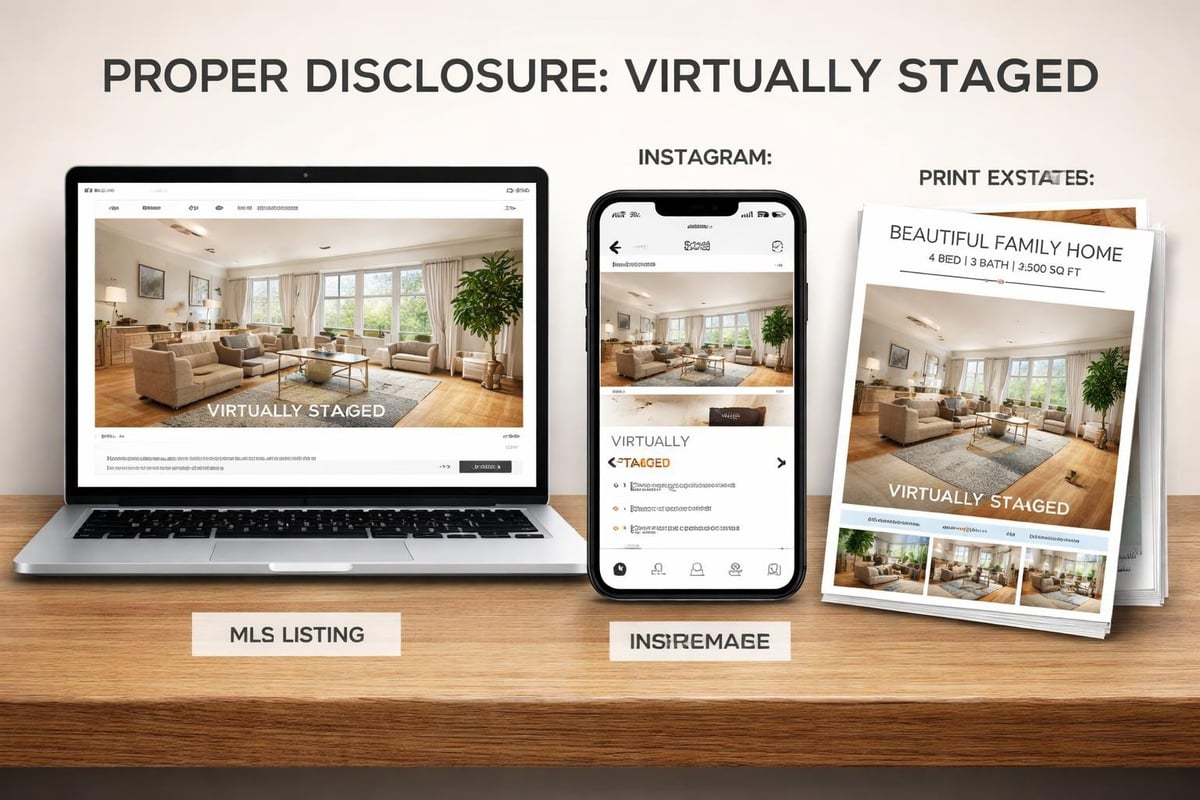
Transparency regarding digitally staged imagery maintains trust with prospective buyers and satisfies legal requirements. Multiple Listing Service (MLS) regulations and real estate advertising standards require clear disclosure when photographs contain virtual furnishings.
Standard disclosure practices include:
- Caption notation on each staged image stating "Virtually Staged" or similar language
- MLS remarks section disclosure about digital staging use
- Availability of unstaged photographs upon buyer request
- Agent verbal disclosure during property showings
- Watermarking or labeling integrated into staged images
These transparency measures protect against misrepresentation claims while allowing full use of staged imagery's marketing advantages. Buyers appreciate the visualization assistance when properly informed about the virtual nature of furnishings.
Measuring ROI and Performance Metrics
Quantifying the business impact of home staging digital investments requires tracking specific performance indicators across staged versus unstaged listings. Data-driven analysis demonstrates value and informs strategic decisions about staging implementation.
Key performance metrics include:
- Days on market comparison between staged and unstaged properties
- Number of showing requests generated within first week of listing
- Offer quantity and quality relative to asking price
- Final sale price as percentage of list price
- Online listing views and engagement rates
Real estate professionals tracking these metrics consistently report substantial improvements when incorporating digital staging. A 2025 National Association of Realtors study found staged listings receive 400% more online views than unstaged equivalents, translating directly to increased buyer traffic and faster sales.
Cost-benefit analysis typically shows returns of 500-1000% on digital staging investments. A $200 staging expense on a property that sells one week faster saves considerable carrying costs while enabling agents to focus on additional transactions.
Competitive Market Positioning
Markets with high listing inventory require differentiation strategies that capture buyer attention. Digital staging provides visual distinction that elevates properties above competing listings in the same price range and neighborhood.
Agents building reputations for exceptional marketing quality attract more seller clients and command premium commission rates. The relatively modest investment in professional staging establishes market positioning as a detail-oriented professional committed to maximizing property value.
Comprehensive digital staging across all listings creates brand consistency that reinforces professional image. Buyers and sellers begin associating specific agents with high-quality presentations, building referral networks and repeat business foundations.
Future Trends and Technology Advancement
The trajectory of home staging digital technology points toward even more sophisticated capabilities emerging throughout 2026 and beyond. Artificial intelligence continues advancing at rapid pace, with implications for staging quality, customization options, and integrated marketing tools.
Emerging developments include:
- Real-time customization allowing buyers to modify staging styles during virtual tours
- AI-powered style recommendations based on property characteristics and market data
- Automated multi-angle staging from single photograph inputs
- Integration with 3D virtual tours and augmented reality viewing experiences
- Predictive analytics identifying optimal staging approaches for specific buyer demographics
The convergence of staging technology with broader proptech innovations creates comprehensive marketing ecosystems. Properties marketed with coordinated digital staging, virtual tours, drone footage, and targeted social advertising achieve superior results compared to single-channel approaches.
Platforms continuously expand furniture libraries and design style options, responding to evolving interior design trends and regional market preferences. The FAQ resources provided by leading platforms help users navigate expanding feature sets and maximize technology value.
Accessibility and Democratization
Earlier generations of virtual staging required significant technical expertise and expensive software licenses. Contemporary platforms have democratized access, enabling individual agents and small brokerages to compete visually with large firms possessing substantial marketing budgets.
Cloud-based delivery models eliminate hardware requirements, allowing professionals to access sophisticated staging capabilities from any device with internet connectivity. Mobile applications extend this accessibility further, enabling on-site staging decisions and immediate implementation.
This democratization elevates overall market standards, as buyers increasingly expect professionally staged imagery across all price points. Properties listed without quality visual presentation face growing disadvantages in capturing buyer attention and generating competitive offers.
Integration with Comprehensive Marketing Strategies
Home staging digital functions most effectively as one component within holistic property marketing strategies. Coordination with professional photography, compelling property descriptions, strategic pricing, and multi-channel promotion creates synergistic effects exceeding individual tactic impacts.
Social media marketing particularly benefits from visually striking staged imagery. Posts featuring beautifully furnished rooms generate significantly higher engagement rates than empty space photographs. Platforms like Instagram and Pinterest thrive on aspirational visual content that staged properties provide.
Integrated marketing approach elements:
- Professional photography with consistent lighting and composition
- Digital staging across all primary living spaces
- Drone aerial photography establishing property context
- 3D virtual tours enabling remote property exploration
- Targeted social media advertising to qualified buyer demographics
- Email marketing campaigns to agent networks and buyer databases
The Tourdrop virtual staging services demonstrate how staging integrates with broader visual marketing offerings, creating comprehensive packages that address multiple presentation needs simultaneously.
Video marketing represents another powerful channel enhanced by digital staging. Walkthrough videos transitioning from empty spaces to staged rooms illustrate transformation potential while maintaining viewer engagement throughout property tours.
Home staging digital has fundamentally transformed real estate marketing, delivering professional-quality results at unprecedented speed and affordability while significantly improving property performance metrics. The technology continues advancing rapidly, offering expanding capabilities that help real estate professionals differentiate their listings and accelerate sales cycles in increasingly competitive markets. Try Furnishly provides AI-powered virtual staging that transforms empty spaces into photorealistic, designer-furnished rooms in seconds, enabling real estate professionals to enhance property listings with ultra-fast rendering and curated furniture styles that increase property value and reduce time on market.
Leave a Comment