

Real estate marketing is changing at lightning speed, and digital staging real estate solutions are now the secret weapon for standing out. With buyers demanding high-impact visuals, the industry is shifting rapidly toward immersive digital experiences.
Digital staging real estate transforms property listings, making them more engaging and helping homes sell faster in 2026. This approach not only captivates potential buyers but also gives agents a clear advantage in today’s crowded market.
This step-by-step guide will walk real estate professionals through the essentials of digital staging real estate, its benefits, how to implement it, the top tools available, and the trends shaping the future.
Get ready to discover how digital staging real estate can take your listings to the next level.
Understanding Digital Staging in Real Estate
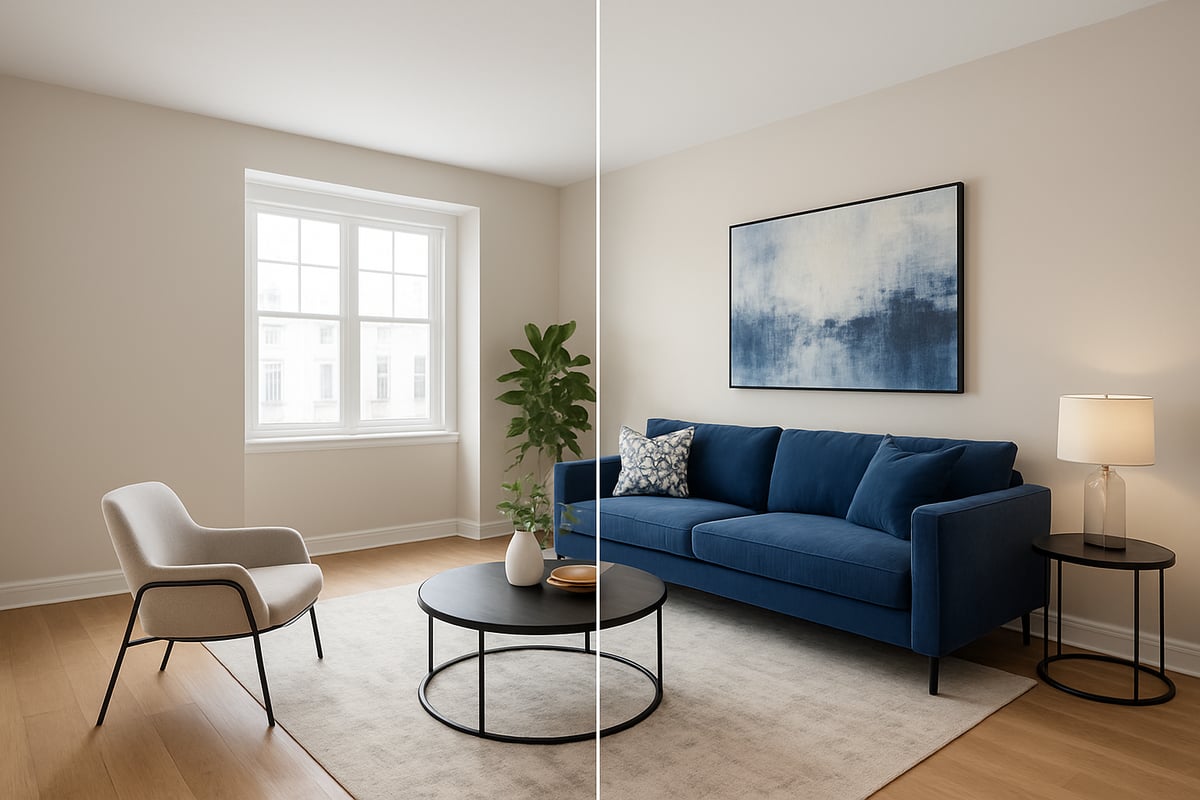
Digital staging real estate has rapidly become a cornerstone of modern property marketing. Unlike traditional staging, which requires physical furniture and decor, digital staging uses advanced software to transform empty or outdated rooms into visually appealing spaces. This digital approach offers agents and sellers a flexible, cost-effective solution to make listings stand out in a crowded market.
What Is Digital Staging Real Estate?
Digital staging real estate began gaining momentum as the industry shifted toward online listings and virtual tours. In the past, traditional staging involved renting furniture, hiring movers, and spending days preparing a property for showings. Now, with digital staging real estate, professionals can upload high-resolution photos and have them virtually furnished in a matter of hours. This innovation has democratized staging, making it accessible for properties of all sizes and budgets.
The workflow of digital staging real estate typically starts with capturing professional images of the property. These photos are then uploaded to a digital staging platform, where design experts or AI-powered tools add furniture, artwork, and decor tailored to the target market. The result is a set of photorealistic images that highlight the property's full potential.
Types of Digital Staging
There are several main types of digital staging real estate solutions:
- Virtual furniture placement: Adding beds, sofas, tables, and accessories to empty rooms.
- Digital decluttering: Removing unwanted items or outdated décor from photos.
- Style upgrades: Transforming design elements, such as wall color, flooring, or lighting, to match current trends.
These options allow agents to customize each listing for maximum impact, appealing to a broad range of buyers.
The Impact: Statistics and Buyer Psychology
Digital staging real estate is not just a visual upgrade, it delivers real results. According to the NAR Report on Home Staging Impact, over 85% of staged homes sell for 6-25% more than unstaged properties. Staged images attract more clicks and longer viewing times online, driving increased engagement.
Buyers form their first impressions within seconds. Digitally staged photos help them envision living in the space, making it easier to connect emotionally. This psychological advantage often leads to faster offers and higher sale prices.
Digital Staging Real Estate: Cost and Time Comparison
One of the standout benefits of digital staging real estate is its affordability and speed. Traditional staging can cost $2,000 or more per listing and take several days to arrange. In contrast, digital staging real estate typically ranges from $40 to $150 per listing, with turnaround times as short as 24 hours. This efficiency enables agents to market properties quickly and at scale.
| Staging Method | Average Cost | Turnaround Time |
|---|---|---|
| Traditional Staging | $2,000+ | Several days |
| Digital Staging | $40-$150 | 24-48 hours |
Before and After: Real-World Success
Consider a recent example: a vacant condo sat on the market for weeks without offers. After applying digital staging real estate, the refreshed photos generated renewed interest. The property sold above asking price within days, illustrating the direct impact of digital staging real estate on sales outcomes.
Digital staging real estate empowers agents and sellers to present properties in their best light, driving engagement and delivering measurable results in today's competitive landscape.
The Business Case: Why Digital Staging Transforms Listings in 2026
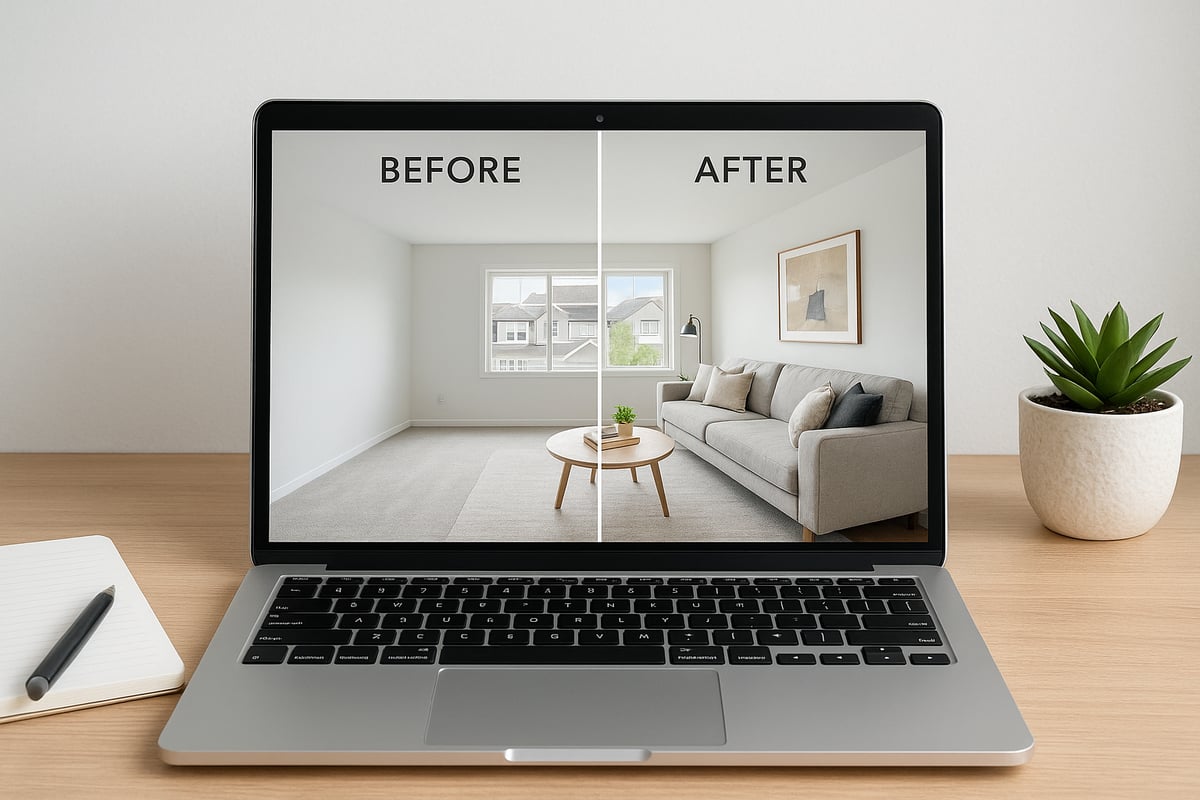
The real estate market in 2026 is more competitive than ever, and digital staging real estate is proving to be a true game changer. As buyers search online for their next home, first impressions are made in seconds. Listings that incorporate digital staging real estate capture attention and drive higher engagement from the outset.
Performance Metrics: Digital Staging Real Estate in Action
Let’s look at how digital staging real estate impacts key performance metrics:
| Metric | Unstaged Listings | Digitally Staged Listings |
|---|---|---|
| Online Views | Baseline | 2x higher |
| Days on Market | 30-45 days | 8-12 days |
| Sale Price Increase | – | 6-25% higher |
| Offer Quality | Standard | Multiple, above asking |
Industry studies from 2024 and 2025 show that listings using digital staging real estate receive twice as many online views and sell up to 73% faster than their unstaged counterparts. This performance boost is crucial for agents and sellers aiming to stand out in a crowded digital space.
Competitive Advantage and Buyer Demographics
Digital staging real estate offers a significant edge by presenting properties in their best possible light. In a marketplace flooded with listings, visually compelling, staged images help properties rise to the top of search results and attract more qualified leads.
This strategy appeals to a broad spectrum of buyers. Millennials and Gen Z, now the largest homebuying segments, are especially drawn to immersive, high-quality visuals. These groups expect listings to be both aspirational and realistic, and digital staging real estate delivers on both fronts.
Mobile, Virtual Tours, and Seller Benefits
With the majority of buyers searching on mobile devices, the role of digital staging real estate becomes even more critical. Staged photos enhance the experience of virtual tours and walkthroughs, allowing buyers to envision their lives in the space before ever stepping inside.
For sellers, digital staging real estate means higher perceived property value, fewer days on the market, and stronger offers. The visual appeal can translate directly into more competitive bidding and a smoother sales process.
Case Study: Fast Sales and Multiple Offers
Consider the example of a suburban home that lingered on the market for over a month. After implementing digital staging real estate, the listing was transformed with modern furnishings and neutral palettes. Within days, the property received multiple offers—several above asking price. This rapid turnaround illustrates how digital staging real estate accelerates sales velocity and increases seller satisfaction.
ROI for Agents and Sellers
Investing in digital staging real estate is not just about aesthetics; it is a strategic business decision. The cost is a fraction of traditional staging, yet the return can be substantial. Agents report that digitally staged listings consistently outperform others in views, offers, and final sale prices. For a comprehensive look at how leading platforms can maximize these benefits, visit this Digital staging platform overview.
Ultimately, digital staging real estate enables agents and sellers to achieve faster sales, higher profits, and a stronger market presence. In 2026, leveraging this technology is essential for anyone serious about real estate success.
Step-by-Step Guide: How to Digitally Stage Real Estate Listings
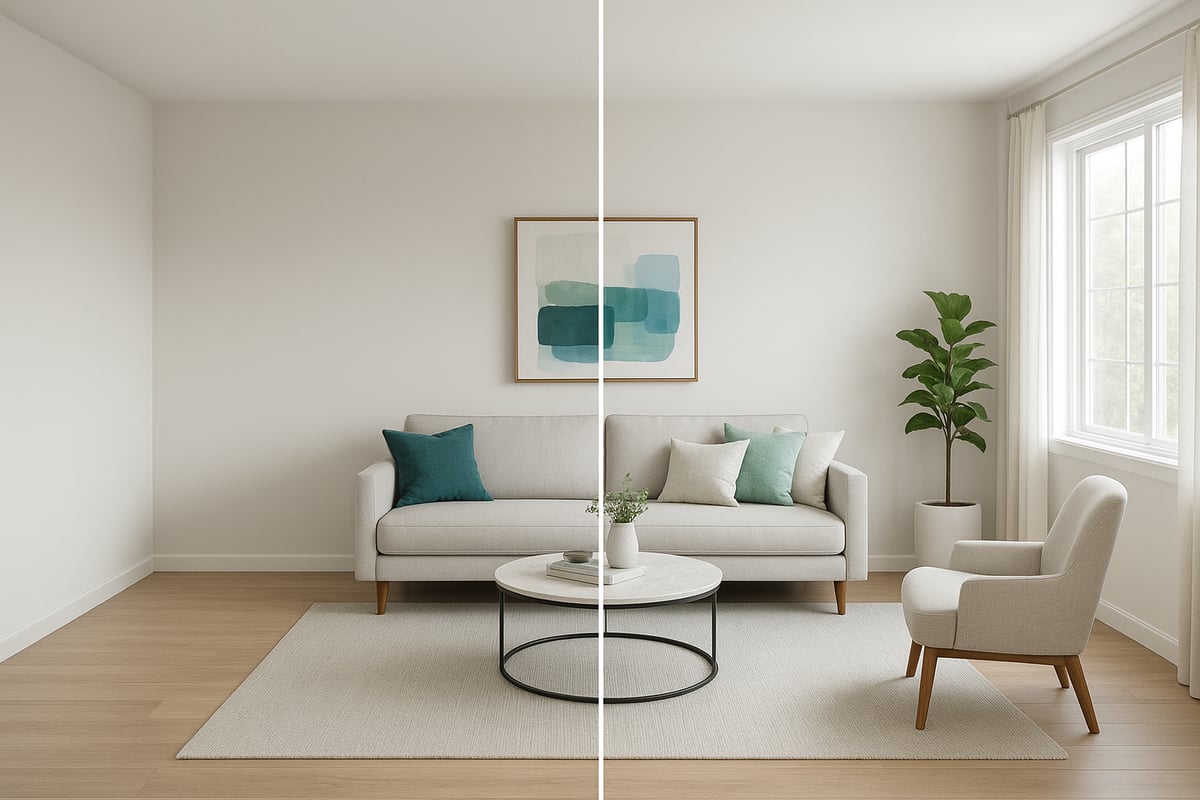
Navigating digital staging real estate is essential for agents aiming to maximize listing impact in 2026. This guide breaks down each step, ensuring your properties stand out in a crowded market and attract serious buyers.
Step 1: Assess the Property and Gather High-Quality Photos
The foundation of successful digital staging real estate lies in outstanding photography. Begin with a thorough walkthrough of the property, noting its best features and areas needing enhancement.
Professional-grade photos are crucial. Use a DSLR or mirrorless camera for crisp images. Ensure ample natural lighting and shoot at wide angles to capture full rooms. Avoid common mistakes such as blurry photos, cluttered backgrounds, or poor composition, as these can limit the impact of digital staging real estate.
Tips for optimal results:
- Shoot during daylight for bright, inviting spaces.
- Capture images from corner angles to show room depth.
- Remove personal items and clutter before photographing.
High-quality images set the stage for effective digital staging real estate, making the next steps easier and more impactful.
Step 2: Choose the Right Digital Staging Platform or Service
Selecting a suitable platform is pivotal in digital staging real estate. Evaluate options based on technology, design quality, turnaround time, cost, and customer support.
Key criteria include:
- AI-powered tools for faster, realistic results.
- A wide design library to match diverse property types.
- Fast rendering (preferably under 24 hours).
- Transparent pricing and responsive support.
Compare leading platforms using a table like the one below:
| Platform | AI Capabilities | Design Quality | Turnaround | Price | Support |
|---|---|---|---|---|---|
| Try Furnishly | Yes | Photorealistic | 15 seconds | $40-150/image | Excellent |
| Platform B | Basic | Good | 24 hours | $60-200/image | Good |
Ensure your chosen service integrates seamlessly with listing portals, so digital staging real estate visuals are displayed optimally across all channels.
Step 3: Select Appropriate Design Styles and Target Buyer Personas
Matching design themes to your target market elevates digital staging real estate results. Consider the property’s architecture, location, and likely buyer demographic.
Popular styles in 2026 include modern, Scandinavian, minimalist, and industrial. For instance, a contemporary look suits urban condos, while traditional or farmhouse styles appeal to suburban families.
Tips for aligning design with buyer personas:
- Research local market trends and preferences.
- Use mood boards to visualize style options.
- Consult with your digital staging real estate provider for recommendations.
Careful style selection ensures the staged images resonate, increasing engagement and buyer interest.
Step 4: Customize and Review Staged Images
Once you receive the staged images, review them carefully to confirm they reflect the property’s best qualities. Digital staging real estate allows for extensive customization, from furniture placement to color palettes and décor.
Editing options include:
- Adjusting furniture layout for optimal flow.
- Tweaking wall colors or flooring to match trends.
- Adding or removing decor for a cohesive look.
To see real-world examples and inspiration, explore the Real estate staging photo gallery, which showcases before-and-after transformations that highlight the power of digital staging real estate.
Request revisions if needed, and establish a feedback loop with your provider to ensure the final images are both attractive and realistic.
Step 5: Integrate Staged Images into Listings and Marketing Materials
Incorporating staged visuals into your listings is critical for effective digital staging real estate. Upload high-resolution images to the MLS, Zillow, Realtor.com, and all relevant platforms.
Best practices include:
- Place staged images first in photo galleries to capture buyer attention.
- Use descriptive captions to highlight key features.
- Integrate visuals into virtual tours and video walkthroughs for immersive experiences.
Leverage social media and email campaigns to share digital staging real estate images, maximizing visibility and engagement.
Step 6: Monitor Performance and Optimize Future Staging Efforts
Tracking results is the final step in optimizing digital staging real estate. Monitor key metrics such as online views, inquiries, offers, and days on market.
Effective strategies include:
- A/B testing staged versus non-staged images to measure impact.
- Gathering feedback from buyers and sellers to identify preferences.
- Analyzing which design styles and platforms yield the best results.
Use this data to refine your digital staging real estate approach, ensuring continuous improvement and higher ROI on future listings.
Top Digital Staging Tools and Platforms for 2026
The digital staging real estate landscape in 2026 continues to evolve at a rapid pace. With advancements in AI, cloud computing, and mobile technology, agents now have access to a diverse range of digital staging platforms designed to streamline the property marketing process.
These tools are shaping how agents present listings, engage buyers, and optimize sales strategies. As competition intensifies, selecting the right platform is critical to achieving standout results.

Criteria for Selecting the Best Digital Staging Tools
When evaluating digital staging real estate platforms, agents should consider several core factors:
- AI Capabilities: Does the software use advanced AI for fast, photorealistic rendering?
- Design Library: Are there diverse, up-to-date furniture and decor options?
- User Experience: Is the interface intuitive for agents and clients?
- Rendering Speed: How quickly can a listing be staged and delivered?
- Cost Structure: Are pricing models transparent and scalable?
- Customer Support: Is technical help readily available?
- Integration: Can the tool connect with MLS, CRMs, and major listing portals?
Below is a summary table comparing key features of top platforms:
| Platform | AI Rendering | Design Library | Mobile App | CRM Integration | Avg. Turnaround | User Rating |
|---|---|---|---|---|---|---|
| BoxBrownie | Yes | Extensive | Yes | Yes | 24 hours | 4.8/5 |
| Virtual Staging Solutions | Yes | Modern | No | Limited | 24-48 hours | 4.7/5 |
| roOomy | Yes | Premium | Yes | Yes | 24 hours | 4.6/5 |
| PadStyler | Yes | Varied | No | Yes | 24 hours | 4.7/5 |
| VHT Studios | Yes | Curated | No | Yes | 1-2 days | 4.5/5 |
Platforms with robust AI and mobile-friendly experiences are outperforming traditional solutions, especially for agents who manage multiple listings on the go.
Leading Platforms: Features, Performance, and Innovation
The best digital staging real estate tools in 2026 set themselves apart with photorealistic results and workflow efficiency. BoxBrownie, for example, offers rapid 24-hour turnaround, a wide range of design styles, and seamless MLS integration. Virtual Staging Solutions is favored for its affordability and responsive customer service.
roOomy stands out with immersive 3D staging and augmented reality previews, letting buyers virtually walk through styled spaces. PadStyler and VHT Studios both provide curated furniture themes and support for bulk orders, making them popular with large brokerages.
Many of these platforms are now leveraging AI to automate furniture placement and decluttering, reducing manual revisions. According to the AI Usage in Real Estate Survey, over 70 percent of agents adopted at least one AI-powered staging tool by 2026, citing improved listing engagement and faster sales cycles.
Agent Success Stories and Industry Recognition
Digital staging real estate platforms are earning high marks from users and industry experts. Agents report up to a 73 percent reduction in days on market for staged listings, with multiple offers received within days of going live.
Consider an agent who used BoxBrownie to virtually stage a vacant luxury condo. The photorealistic images attracted twice as many online views and led to an above-asking sale within a week. User ratings consistently exceed 4.7 out of 5, and several platforms have won industry awards for innovation and customer satisfaction from 2024 to 2026.
To stay ahead of the curve, real estate professionals can follow ongoing digital staging blog insights for reviews, updates, and best practices as new tools emerge.
Future Trends: The Next Evolution of Digital Staging in Real Estate
As we look toward the future, digital staging real estate is poised for transformative advancements. The next evolution will be defined by smarter technology, sustainability, and a global reach that reshapes how properties are marketed and experienced.
The Rise of AI, AR/VR, and Interactive Digital Staging
Artificial intelligence is rapidly enhancing the capabilities of digital staging real estate. Advanced AI now automates furniture placement, optimizes lighting, and tailors design to individual buyer preferences. In 2026, these tools will become even more intuitive, making every listing feel personalized.
Augmented reality and virtual reality are taking property tours to a new level. Buyers can wear a headset or use a smartphone to walk through a digitally staged space, interacting with furniture and decor in real time. This immersive experience allows users to switch between design styles or visualize renovations instantly. According to AI Virtual Staging Revolution in 2025, these innovations are already revolutionizing digital staging real estate, driving higher engagement and faster sales.
Interactive staging is another major trend. Buyers can now customize virtual furnishings, wall colors, or layouts during their online tour. This flexibility creates a sense of ownership and helps buyers see themselves in the home before setting foot inside.
Sustainability, Smart Homes, and Ethical Digital Spaces
Sustainability is becoming a priority in digital staging real estate. Virtual staging eliminates the need for physical furniture, reducing waste and the carbon footprint associated with traditional staging. Eco-friendly digital assets, such as virtual plants or recycled-material furniture, are becoming increasingly popular in listings.
The integration of smart home technology is also shaping digital staging real estate. Virtual tours now highlight smart thermostats, security systems, and automated lighting. This feature appeals to tech-savvy buyers and demonstrates a property's modern value.
Ethical considerations are gaining traction as digital staging becomes more realistic. Accurate representation is essential to avoid misleading buyers. Regulations are emerging to ensure digitally staged images reflect the true condition of the property, protecting both buyers and agents. Transparency in digital staging real estate fosters trust and sets industry standards for the future.
The Global Future of Digital Staging Real Estate
Digital staging real estate is expanding well beyond local markets. Agents and sellers now leverage virtual staging to reach international buyers, especially in the luxury sector. Early adoption of AI and VR technologies has enabled seamless global marketing, with buyers touring and customizing properties from anywhere in the world.
3D modeling and metaverse property tours are gaining momentum. These tools allow for fully interactive home walkthroughs, where buyers can experience a property as if they are physically present. This trend is expected to accelerate, as detailed in the Virtual Staging Market Forecast 2035, which predicts strong growth and adoption of digital staging real estate worldwide.
As digital staging real estate continues to evolve, it will redefine property marketing, elevate buyer experiences, and open new opportunities for real estate professionals across the globe.
Leave a Comment