

The real estate industry has undergone a dramatic transformation in recent years, with technology reshaping how properties are marketed and sold. Among the most impactful innovations is ai virtual staging, a solution that leverages artificial intelligence to digitally furnish empty properties with photorealistic furniture and décor. This technology has become essential for real estate professionals seeking to showcase a property's full potential without the logistical challenges and expenses of traditional physical staging. As we navigate 2026, AI-powered solutions have matured significantly, offering unprecedented speed, quality, and customization options that make professional staging accessible to agents and brokers of all sizes.
What Is AI Virtual Staging and How Does It Work
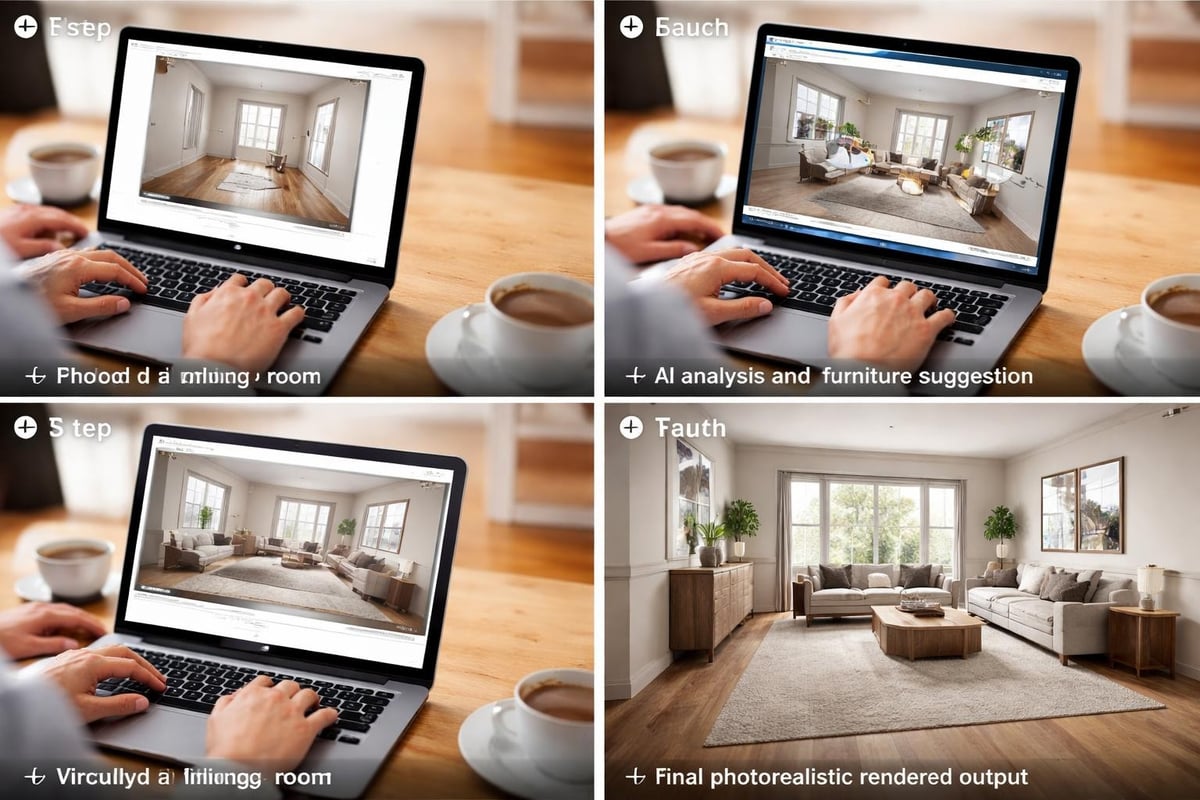
AI virtual staging uses advanced machine learning algorithms and computer vision to analyze empty room photographs and digitally insert furniture, artwork, and decorative elements. The process begins when you upload a photo of an unfurnished space to a platform that processes the image through neural networks trained on millions of interior design examples.
The technology identifies key architectural features like walls, windows, floors, and ceiling heights. It then calculates proper perspective, lighting conditions, and spatial dimensions to ensure furniture placement appears natural and proportionally accurate. Modern ai virtual staging platforms can render these transformations in seconds rather than the hours or days required by manual graphic design.
Key technical components include:
- Deep learning models for object recognition and spatial understanding
- Ray tracing algorithms for realistic shadow and light reflection
- Style transfer networks that apply specific design aesthetics
- Automated perspective correction for accurate furniture scaling
The sophistication of these systems has reached a point where distinguishing virtually staged photos from professionally photographed staged homes has become increasingly difficult. This realism is critical for maintaining buyer trust while showcasing a property's possibilities.
Strategic Benefits for Real Estate Marketing
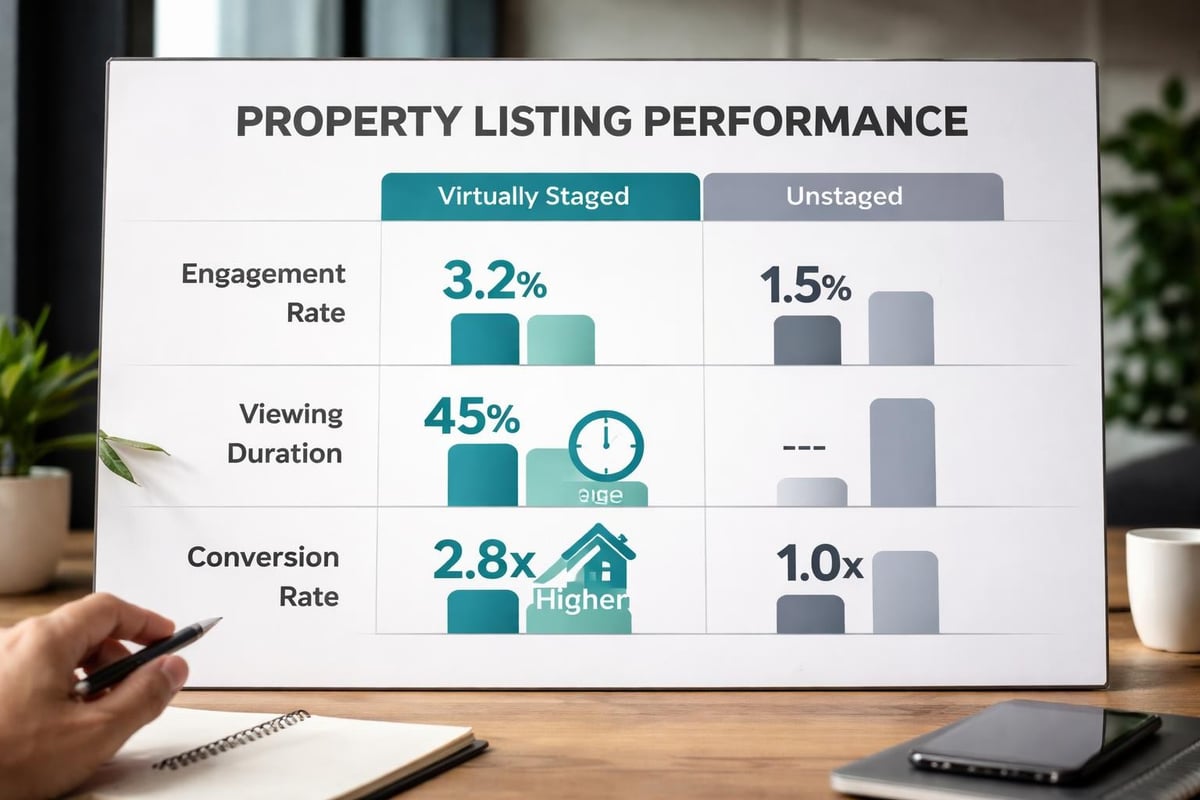
Virtual staging powered by artificial intelligence delivers measurable advantages that directly impact sales performance and marketing efficiency. Properties presented with professionally staged photos receive significantly more engagement across listing platforms, generating higher inquiry volumes and shorter market times.
Cost Efficiency and Scalability
Traditional physical staging typically costs between $3,000 and $10,000 per property, with monthly rental fees adding to expenses for homes that remain on the market longer. AI virtual staging reduces these costs by 90-95%, with most services charging between $25 and $75 per room.
This economic advantage becomes particularly significant when marketing multiple properties simultaneously or staging various rooms to appeal to different buyer demographics. According to Zillow’s comprehensive guide on virtual staging, staged homes sell 73% faster than non-staged properties while commanding higher sale prices.
| Staging Method | Average Cost Per Room | Turnaround Time | Flexibility |
|---|---|---|---|
| Physical Staging | $500-$1,200 | 3-7 days | Limited style changes |
| Traditional CGI | $150-$300 | 24-48 hours | Moderate revisions |
| AI Virtual Staging | $25-$75 | Minutes to hours | Unlimited variations |
Time-to-Market Advantages
Speed represents another critical differentiator. Real estate markets move quickly, and delays in listing preparation can mean missed opportunities with motivated buyers. AI virtual staging eliminates scheduling conflicts with stagers, delivery logistics, and installation time.
Agents can photograph an empty property and have professionally staged images ready for MLS listings within hours. This rapid turnaround proves especially valuable when competing in hot markets where early listing visibility correlates directly with sale success.
Design Versatility and Target Market Customization
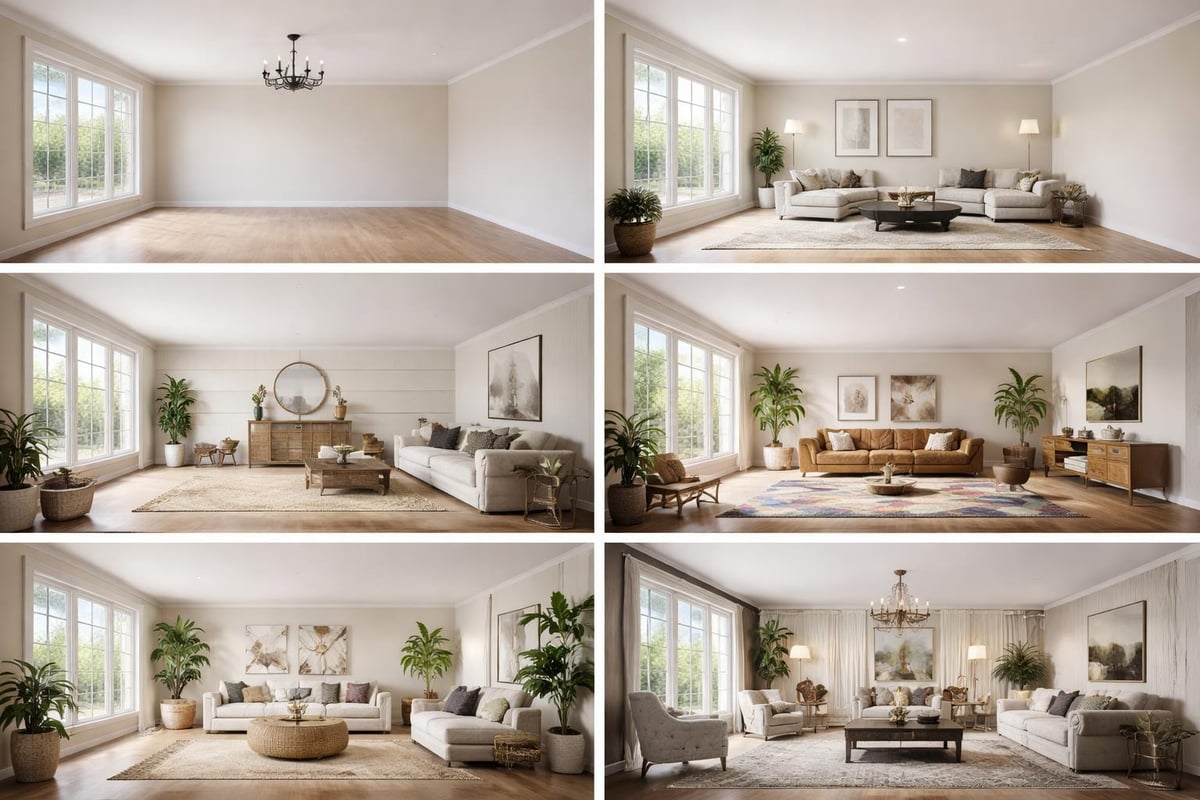
One of the most powerful aspects of ai virtual staging lies in its ability to generate multiple design variations from a single photograph. This flexibility allows real estate professionals to test different aesthetic approaches and target specific buyer demographics with tailored presentations.
Style Options and Design Trends
Modern AI platforms offer extensive furniture libraries spanning numerous design categories. Whether targeting luxury buyers interested in contemporary minimalism, families seeking traditional comfort, or young professionals drawn to modern industrial aesthetics, virtual staging can accommodate these preferences.
Popular staging styles for 2026 include:
- Scandinavian minimalism with clean lines and neutral palettes
- Warm modern combining contemporary furniture with natural materials
- Coastal casual featuring light colors and organic textures
- Urban industrial showcasing exposed materials and bold accents
- Transitional designs blending traditional and contemporary elements
The ability to stage the same room in multiple styles without additional photography creates opportunities for A/B testing in digital marketing campaigns. Agents can analyze which presentations generate the most engagement and adjust their approach based on data rather than assumptions.
Room-Specific Optimization
Different rooms require different staging strategies. AI virtual staging excels at optimizing each space according to its function and buyer expectations. Living rooms might emphasize conversational furniture arrangements, while home offices showcase productivity-focused layouts increasingly important to remote workers.
As noted by Houzz’s discussion on virtual staging essentials, effective staging highlights a room's purpose and helps buyers visualize themselves using the space. AI technology makes this room-by-room customization economically feasible even for modest listings.
Implementation Best Practices for Maximum Impact
Successfully integrating ai virtual staging into your real estate marketing strategy requires more than simply uploading photos and selecting furniture. Professional results demand attention to photography quality, ethical disclosure practices, and strategic room selection.
Photography Fundamentals
The quality of your source photographs directly impacts virtual staging results. AI algorithms work best with well-lit, properly exposed images captured from appropriate angles. Shoot during daylight hours when possible, using wide-angle lenses to capture complete room perspectives.
Essential photography guidelines:
- Use natural light supplemented with additional lighting to eliminate shadows
- Shoot from doorway height at approximately 5 feet for natural perspective
- Ensure vertical lines remain straight to avoid distortion
- Capture the widest possible view of each room
- Clean and prepare spaces before photographing to minimize AI corrections
Higher resolution images provide AI systems with more detail for accurate analysis, though most platforms optimize file sizes automatically. For best results through Try Furnishly’s staging service, upload images with at least 1920×1080 pixel dimensions.
Disclosure and Transparency Requirements
Ethical marketing practices and legal compliance require clear disclosure when using virtual staging. The National Association of Realtors emphasizes that virtually staged photos must be clearly identified to prevent buyer misrepresentation.
Include disclaimers in listing descriptions and photo captions indicating which images feature virtual furnishings. This transparency maintains trust while still allowing buyers to appreciate a property's spatial potential. Most MLS systems provide specific fields for noting virtual enhancements.
Measuring ROI and Performance Metrics
Quantifying the return on investment from ai virtual staging helps justify the expense and refine your marketing approach. Track multiple metrics to understand how staged listings perform compared to unstaged alternatives.
Key Performance Indicators
Monitor these data points to evaluate staging effectiveness:
| Metric | Unstaged Average | Staged Average | Improvement |
|---|---|---|---|
| Days on Market | 47 days | 28 days | 40% reduction |
| Online Views | 312 views | 892 views | 186% increase |
| Showing Requests | 8 requests | 23 requests | 188% increase |
| Sale Price vs. Listing | 96.3% | 99.1% | 2.8% premium |
These benchmarks vary by market, property type, and price point, but consistent patterns emerge showing staged properties outperforming unstaged alternatives. Compare your individual listings against your market averages to identify opportunities for optimization.
Testing and Iteration
Digital marketing allows for continuous improvement through systematic testing. Create variants of your listings featuring different staging styles and monitor which versions generate the most engagement. Email campaign analytics, social media metrics, and website heat maps reveal buyer preferences.
Consider staging focal rooms first, then expanding based on results. Living rooms, primary bedrooms, and kitchens typically deliver the highest return, as these spaces most strongly influence buyer decisions. Review pricing options to determine the most cost-effective approach for your listing portfolio.
Advanced Applications and Future Developments
AI virtual staging technology continues evolving rapidly, with new capabilities emerging that extend beyond basic furniture placement. Understanding these developments helps real estate professionals stay competitive and leverage cutting-edge tools.
Interactive and Customizable Experiences
Modern platforms increasingly offer buyer-facing tools that allow prospective purchasers to experiment with different furniture arrangements and design styles themselves. This interactive approach increases engagement time and emotional connection to properties.
Some systems integrate with augmented reality applications, enabling buyers to visualize staged rooms through smartphone screens during in-person showings. This technology bridges virtual and physical experiences, helping buyers confirm that digital representations accurately reflect actual spaces.
Integration with Marketing Ecosystems
AI virtual staging now connects seamlessly with broader real estate marketing workflows. Platforms offer API integrations with MLS systems, social media scheduling tools, and email marketing software, streamlining the process from staging to distribution.
Workflow integration points include:
- Direct MLS uploads with automated disclosure labeling
- Social media optimization with platform-specific aspect ratios
- Print marketing exports at high resolution for brochures
- Website integration with before/after comparison sliders
- Email campaign templates featuring staged property highlights
By exploring Try Furnishly’s gallery, agents can see examples of how professionally staged images integrate across multiple marketing channels, maintaining consistent quality and messaging.
Room Type Strategies and Specialized Spaces
Different property types and room functions benefit from tailored ai virtual staging approaches. Understanding how to optimize staging for specific spaces maximizes marketing impact and buyer appeal.
Residential Living Spaces
Living rooms serve as the emotional heart of most homes and deserve special attention in staging strategy. AI virtual staging excels at creating inviting conversation areas that demonstrate a room's entertaining potential while maintaining comfortable traffic flow.
For open-concept layouts, virtual staging can define distinct zones for living, dining, and kitchen areas without physical barriers. This approach helps buyers understand how to utilize multifunctional spaces that might otherwise appear overwhelming or confusing when empty.
Commercial and Multifamily Applications
AI virtual staging extends beyond single-family residential properties. Commercial spaces, apartment complexes, and mixed-use developments benefit from visualizations that demonstrate versatility and professional appeal.
Office spaces can be staged to show modern collaborative work environments, individual offices, or conference facilities. Retail locations benefit from staging that suggests successful business operations and customer flow patterns. Multifamily common areas showcase amenity value through staged fitness centers, lounges, and coworking spaces.
Outdoor and Specialty Areas
Advanced ai virtual staging now addresses outdoor spaces, patios, balconies, and rooftop terraces. These areas significantly influence buyer decisions, particularly in urban markets where outdoor living space commands premium values.
Staging outdoor areas requires attention to weather-appropriate furniture, proper scale for open spaces, and integration with surrounding landscapes or cityscape views. The technology can add patio furniture, outdoor kitchens, fire pits, and landscaping elements that help buyers envision al fresco entertaining possibilities.
Selecting the Right AI Virtual Staging Platform
With numerous ai virtual staging services available in 2026, choosing the right platform requires evaluating several critical factors. The ideal solution balances quality, speed, cost, and user experience while offering features aligned with your specific business needs.
Quality and Realism Assessment
Examine sample galleries carefully, paying attention to lighting consistency, shadow accuracy, and furniture proportions. High-quality platforms produce images where staged elements appear naturally integrated rather than obviously superimposed.
Test platforms with your own photos to evaluate results before committing to subscriptions. Look for realistic reflections in windows and mirrors, appropriate floor shadows, and furniture that respects room architecture. The FAQ section often addresses quality standards and revision policies.
Turnaround Time and Volume Capacity
Consider your typical workload and timeline requirements. Some agents need occasional staging for individual listings, while teams managing dozens of properties simultaneously require platforms capable of handling high volumes without quality degradation.
Evaluate whether platforms offer priority processing for urgent listings and how they handle rush requests. Understanding capacity limits prevents disappointment when marketing deadlines approach.
Style Library and Customization Options
Review available furniture collections and design styles to ensure they align with your market demographics. Platforms specializing in luxury properties should offer high-end contemporary and traditional furnishings, while those targeting first-time buyers need budget-conscious yet attractive options.
The ability to request custom furniture additions or specific design elements distinguishes professional-grade platforms from consumer-oriented alternatives. Some services allow uploading reference images to guide AI styling, providing additional creative control.
AI virtual staging has fundamentally transformed real estate marketing by making professional property presentation accessible, affordable, and infinitely customizable. The technology delivers measurable improvements in engagement metrics, sale speed, and final sale prices while reducing costs and logistical complexity compared to traditional staging methods. Whether you're marketing luxury estates, starter homes, or commercial properties, leveraging AI-powered visualization tools has become essential for competitive success in 2026's digital-first real estate landscape. Try Furnishly provides real estate professionals with the advanced AI technology, extensive design libraries, and rapid rendering capabilities needed to transform empty listings into compelling visual stories that attract buyers and accelerate sales.
Leave a Comment