
So, what exactly is a real estate photo editing service? Think of it as the secret weapon top agents use to turn standard property photos into stunning, scroll-stopping images that get buyers in the door. It’s all about taking a good photo and making it great.
Actionable Insight: Instead of just uploading photos as-is, you send them to a service. For a few dollars per image, they correct colors, brighten dark corners, and can even virtually furnish an empty room to spark a buyer's imagination.
Why Flawless Photos Are Your Strongest Sales Tool
Picture this: a potential buyer is swiping through hundreds of listings on their phone. What makes them slam on the brakes and actually click on your property? It's rarely the clever description or the long list of features. It’s the lead photo.
That single image is your listing's digital front door. Its quality is the deciding factor in whether a buyer feels compelled to step inside for a closer look or just keeps on scrolling. This is what we call "digital curb appeal," and in today's market, it's everything.
A decent, unedited photo might show the basic layout of a room. But a professionally edited image does something far more powerful—it creates a feeling. It helps a buyer stop seeing a house and start seeing a home, a place where they can imagine their own life unfolding.
The Impact of Professional Editing
A professional real estate photo editing service isn't a luxury anymore; it’s a non-negotiable part of any serious marketing plan. You're not just paying to "clean up" a picture. You're making a direct investment in shaping a buyer's perception from the very first glance.
Practical Example: An editor can take a photo of a north-facing living room shot on a cloudy day and transform it into a space that feels bright, airy, and full of potential, even if the weather wasn't cooperating.
Want to see what I mean? We’ve put together a gallery of some truly incredible photo before and after editing examples that show this transformation in action.
This isn't just theory, either. The results are measurable and dramatic. Listings with high-quality, professionally touched-up images get up to 61% more online views. Even more impressive, they can command a 47% higher price per square foot, according to key real estate photography statistics from PhotoUp.net. Those numbers prove that powerful visuals don't just attract eyeballs; they directly boost a property's perceived value.
The data below breaks it down even further, showing how professional editing drives the metrics that matter most.
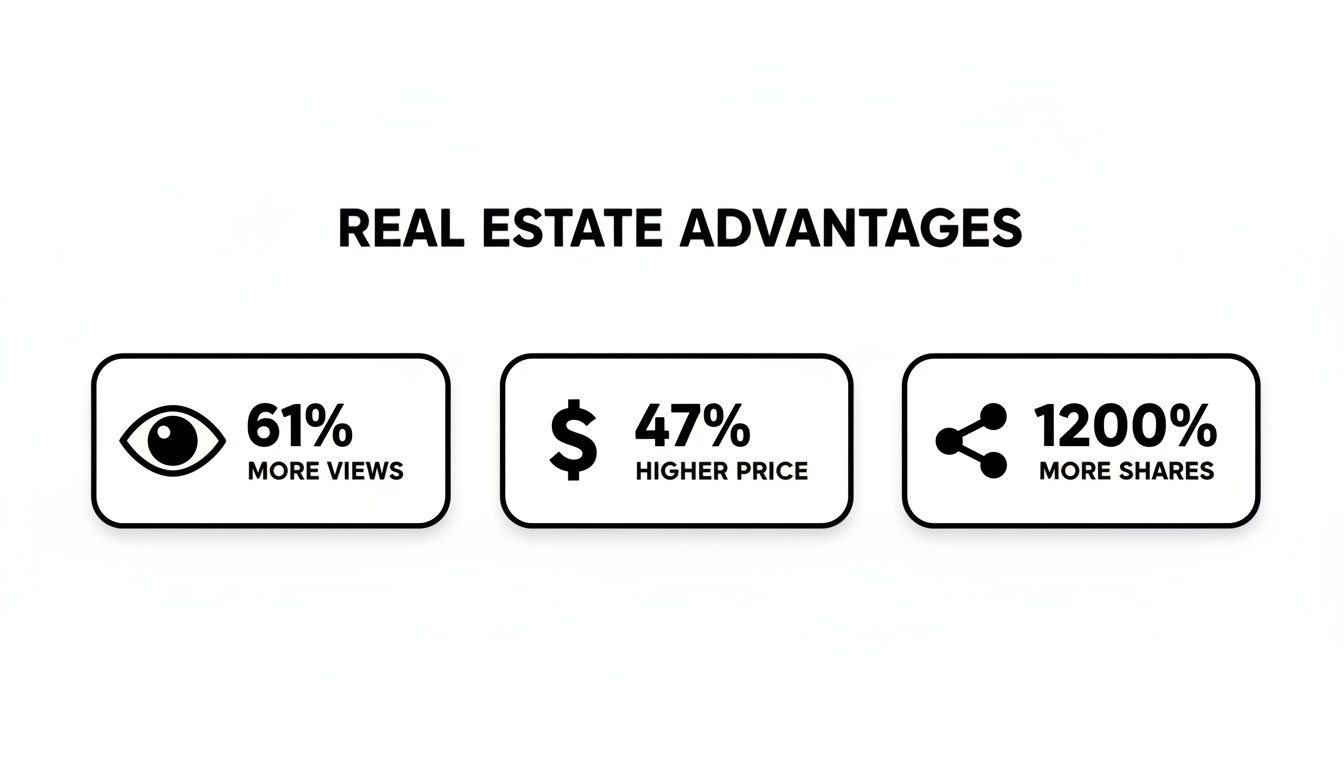
As you can see, investing in better images delivers a massive return in views, price, and social media buzz.
Setting the Stage for a Faster Sale
When you showcase a property in its absolute best light, you're not just showing four walls and a roof. You're crafting a compelling story that connects with buyers on an emotional level. It's that initial connection that gets them to book a showing, walk through the door, and ultimately write an offer.
The goal isn't just to sell a house; it's to sell a lifestyle. Professional photo editing helps you do exactly that by turning empty or cluttered spaces into aspirational scenes that buyers can connect with on a personal level.
This foundation is key to understanding how specific editing techniques, like virtual staging or day-to-dusk conversions, work to solve real-world sales challenges. Each service is a tool in your belt, designed to overcome a buyer's hesitation before it even surfaces and clear the path for a faster, more profitable sale.
A Look at Your Real Estate Photo Editing Toolkit
So, what can a real estate photo editing service actually do for your listings? We’re talking about more than just a few quick fixes. These services give you a whole suite of options, from simple touch-ups that make a good photo great to total transformations that can redefine a property.
Let’s walk through the most common services and see how they solve real-world problems for agents and sellers.
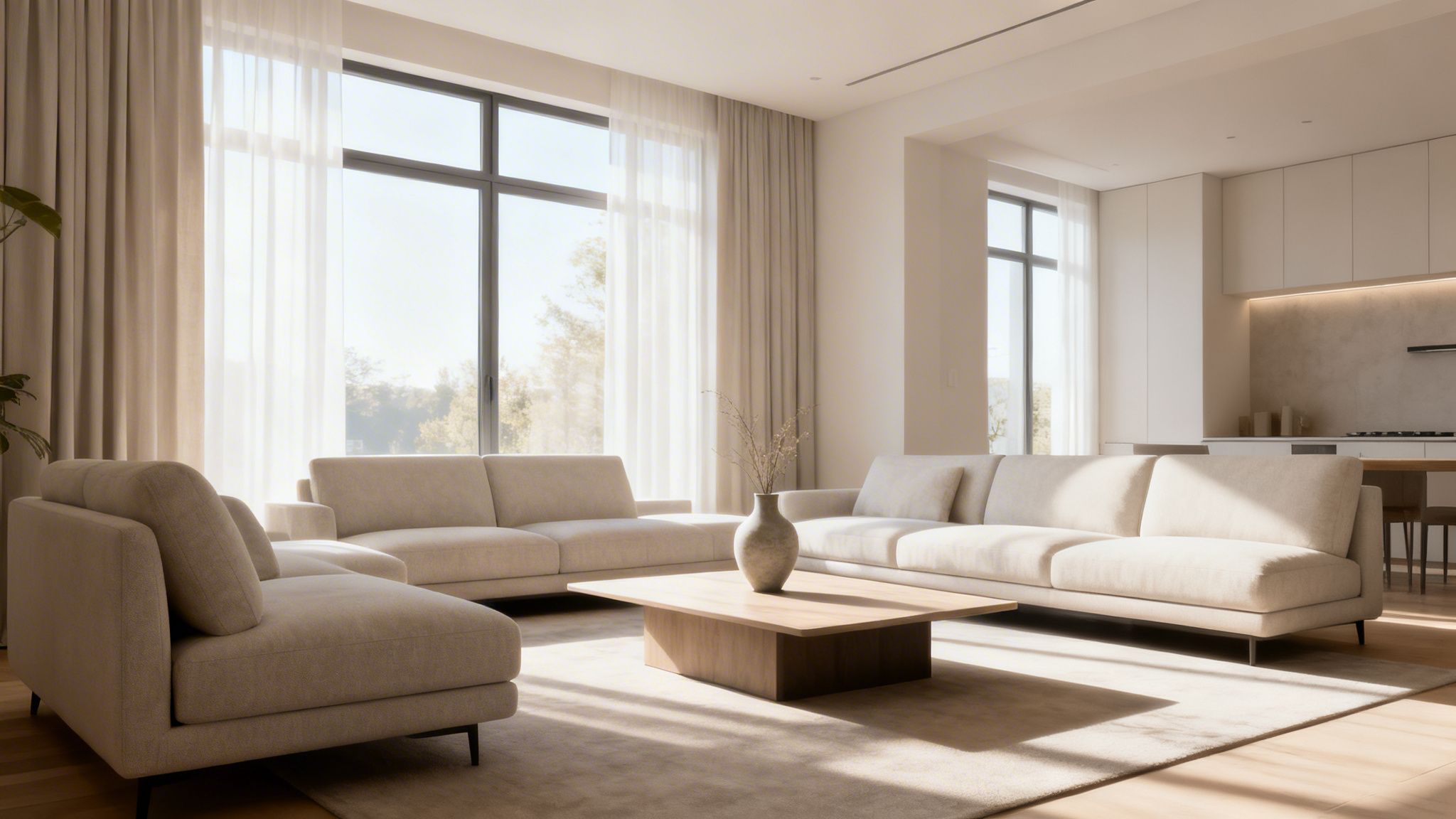
Each of these tools has a specific job, all aimed at one thing: making sure every property you list looks its absolute best online.
Image Enhancement: The Must-Have Polish
Think of image enhancement as the essential tune-up every single listing photo needs. It’s not about faking anything; it’s about making the photo a true, vibrant reflection of the space. This is, without a doubt, the most requested job for any editing service.
Practical Example: You shoot on a cloudy day, and the pictures come back looking dark and flat. The grass outside looks grey, and the view from the window is completely blown out. A professional editor jumps in and fixes this.
- Adjusting Brightness and Contrast: This simple step brings light into dim corners and injects life back into a dull, flat image.
- Correcting Color and White Balance: This ensures that white walls look crisp white—not yellow or blue—giving buyers an accurate sense of the home's feel.
- Sharpening Details: This makes the beautiful grain in the hardwood floors and the sharp lines of the crown molding pop.
Just this one step can take a dreary photo and make it feel bright, spacious, and welcoming. Best of all, it's a fast fix, often done in just a few hours.
Item Removal and Decluttering
It’s almost impossible for a buyer to imagine their life in a home when they’re staring at someone else’s. That’s where item removal, or digital decluttering, comes in. It’s all about creating a clean slate so buyers can mentally move in.
Practical Example: A family room has personal photos on the mantle, toys scattered on the rug, and a giant, well-loved but very taste-specific armchair taking up a corner. An editor can digitally erase those distractions. The room instantly feels bigger, more neutral, and ready for a new owner. It’s a subtle change that helps buyers focus on the home's potential, not the seller's stuff.
By removing personal clutter, you transform a photo from "someone else's house" into "your potential new home." This mental shift is a crucial step in the buyer's journey.
Virtual Staging and Renovation
This is where things get really exciting. Virtual staging fills an empty room with beautiful digital furniture, while virtual renovation shows buyers a property’s untapped potential. For vacant or dated listings, these services are absolute game-changers.
Virtual Staging: An empty room often looks cold and smaller than it really is in photos. Virtual staging adds stylish, properly scaled furniture to show off what the space is for. That empty bonus room can suddenly become a chic home office, a fun playroom, or a cozy media den, sparking a buyer’s imagination.
Virtual Renovations: Got a house with a great floor plan but a kitchen straight out of 1985? Virtual renovations allow you to perform a digital facelift. For example, you can show one version with the dated linoleum and a second "after" version with modern hardwood, new counters, and fresh paint. This helps buyers look past cosmetic issues and see the true gem underneath.
If you’re curious about the technology behind this, our guide on real estate photo editing software breaks down the tools that make these incredible edits possible.
Day-to-Dusk Conversion
A day-to-dusk conversion, sometimes called a twilight shot, turns a standard daytime exterior photo into a stunning, high-end image. Let’s be honest, these photos just stop the scroll. They feel dramatic, warm, and incredibly luxurious.
Actionable Insight: Use a day-to-dusk conversion as your primary "hero" image on Zillow or the MLS. This edit works wonders for properties with great landscape lighting, a pool, or a beautiful patio. It transforms the home from just another house into a private, resort-style retreat. That first impression can make all the difference.
The Real-World Payoff: Why Professional Photo Editing Is a Must-Have
It's easy to think of professional photo editing as just making pictures look pretty. But honestly, that’s missing the point entirely. Investing in a real estate photo editing service isn't about aesthetics; it's a cold, hard business decision with a return you can actually measure.
Great photos do more than just catch the eye—they drive clicks, generate real offers, and put more money in your pocket.
Let's get practical and talk about how these services directly boost your bottom line.
Stop the Scroll and Get the Click
Think about how people shop for homes today. They're endlessly scrolling through Zillow, Redfin, or Instagram. Your hero image has about two seconds to stop them in their tracks. That's it.
A professionally edited photo—one that’s bright, sharp, and perfectly composed—jumps off the screen. It cuts through the noise of dark, blurry phone pictures from other listings. This first impression is everything.
- More Clicks: A polished, inviting thumbnail is simply more clickable. It's human nature.
- More Engagement: Buyers are more likely to save, share, and spend time looking through a gallery of beautiful photos.
- Less Wasted Effort: If you can't get that first click, all the other details you worked so hard on—the description, the features—don't even matter.
Sell Faster and for a Higher Price
It's a proven fact. Properties marketed with professional photography sell faster and for more money. It’s not magic; it’s psychology. A stunning photo creates an immediate emotional connection and a sense of value.
When a home looks bright, clean, and full of potential, buyers feel a sense of urgency. It feels "right," and they're motivated to see it before someone else does. This directly leads to fewer days on market.
Practical Example: A home with virtually staged photos helps buyers emotionally "move in" before they even tour. This excitement often leads to more showings in the first week, generating competition and stronger offers.
You're not just selling a house; you're selling a dream. Professional editing is the tool you use to paint that picture as vividly as possible, and that’s what gets you better, faster offers.
Become the Agent Sellers Want to Hire
Your portfolio is your resume. When you walk into a listing presentation, what you've done for other clients speaks volumes.
Actionable Insight: Create a "before and after" section in your listing presentation. Show potential sellers the original photo of a previous client's home next to the final, edited version. It’s tangible proof that you invest in quality and know how to make a home look its absolute best. This instantly builds trust and sets you apart from the competition.
Comparing Traditional Staging vs Virtual Staging
For most agents, the biggest "aha!" moment comes when they compare the ROI of virtual staging to old-school physical staging. Virtual staging, which is a core part of many photo editing services, offers the same visual punch without the cost, time, and logistical nightmares.
The difference is stark.
Comparing Traditional Staging vs Virtual Staging
| Feature | Traditional Physical Staging | Virtual Staging Service |
|---|---|---|
| Average Cost | $2,500 – $7,000+ per project | $25 – $75 per image |
| Timeline | 1-3 weeks for consultation, delivery, and setup | 15 seconds to 48 hours for delivery |
| Flexibility | Locked into one style; difficult to change | Can create multiple styles (e.g., Modern, Coastal) for the same room |
| Logistics | Furniture rental, movers, insurance, and de-staging | Simple photo upload and digital delivery |
When you look at the numbers, it’s not even a contest. With virtual staging, you get the powerful marketing benefits of a staged home for a tiny fraction of the cost. It’s one of the smartest ways to maximize your marketing budget and see a massive return.
How to Choose the Right Photo Editing Service
Choosing who edits your listing photos is a bigger deal than most people think. It's not just about finding someone to tweak a few images; you're looking for a partner. A good one makes your life easier and your listings shine, but the wrong one can cause endless headaches and cost you a sale.
So, with a sea of options out there, how do you find the right real estate photo editing service? Here’s a simple checklist to vet potential partners.
Review Their Portfolio Like a Buyer Would
First things first, look at their work. But don't just scroll through the pretty "after" shots. You need to put on your detective hat and look for the subtle clues that separate the pros from the amateurs. A great portfolio isn’t just about a few stunning images; it’s about rock-solid consistency.
As you browse their gallery, ask these questions:
- Is the Style Consistent? Do all the photos look like they came from the same skilled team, or are they all over the place? Wildly different results mean they lack a solid quality control process.
- Is the Virtual Staging Believable? This is a big one. Does the virtual furniture actually look like it belongs in the room? Actionable Tip: Look at the shadows under the furniture and the scale of a chair next to a window. Bad virtual staging gets this wrong, making it look like a cheap sticker on a photo.
- Do the Details Still Look Real? Zoom in. Look at the texture on a wood floor, the view through a window, or the reflection in a mirror. A true expert enhances a photo without making it look fake or "airbrushed."
Check Their Turnaround Time
In real estate, time is money. You need to get that listing live while buyer interest is at its peak. Waiting around for a week for your photos just isn't an option.
Most traditional editing services promise a 24 to 48-hour turnaround, which is often fast enough for a standard workflow. But the market is getting faster, and expectations are changing.
This is where new technology is really shaking things up. AI-powered platforms like Try Furnishly can deliver virtually staged images in minutes, not days. The power to upload a photo and get an edited version back almost instantly gives you a massive leg up on the competition.
Think about your own workflow. Do you need that immediate speed to stay ahead, or does a one or two-day window work for you?
Understand the Full Pricing Structure
Nobody likes surprise fees. Before you sign up, you need to know exactly what you’re paying for and what might cost extra down the line. A transparent company will have this all laid out for you.
Actionable Insight: Before committing, ask for a sample quote on a real project. For example, "What would it cost to enhance 20 photos, virtually stage 3 empty rooms, and create 1 day-to-dusk exterior shot?" This forces them to show you their full pricing model in a real-world scenario.
Get clarity on a few key things:
- Per-Image vs. Package Deals: Do they charge by the photo, or can you get a better deal with a subscription or a bulk package?
- Revision Fees: What if you’re not happy with the first draft? A good service will offer at least one or two free revisions.
- Extra Charges: Always ask about the extras. Are you going to get dinged for high-resolution files, removing a car from the driveway, or putting a rush on an order?
Test Drive Their Customer Support
Here’s a pro tip: before you commit, send them a test. The way a company handles a simple pre-sale question tells you everything you need to know about how they'll handle a real problem later. Shoot them an email or hop on their live chat.
How fast do they respond? Are they helpful and clear, or do they give you a canned answer? Here are a few questions to ask:
- "What's your process for revisions if the first edit isn't quite right?"
- "Can you match a specific editing style from one of my past listings? I can send an example."
- "How do you ensure consistent quality if I send you a large batch of 30+ photos for one property?"
Their answers will reveal whether they’re just another vendor or a true partner you can build your business with.
A Simple Workflow for Perfect Listing Photos
Finding a great real estate photo editing service is a huge win, but it’s really only half the job. To get those truly stunning listing photos every single time, you need a simple, repeatable game plan. This four-stage workflow eliminates guesswork and ensures the final images are exactly what you envisioned.
Shoot with Editing in Mind
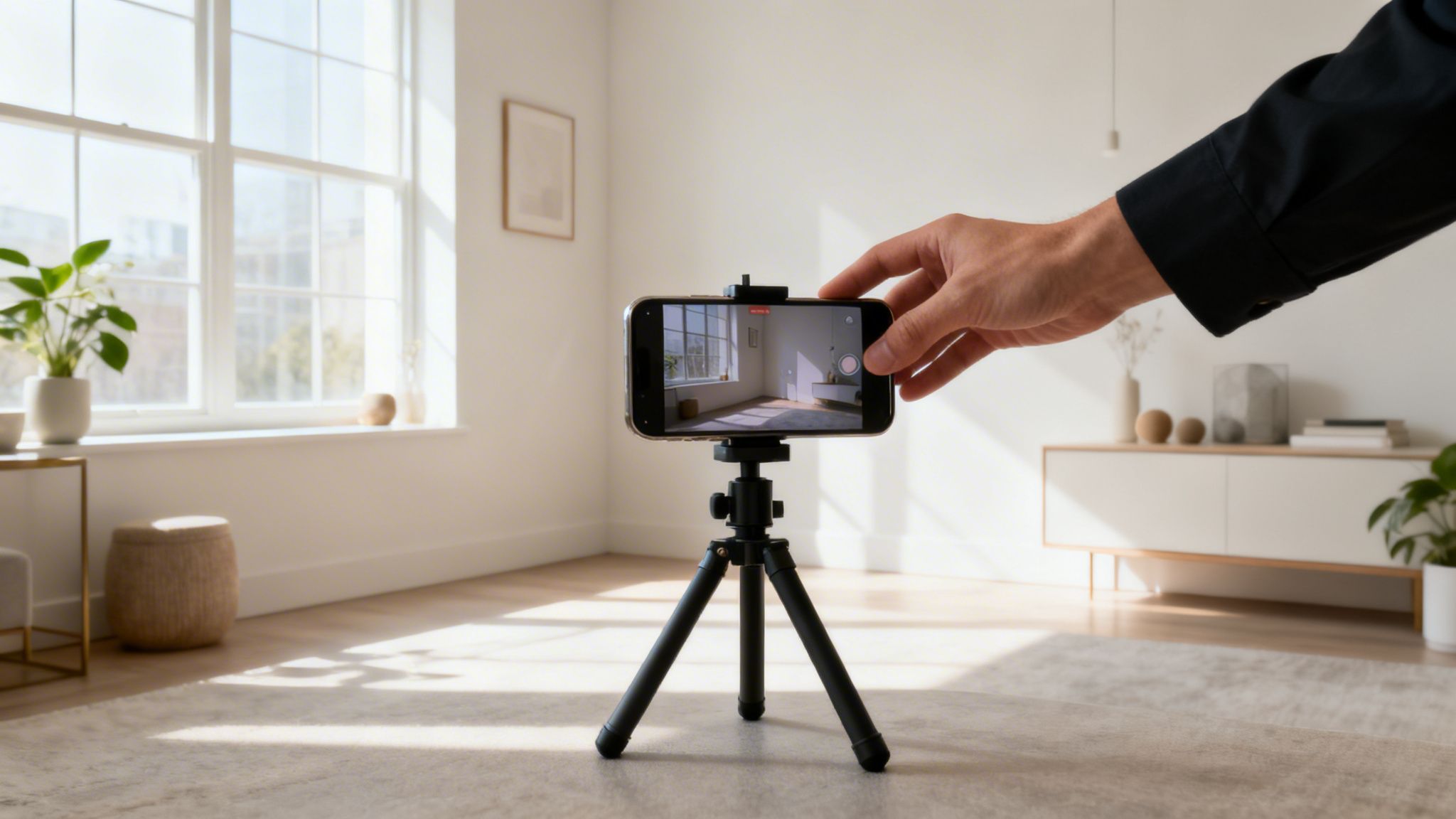
Believe it or not, the best edits begin with the photos you take. You don't need a fancy camera rig—your smartphone can work wonders—but capturing your shots with the editing process in mind will make a massive difference.
Actionable Insight: Always shoot in landscape (horizontal) format. MLS and real estate portals are designed for it. A vertical photo will have black bars on the sides and look unprofessional.
- Shoot from a Corner: This classic trick makes rooms feel bigger and more open, instantly showing buyers how the space flows.
- Use the Highest Resolution: Dive into your camera or phone settings and max it out. More pixels mean more flexibility for your editor to crop, sharpen, and perfect the image.
- Keep It Level: Do your best to hold the camera straight at waist-height. This helps avoid those weird, distorted vertical lines that can make a room feel like it's tilting.
If you’re looking to really nail the basics, our guide on how to take great real estate photos is packed with more practical tips.
Submit Your Images with Clear Direction
Once you have your photos, clear communication becomes your most powerful tool. Never assume your editor is a mind reader. A few simple, specific instructions can be the difference between a pretty good result and a perfect one.
Actionable Tip: Instead of sending a long email, use a simple naming convention. Rename the file LivingRoom-View1-Remove-Toys-Brighten-Corner.jpg. This attaches the instruction directly to the image, preventing confusion.
Or, provide a short but specific list of requests.
A quick note like, "For the living room shots, please remove the dog toys from the floor and brighten the dark corner by the window," gives your editor actionable guidance. It prevents confusion and saves everyone a ton of time.
This clarity ensures their talent is focused on what actually matters to you.
Review and Provide Constructive Feedback
The review stage isn’t about pointing out flaws; it's a collaboration. The trick is to give feedback that is specific and helpful, not just a gut reaction. Instead of saying, "I don't like it," try to pinpoint why.
For example, when looking at a virtually staged photo:
- Instead of: "The furniture looks weird."
- Try: "That sofa feels a bit too large for the room. Could we try a smaller one in a more neutral color, like a light gray?"
This kind of constructive feedback helps your editor get inside your head and make the right adjustments quickly. A collaborative spirit avoids endless revisions and helps you build a fantastic long-term partnership with your photo editing service.
Deploy Your Edited Images for Maximum Impact
Your stunning new photos are ready to go—now it's time to put them to work.
Actionable Insight: Your lead photo on the MLS should be your most compelling shot—usually a gorgeous day-to-dusk exterior or a bright, welcoming living room that hooks buyers instantly. Use your 2nd and 3rd photo slots for the kitchen and primary bedroom.
Use the full gallery of high-resolution images on your website and listing portals to give potential buyers a complete virtual tour. For social media like Instagram and Facebook, pick out the most eye-catching photos for posts and stories that make people stop scrolling. And don't forget print—these polished images will make your flyers and brochures look far more professional, helping you win that next listing.
We get it. Even after seeing all the benefits, jumping into the world of real estate photo editing can feel like a big step. The tech moves fast, and you probably have a few nagging questions. That’s smart.
Let's clear the air. We’ve heard just about every question in the book from agents over the years, so we’ve rounded up the most common ones to give you the straight, practical answers you need.
Is Virtual Staging Deceptive?
This is easily the most important question. The simple answer? Not when it’s done right. Ethical virtual staging isn't about misleading buyers; it’s about showcasing a property's true potential.
Think of it like dressing a mannequin in a store. You’re not claiming the mannequin is a real person, you’re just showing how the outfit could look on someone. The key is total transparency.
Actionable Insight: Almost every MLS requires a clear disclosure on virtually staged photos. The industry standard is a simple watermark or a note like "Virtually Staged" in the image description. This ensures buyers know they're seeing a beautifully rendered vision of the space.
The goal of virtual staging isn't to hide flaws but to help buyers overcome the "imagination gap." When done transparently, it’s a powerful marketing tool that highlights a property’s best features without being deceptive.
What Is a Realistic Budget for Photo Editing?
Your photo editing budget can be incredibly flexible. Here’s a quick look at what you can generally expect.
Basic Image Enhancement: For the essentials like color correction, brightening, and sharpening, you're looking at $1 to $5 per photo. This is the most common and budget-friendly choice.
Item Removal and Day-to-Dusk: When you need more intensive work, like digitally clearing out clutter or turning a daytime shot into a stunning twilight photo, the cost typically lands between $5 to $15 per photo.
Virtual Staging: This is where the real magic happens. It usually runs from $25 to $75 per photo. While that's more per image, it’s just a tiny fraction of the thousands you’d spend on physical staging.
Can You Really Edit Smartphone Photos?
Absolutely. Today’s smartphone cameras are seriously impressive, and a good editing service can make those shots look remarkably professional. Editors can easily correct lens distortion, brighten up shadowy corners, and make the colors pop.
Practical Example: You took a photo with your iPhone, and the vertical lines of a doorway look slightly bent or curved. An editor can apply "lens correction" to straighten those lines, making the photo look like it was taken with a professional wide-angle lens.
That said, it’s important to have realistic expectations. Editing can dramatically improve a phone photo, but it can’t invent detail that wasn't captured. A professional DSLR will always give you a better starting point.
AI Editors vs Human Editors Which Is Better?
This isn't really a "one vs. the other" situation. It's more about picking the right tool for the job, because both AI and human editors bring something unique to the table.
AI Editors (like Furnishly): Their biggest advantages are speed and cost. An AI can stage a room or enhance a batch of photos in seconds, which is a game-changer for tight deadlines. They also make professional-grade editing incredibly affordable and accessible.
Human Editors: Their superpower is nuance and customization. A person can interpret subjective feedback like, "make it feel cozier," or tackle a one-of-a-kind editing challenge that requires a creative eye. This is perfect for ultra-luxe listings or photos that need a true artist’s touch.
Actionable Insight: Use an AI-powered service for 90% of your work—fast, scalable virtual staging and enhancements. Then, call in a human expert for that one unique, high-value listing that demands a bespoke finish.
Ready to see how fast and effective AI can be? With Try Furnishly, you can transform empty rooms into stunning, designer-furnished spaces in as little as 15 seconds. Give your listings the visual edge they need to sell faster and for a higher price. Get your free trial started at https://tryfurnishly.com.
Leave a Comment