

The virtual staging industry is rapidly transforming real estate marketing, and platforms like visualstager are at the forefront of this change as we approach 2026. With buyers expecting photorealistic, beautifully staged listings online, demand for fast and flexible solutions has never been higher.
In this article, we present a detailed, side-by-side comparison of visualstager and other top virtual staging platforms. We’ll evaluate user experience, pricing, design libraries, image quality, technology, and standout features.
Curious which platform is best positioned for the future? Read on for actionable insights that will help you choose the right virtual staging solution for your real estate needs.
The 2026 Virtual Staging Landscape: Trends & Key Players
The virtual staging industry is undergoing rapid transformation as we head into 2026. Innovative platforms like visualstager are at the forefront, but a wave of new technologies and changing user expectations are reshaping how real estate professionals approach property marketing.

The Evolution of Virtual Staging Technology
Virtual staging has evolved from niche software to a mainstream marketing essential. Early solutions required advanced skills and software downloads, but by 2026, browser-based and AI-powered platforms like visualstager have made staging accessible to all.
A key driver is the demand for photorealistic, cost-effective, and fast results. Data shows that 85% of staged properties achieve or exceed their asking price, reinforcing the value of compelling visuals. The market’s growth is significant, with Virtual Staging Market Growth Statistics projecting double-digit expansion through 2033.
Rising online home shopping and buyers’ high expectations for visual appeal have accelerated this shift. Today’s leaders include visualstager, PhotoUp, and a new generation of AI-driven solutions, all competing to define the future of virtual staging.
Market Demands and User Expectations
Real estate professionals now expect virtual staging tools to deliver speed, flexibility, and easy customization. Platforms like visualstager respond with browser-based, no-software-required interfaces, enabling agents and photographers to stage properties from any device.
Key user demands include:
- Mobile-friendly workflows for on-the-go access
- Wide variety of design styles and room templates
- Seamless, intuitive navigation
Some users prefer hands-on DIY control, as offered by visualstager, while others seek the convenience of full-service providers like PhotoUp. Regardless of approach, the need for efficient, visually compelling results is universal.
2026 Innovations Shaping the Industry
In 2026, AI advancements are setting new standards in virtual staging. Instant, high-quality rendering, automated furniture removal, and the ability to switch styles with a click are becoming baseline features. Platforms such as visualstager are expanding design libraries and enhancing photorealism to keep pace.
Other innovations include:
- Cross-platform integrations with listing sites and CRMs for streamlined workflows
- User-friendly interfaces designed for non-designers
- Expanding accessory and decor options for greater customization
These advancements ensure that even users with little design experience can achieve professional-quality staging, further broadening the appeal and impact of solutions like visualstager.
VisualStager: Features, Strengths, and Limitations
VisualStager has carved a niche in the virtual staging industry with its do-it-yourself approach. Designed for real estate professionals and photographers, visualstager offers a browser-based platform that eliminates the need for software installation. Let’s break down its core features, strengths, and the areas where it falls short.

DIY Approach and User Experience
Visualstager stands out for its hands-on, browser-based staging. Users can create an account, upload property images, and start staging immediately from any device. The drag-and-drop interface is intuitive, making it accessible for those without design experience.
For agents and photographers seeking direct control, visualstager’s DIY model is appealing. You can experiment with different layouts and decor in real time. The platform’s no-software setup means you can access your projects anywhere, whether in the office or onsite.
However, new users may face a learning curve. While the interface is user-friendly, mastering the tools for the most realistic results takes practice. Still, for those who want immediate access and flexibility, visualstager provides a solid foundation.
Design Library and Customization Options
Visualstager’s design catalog features over 4,000 furniture and decor items, covering a broad range of room types and styles. Users can:
- Search by name, style, or category
- Save favorites for quick access
- Apply decor to living rooms, bedrooms, kitchens, and more
Customization is a key strength. Visualstager allows unlimited revisions, so you can tweak your staging until satisfied. This flexibility is ideal for experimenting with different looks before finalizing images.
Yet, the catalog’s organization presents challenges. Search inconsistencies and unclear categories can slow down the process, especially for users with tight deadlines. Navigating the extensive library can be time-consuming, and finding the right piece sometimes requires patience.
Pricing and Payment Structure
Visualstager uses a credit-based payment system. Here’s a breakdown:
| Feature | Cost |
|---|---|
| Per staged photo | 10 credits ($15/image) |
| Watermark removal | Additional credit or monthly |
| Volume discounts | Available for bulk purchases |
Compared to other DIY platforms, visualstager’s per-image cost sits at the industry average. Watermark removal requires extra credits or a subscription, so total costs can add up for agents with multiple listings. The credit system offers flexibility, but it’s essential to account for all potential charges when budgeting.
Turnaround Time and Workflow
One of visualstager’s standout features is instant turnaround. After staging, users receive high-resolution images within minutes. This speed benefits agents in fast-paced markets who need to publish listings quickly.
The workflow is straightforward: upload, stage, download. Unlimited edits are included at no extra charge, allowing users to perfect their staging without worrying about additional fees.
For first-time users, the DIY process may take longer as they learn the tools and catalog navigation. With practice, however, most can achieve a streamlined workflow that supports rapid property marketing.
Quality of Results and Realism
Visualstager delivers results that range from acceptable to underwhelming, depending on user skill and image complexity. Common issues include:
- Flat or unrealistic shadows
- Inconsistent furniture perspective
- Limited photorealism in finished images
The quality is highly dependent on the user’s eye for design and attention to detail. For high-end listings or clients with demanding standards, the DIY approach may not always meet expectations.
If you want to see how visualstager’s output compares to professionally staged or AI-powered alternatives, you can browse staged image examples in this Virtual Staging Gallery Examples for a side-by-side look at realism and style.
Overall, visualstager offers a flexible, affordable entry point for virtual staging, but its limitations in realism and catalog navigation are important considerations for real estate professionals.
Virtual Staging Solutions: The Full-Service & AI-Driven Alternatives
The virtual staging landscape has evolved rapidly, with full-service and AI-driven alternatives redefining what is possible for real estate marketing. While visualstager pioneered DIY browser-based staging, today’s leading solutions cater to a broader range of needs and skill levels. Let’s explore how these platforms are changing the game for agents, photographers, and sellers in 2026.
Full-Service Providers (e.g., PhotoUp)
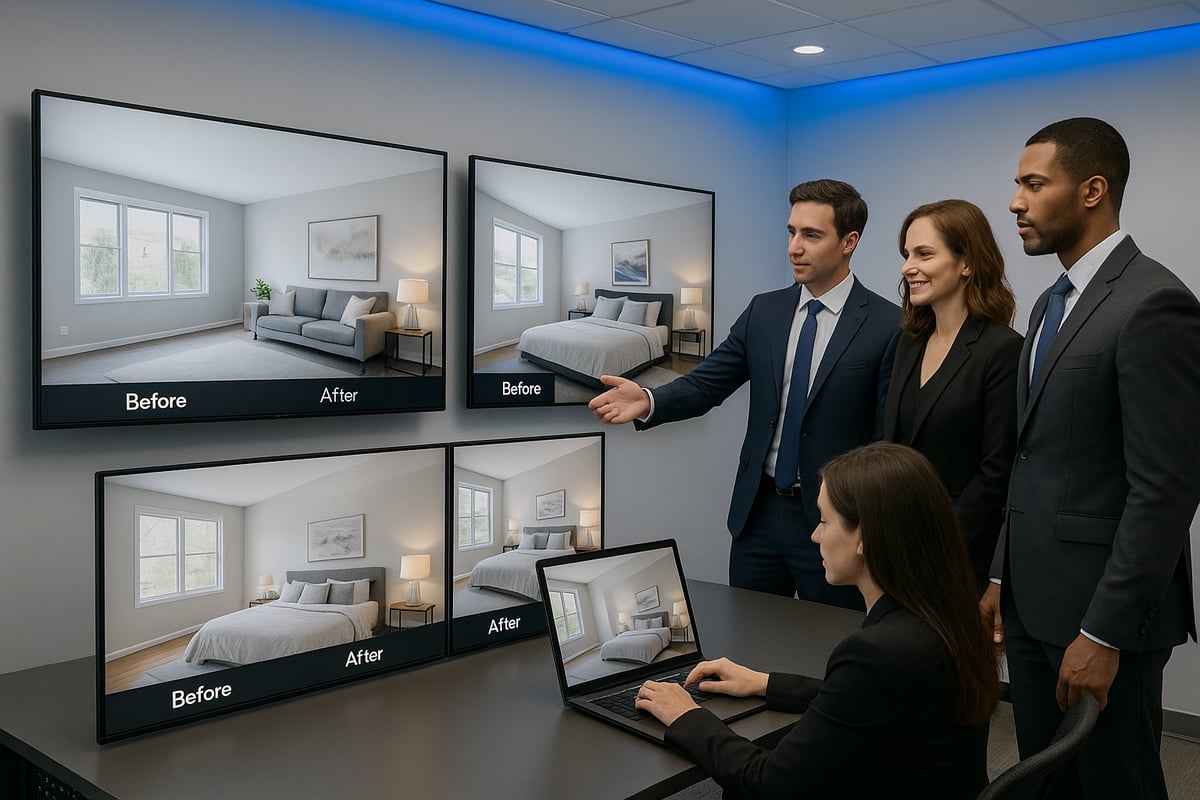
Full-service virtual staging providers have become a preferred choice for those seeking a polished, hands-off experience. Unlike the DIY approach of visualstager, these platforms assign professional designers to handle every aspect of staging. Users simply create an account, upload property photos, and select their preferred service options.
Turnaround time is typically 24 to 48 hours, but expedited services are available for urgent needs. Full-service providers often include two free revisions, so clients can request tweaks to furniture placement or style. High-resolution, market-ready images are delivered upon approval, ready for use in listings and marketing materials.
A significant advantage over visualstager is the broader marketing suite offered by many full-service companies. Services often extend to photo editing, virtual tours, floor plans, property websites, and branded flyers. Pricing is credit-based, with staged images usually costing 20 to 30 credits, at rates from $1.25 to $1.30 per credit. This structure makes full-service solutions accessible for agents with multiple listings or those who value time savings.
AI-Powered Solutions: The 2026 Edge
AI-powered virtual staging solutions have revolutionized the industry by offering near-instant results and advanced automation. Compared to visualstager, these platforms leverage cutting-edge algorithms to render staged rooms in seconds, not days. Features like automated furniture removal, unlimited style regenerations, and photorealistic rendering have become standard.
AI-driven platforms cater to all skill levels, eliminating the learning curve associated with traditional DIY tools. Real estate professionals can choose from multiple design styles curated by interior designers, ensuring each image aligns with current trends. The speed and cost savings of AI staging make it an attractive option for agents managing high volumes or working in fast-paced markets.
Another benefit over visualstager is the ability to stage both empty and previously furnished rooms with a single click. As AI technology matures, the gap between machine-generated and human-edited images continues to narrow, offering unprecedented realism and flexibility.
Design Libraries and Style Variety
The depth and organization of design libraries have become a key differentiator among virtual staging solutions. While visualstager offers a catalog of 4,000+ furniture and decor items, users often report navigation challenges and inconsistent search results. In contrast, full-service and AI-powered platforms now feature between 8 and 18 curated design styles, such as Mid-Century, Scandinavian, and Farmhouse.
Advanced search and filtering tools allow users to browse by room type, style, or accessory, streamlining the staging process. Accessory options like artwork, rugs, and lighting fixtures provide further customization, helping agents tailor visuals to their target audience.
Below is a quick comparison:
| Feature | visualstager | Full-Service/AI Alternatives |
|---|---|---|
| Catalog Size | 4,000+ items | 8–18+ curated styles |
| Search & Filter | Basic, inconsistent | Advanced, organized |
| Accessory Options | Limited | Extensive, designer-curated |
This expanded style variety and user-friendly browsing experience give modern platforms a clear edge for agents seeking both speed and sophistication.
Quality, Realism, and Branding
Image quality and realism are critical for making listings stand out online. While visualstager enables unlimited DIY edits, the final results often depend on the user’s skill, and some images may lack depth, accurate shadowing, or true-to-life perspective. This can be a limitation for high-end properties or clients with exacting standards.
Full-service providers and AI solutions consistently deliver images with professional polish and high photorealism. Many platforms now allow for branding overlays, agent contact details, or brokerage logos directly on staged photos, enhancing marketing impact. For example, PhotoUp’s portfolio is frequently praised for its realism and detail, while AI-powered results are now matching or even surpassing traditional editing.
The reliability and market-readiness of these images make them a preferred choice for agents who want to attract discerning buyers quickly.
Pricing Models and Value
Pricing structures have diversified to fit different user needs. While visualstager uses a credit-based system with additional charges for watermark removal, competitors offer a mix of pay-per-image, subscription, and credit-based models. Many full-service and AI platforms provide free trials, volume discounts, and complimentary credits for new users.
Agents managing multiple listings can realize significant cost savings by leveraging these flexible plans. The overall value proposition is enhanced by bundled services, unlimited revisions, and the ability to stage at scale. To see how visualstager stacks up against leading solutions, explore this Virtual Staging Pricing Comparison for detailed breakdowns.
With rapid advancements in AI and growing service ecosystems, the best virtual staging solution often comes down to individual workflow, desired quality, and budget priorities.
Try Furnishly: AI-Powered Virtual Staging for 2026
The virtual staging landscape is rapidly evolving, with solutions like visualstager paving the way for innovation. Try Furnishly emerges as a next-generation, AI-powered platform that sets a new standard for speed, design quality, and ease of use.
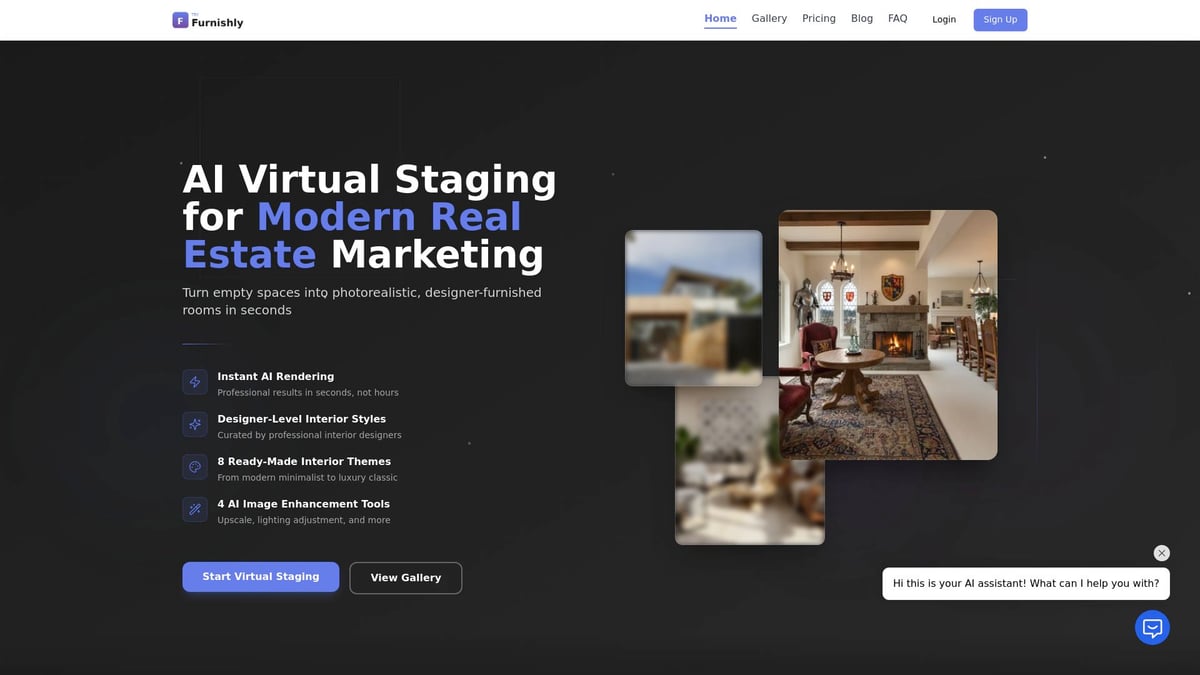
What makes Try Furnishly stand out from visualstager and other competitors? The answer lies in its instant AI rendering. Users can transform property photos into professionally staged spaces in as little as 15 seconds. This lightning-fast process empowers agents and sellers to market listings with unprecedented speed, keeping pace with the industry’s demand for quick turnarounds.
Design flexibility is at the heart of Try Furnishly. The platform offers eight designer-curated interior styles, ranging from Modern to Farmhouse. Thousands of high-quality furniture pieces and decor accessories are available, ensuring every room receives a unique, tailored look. Unlike visualstager, unlimited regenerations allow users to experiment with different styles until they achieve the perfect result.
Key features include:
- AI-powered furniture removal for decluttering spaces
- Advanced image enhancement tools for professional finishes
- Support for both empty rooms and already furnished spaces
These tools provide a level of customization and polish that visualstager users often seek when preparing high-stakes listings.
The benefits of using Try Furnishly are clear. Homes staged with AI solutions can sell up to 73% faster and often command higher prices. The platform delivers significant cost savings compared to traditional methods, making high-quality staging accessible for agents, developers, photographers, and individual sellers. Flexible pricing includes a free trial with five credits, affordable paid plans, and no long-term commitment required.
Trust is central to Try Furnishly’s rapid adoption. Over 5,000 real estate professionals rely on the platform, with more than 50,000 images staged to date and an impressive 4.9 out of 5 customer rating. Whether you manage a single listing or a large portfolio, Try Furnishly offers the speed, quality, and flexibility needed to stay ahead in 2026.
Curious how AI-powered staging compares to visualstager or want more details about the technology? Explore the Virtual Staging Frequently Asked Questions to discover how these advancements can support your real estate marketing strategy.
Side-by-Side Comparison: VisualStager vs. Leading Virtual Staging Solutions
Choosing the right virtual staging platform in 2026 can transform your real estate marketing results. visualstager, along with new AI-driven and full-service competitors, offers unique advantages and challenges. Here, we break down how visualstager stacks up against the latest solutions, helping you make an informed decision.
User Experience and Accessibility
visualstager’s browser-based DIY interface appeals to users who want complete control over staging. You can access the platform from any device without installing software, making it flexible for agents and photographers on the go. However, there is a learning curve, especially for those new to digital staging.
Alternatives, such as AI-powered and full-service solutions, focus on intuitive, mobile-friendly workflows. AI platforms deliver instant results with minimal user input, while full-service providers handle everything for you. For professionals who value speed and ease, these options may offer a smoother experience.
Design Library and Style Range
When it comes to design selection, visualstager provides over 4,000 furniture and decor items, covering a variety of room types. Users enjoy the ability to mix and match, but catalog navigation can feel cumbersome, especially when searching by style or category.
Modern competitors feature curated design libraries with 8–18+ interior styles, streamlined galleries, and advanced filtering. For example, PhotoUp offers 11 distinct styles and 18 room types, while AI platforms present designer themes and thousands of accessories for enhanced customization. This broader range helps agents meet diverse client tastes with less effort.
Turnaround Time and Workflow
visualstager stands out for its instant DIY results. After uploading your photo and staging it, you can download high-resolution images in minutes. This immediate feedback is valuable for agents who need quick updates.
Full-service providers generally require 24–48 hours to deliver professionally staged photos, with options for rush orders. AI-driven platforms have changed the game, providing fully staged images in as little as 15 seconds. For agents handling multiple listings or needing fast turnarounds, AI solutions now set the pace.
Pricing and Value
visualstager uses a credit-based payment model, charging $15 per staged photo, with discounts for volume purchases. Watermark removal may incur additional fees or require a subscription. While this is competitive for DIY tools, costs can add up for agents with high-volume needs.
Other platforms offer flexible options, like per-image pricing, subscription plans, and free trials. AI and full-service solutions often provide volume discounts and complimentary credits, increasing value for frequent users. For a deeper look at trends and pricing across the industry, see the Virtual Home Staging Software Market Analysis.
| Feature | visualstager | AI-Powered Solutions | Full-Service Providers |
|---|---|---|---|
| User Control | DIY | Automated/Hands-off | Designer-managed |
| Turnaround | Minutes | Seconds-Minutes | 24–48 hours |
| Library Size/Styles | 4,000+ items | 8–18+ styles | 11+ styles, 18+ rooms |
| Pricing | $15/photo | $1.25–$1.30/credit | $25–$40/photo |
Quality and Realism
visualstager’s output quality depends heavily on user skill. While the platform enables unlimited edits, achieving photorealistic results can be challenging. Common issues include flat shadows, awkward perspectives, and less-polished finishes, making it less suitable for luxury or high-stakes listings.
By contrast, AI and full-service solutions now deliver consistently market-ready images. Recent innovations, such as Zillow’s AI-Powered Virtual Staging, showcase how automated platforms are matching and even surpassing professional designers in realism. This technological leap ensures listings look inviting and credible to buyers.
Flexibility, Customization, and Additional Features
visualstager’s unlimited DIY edits appeal to users who want hands-on customization. However, its features are limited to virtual staging, with fewer options for broader marketing integrations.
Alternatives now include a suite of tools: photo editing, virtual tours, branded media, floor plans, and CRM integrations. AI solutions offer unlimited style regenerations and easy branding, while full-service providers bundle staging with marketing assets. This expanded toolkit helps agents streamline their workflow and stand out in a competitive market.
Support, Revisions, and User Community
visualstager operates as a self-serve platform with limited customer support. Users rely on help guides and community forums for troubleshooting. For those who prefer more guidance, full-service and AI platforms provide dedicated support teams, free revisions, and active user communities. For example, PhotoUp offers US-based assistance and clear revision policies, ensuring agents have help when they need it.
In summary, visualstager remains a strong DIY option, but the rapid evolution of AI and full-service platforms raises the bar in quality, efficiency, and value. Agents should weigh their priorities—control, speed, cost, or polish—when selecting the best solution for their 2026 marketing strategy.
Which Solution is Right for You? Decision Guide for 2026
Selecting the best virtual staging platform in 2026 depends on your goals, workflow, and expectations. With solutions ranging from visualstager to full-service and AI-powered providers, understanding your unique needs is essential.
User Profiles and Best-Fit Scenarios
Each virtual staging option serves a distinct user profile. If you prefer hands-on control and have a keen eye for design, visualstager is ideal. Its DIY approach empowers agents and photographers who want affordable, quick staging with full creative oversight.
For those prioritizing professional polish and minimal involvement, full-service platforms deliver designer-curated results well suited to luxury or high-stakes listings. AI-powered solutions appeal to users who value instant results, flexibility, and a balance between speed and image quality.
- visualstager: DIY, budget-friendly, creative control
- Full-service: Professional finish, time-saving, high-end appeal
- AI-powered: Instant output, broad style range, scalable
Key Decision Factors
Choosing between visualstager, full-service, or AI-driven platforms requires evaluating several factors. Budget is a primary consideration, as upfront costs, volume discounts, and ongoing value can differ significantly.
Time constraints also play a crucial role, especially in competitive markets where fast turnaround is vital. Assess your expectations for design variety, photorealism, and branding options. Workflow integration matters as well, particularly if you need additional marketing tools or seamless compatibility with listing platforms.
| Factor | visualstager | Full-Service | AI-Powered |
|---|---|---|---|
| Cost | Low | Moderate | Low to Moderate |
| Turnaround | Minutes | 24-48 hours | Seconds-Minutes |
| Customization | High | Moderate | High |
Real-World Examples and Recommendations
Consider an agent managing over ten listings per month. AI or full-service credits often provide the best value and efficiency for this workflow. For those who enjoy direct involvement and learning new tools, visualstager offers control but requires a time investment.
Sellers wanting a quick market entry may prefer AI-powered platforms for their speed and quality. Meanwhile, agents handling luxury properties may benefit from the professionalism of full-service solutions, ensuring every image meets the highest standards.
- Multiple listings: AI or full-service credits
- DIY enthusiasts: visualstager for creative freedom
- Fast sales: AI-powered for instant results
Future-Proofing Your Virtual Staging Strategy
As technology evolves, future-proofing your approach becomes increasingly important. Look for platforms that scale with your business, embrace AI advancements, and support emerging marketing trends.
Trial options, such as free credits or demo images, help you assess fit before committing. Staying informed about innovations, such as those described in ReStyle3D: AI in Virtual Staging, ensures you remain competitive as new capabilities emerge.
Choosing visualstager or another solution should align with your long-term growth, adaptability, and need for ongoing support. Evaluate each platform’s trajectory and community engagement to make a confident, future-ready decision.
Leave a Comment