

Imagine walking into a blank, lifeless room and watching it transform into a stunning, photorealistic living space within seconds. In 2026, virtual staging companies are making this possible for real estate professionals everywhere, using advanced AI tools to create captivating interiors without any physical effort.
These innovations are not just eye-catching, they are accelerating sales and reshaping how properties are marketed. In this article, you will discover seven leading virtual staging companies, each offering unique features, pricing, and solutions that help agents, sellers, and developers stand out in a competitive market.
Get ready to see how technology is redefining real estate marketing—and why you should consider these top virtual staging companies for your next listing.
Why Virtual Staging is Transforming Real Estate in 2026
Picture the real estate world in 2026, where virtual staging companies have redefined how homes are presented and sold. The digital transformation is not just a passing trend, but a fundamental shift that is saving money, speeding up sales, and making marketing more sustainable and effective for everyone involved.
The Shift from Traditional to Virtual Staging
Traditional home staging often costs between $2,000 and $5,000 per property, with added expenses for moving, storing, and coordinating furniture. In contrast, virtual staging companies offer solutions starting as low as $15 to $100 per image, making professional presentation accessible to more sellers. Physical staging can be slow and labor-intensive, while digital alternatives scale instantly across single homes or large developments.
Agents leveraging virtual staging companies have reported up to 73% faster sales, as highlighted in research on virtual staging leads to 73% faster home sales. This rapid turnaround, combined with the environmental benefit of eliminating physical waste, is redefining industry standards and expectations.
The Role of AI and Automation in Real Estate Marketing
In 2026, artificial intelligence powers virtual staging companies to create photorealistic, customized interiors in seconds. Automation streamlines workflows for agents and marketers, reducing repetitive tasks and freeing up time for client engagement. According to recent data, 89% of buyers consider online photos the most valuable resource in their home search.
AI-driven features, such as decluttering, furniture removal, and style personalization, are now standard. Virtual staging companies also offer enhancements like day-to-dusk conversions and virtual renovations, making listings stand out in a crowded digital marketplace.
Key Benefits for Agents, Sellers, and Buyers
Virtual staging companies provide a competitive edge by boosting the visual appeal of listings, which leads to more inquiries and scheduled showings. Cost savings are significant, enabling agents and sellers to update staging frequently and adapt to market feedback without overspending.
Buyers benefit, too, as they can better visualize the potential of a space, forming a stronger emotional connection and often perceiving higher value. Sellers see faster sales and higher closing prices, while brokerages and teams can consistently brand and differentiate their listings through scalable digital staging solutions.
The Future: Integration with 3D, Video, and Interactive Experiences
Virtual staging companies are pushing boundaries by integrating with 3D tours, interactive floor plans, and AR/VR experiences. Social media-ready video staging, optimized for platforms like Instagram and TikTok, is becoming essential for reaching modern buyers.
Seamless integration with listing platforms, such as Zillow and Redfin, means agents can market properties more effectively. API-based solutions are empowering brokerages and proptech firms to automate and customize their marketing workflows. By 2026, virtual staging companies are expected to be a standard tool in every real estate professional’s arsenal.
7 Virtual Staging Companies Transforming Real Estate in 2026
The landscape of virtual staging companies is rapidly evolving in 2026. Agents, sellers, and developers now have access to a wide variety of solutions, each offering unique features, pricing, and benefits. Below, we explore seven leading virtual staging companies that are setting new standards for photorealism, speed, and marketing impact.
Try Furnishly
Try Furnishly has quickly become a favorite among virtual staging companies for its blend of affordability, speed, and AI-driven quality. The platform offers a free trial with 5 credits, allowing users to experience its AI-powered staging with no upfront commitment. Paid plans are cost-effective and flexible, making it accessible for agents, photographers, and developers alike.
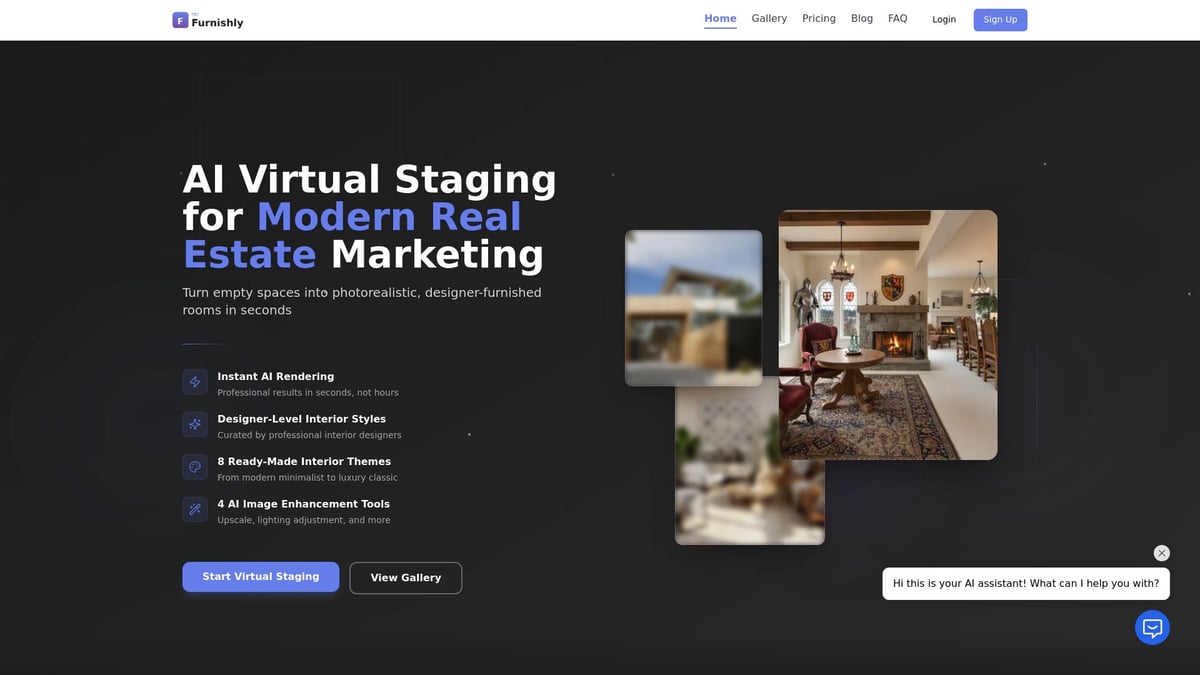
Core features include 8 designer-curated styles, instant furniture removal, and ultra-fast rendering—images are ready in just 15 seconds. Users benefit from unlimited edits and high-resolution downloads, which can help listings sell up to 73% faster. The workflow is designed for ease of use, making it a great option for both tech-savvy and new users.
Pros of Try Furnishly include speed, flexibility, and cost savings. No credit card is needed for the trial, and the platform boasts a 4.9/5 customer rating. However, it is limited to digital staging and requires quality source images for best results.
Try Furnishly stands out among virtual staging companies thanks to its AI-driven workflow and extensive furniture library. To compare pricing and plan details, visit their virtual staging pricing plans page.
Apply Design
Apply Design is recognized for bringing customization and scalability to virtual staging companies. With pay-per-image or subscription options, it supports both individual agents and large brokerages. The platform stages over 8,000 properties monthly, reflecting its popularity and reliability.
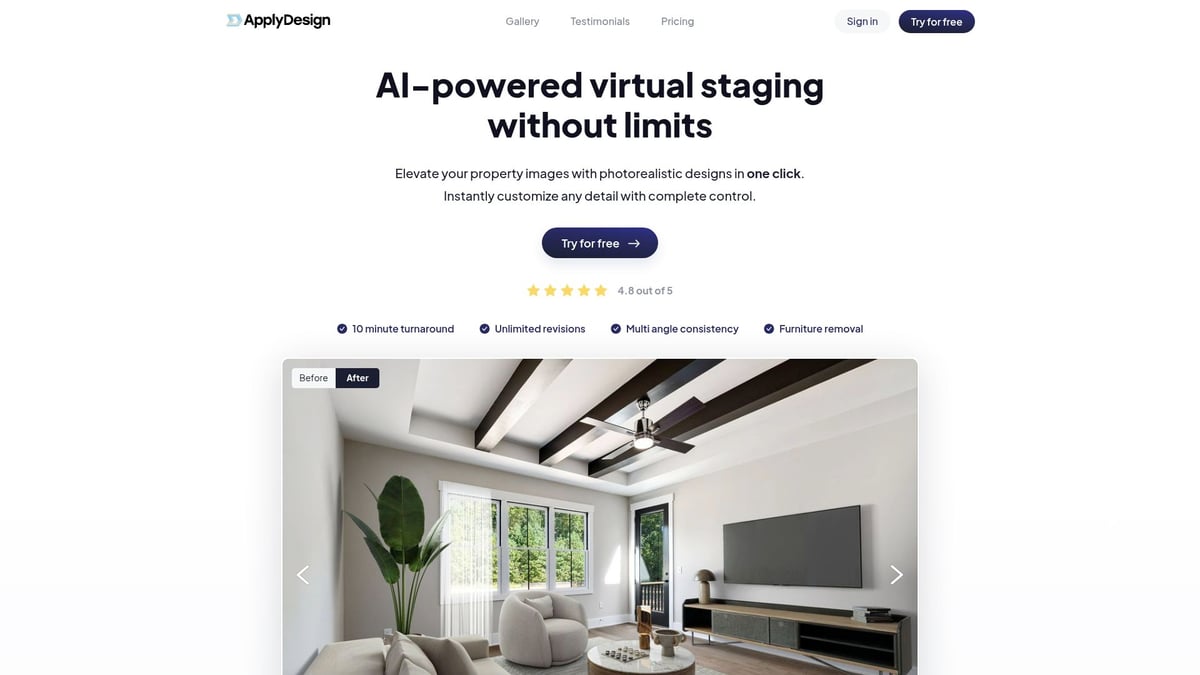
Features include one-click photorealistic staging, instant customization, and AI-powered design tools. Apply Design is trusted by major players like Zillow and Redfin, and it excels at transforming vacant or outdated spaces. Its control over design details allows agents to tailor spaces to specific buyer profiles.
The main advantages are customization, fast turnaround, and scalability for teams. Some advanced features may require a learning curve, and pricing varies by volume. Apply Design is ideal for high-end listings, franchises, and rapid marketing updates, making it a top choice among virtual staging companies.
BoxBrownie
BoxBrownie remains a global leader among virtual staging companies, known for its wide range of services beyond just staging. Pricing starts at $24 per image, with bulk discounts available, making it accessible for agents and developers worldwide.
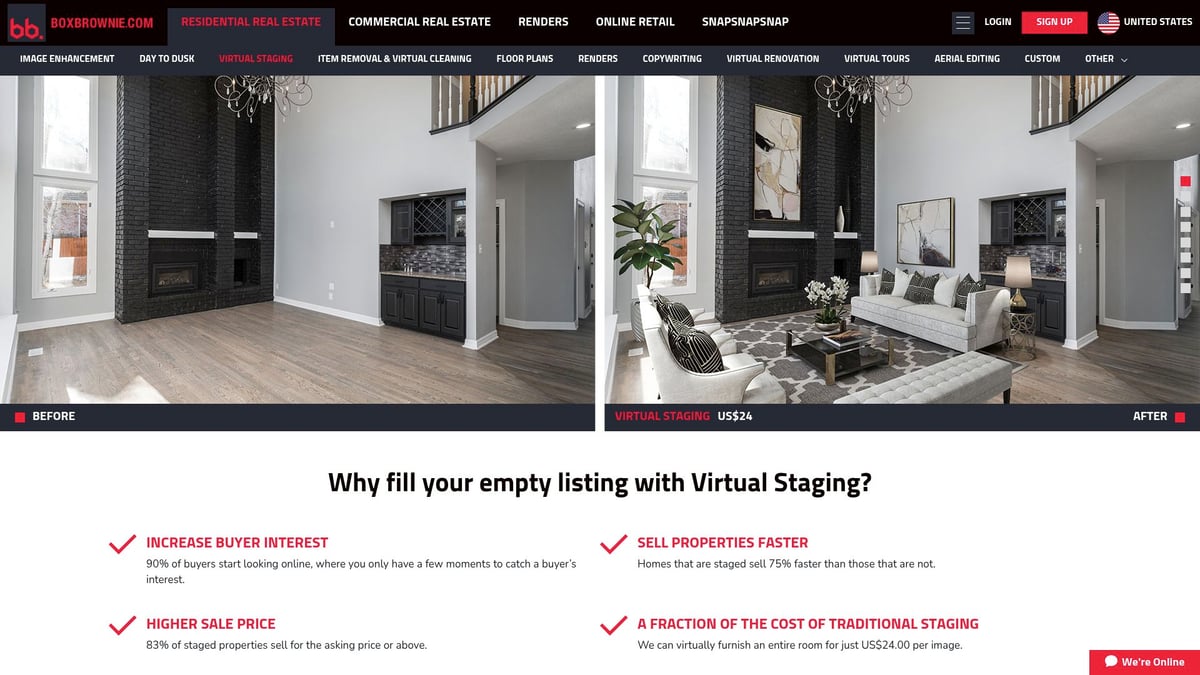
Key features include virtual staging, photo enhancement, floor plans, and virtual tours. The company promises a fast turnaround of 24 to 48 hours and is recognized for attention to detail. BoxBrownie’s reach is truly international, supporting clients in multiple markets.
Pros are affordability, reliability, and diverse service offerings. The platform is less AI-driven compared to others and offers limited free trial options. BoxBrownie is suited for quick listing updates, international agents, and those needing multiple digital services from one provider.
Trolto
Trolto is redefining what virtual staging companies can offer by focusing on video-first marketing. With pricing starting at $59 per month, Trolto appeals to agents and brokerages looking to boost their social media presence.

Features include AI-powered virtual staging, automatic cinematic video creation, Instagram Reels integration, and effective furniture removal. The platform excels in creating dynamic, branded content for listings, making it perfect for social-first marketing strategies.
One-click video generation, clean furniture removal, and high-quality visuals are standout pros. The higher entry price may not suit agents interested only in still images. Trolto is an ideal choice for content creators and agencies seeking viral property marketing through video, further raising the bar among virtual staging companies.
Styldod
Styldod is a go-to option among virtual staging companies for modern, design-forward results at competitive prices. Starting at $16 per image, Styldod offers bulk and subscription options, making it accessible for agents and property managers.
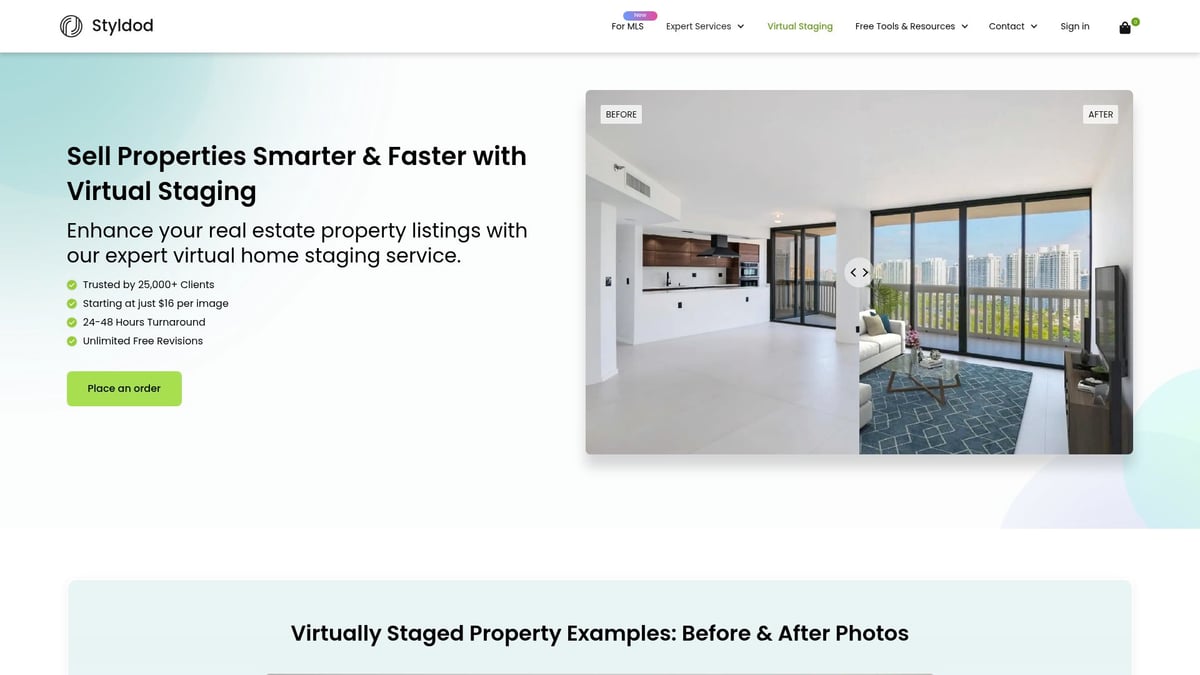
The platform’s features include virtual staging, 3D renders, Matterport integration, and virtual renovations. Fast delivery and a focus on contemporary design drive high customer satisfaction. Styldod also supports staging for 3D tours, which is valuable for luxury and urban listings.
Pros include Matterport integration, 3D capabilities, and attractive pricing. Some advanced features are available only in higher-tier plans, and occasional style limitations may occur. Styldod is well-suited for agents needing versatility and modern staging solutions.
Collov AI
Collov AI brings affordability and advanced editing tools to the lineup of virtual staging companies. Plans start at $16 per month for 60 images, with options for teams and brokerages managing high volumes.

The platform features AI-powered staging, furniture removal, and the ability to change walls, floors, and cabinets. Users benefit from lightning-fast processing and up to 10 free revisions per photo. Collov AI makes bulk staging and rapid listing refreshes both easy and cost-effective.
Pros include speed, affordability, and advanced editing tools. The main drawbacks are the lack of exterior or landscaping staging and minor image artifacts in some cases. Collov AI is best for teams needing to stage multiple properties quickly and efficiently, making it a strong contender among virtual staging companies.
Stuccco
Stuccco stands out among virtual staging companies for its personalized, designer-led approach. Offering competitive per-image rates and custom quotes for large projects, Stuccco is ideal for agents marketing luxury or unique properties.
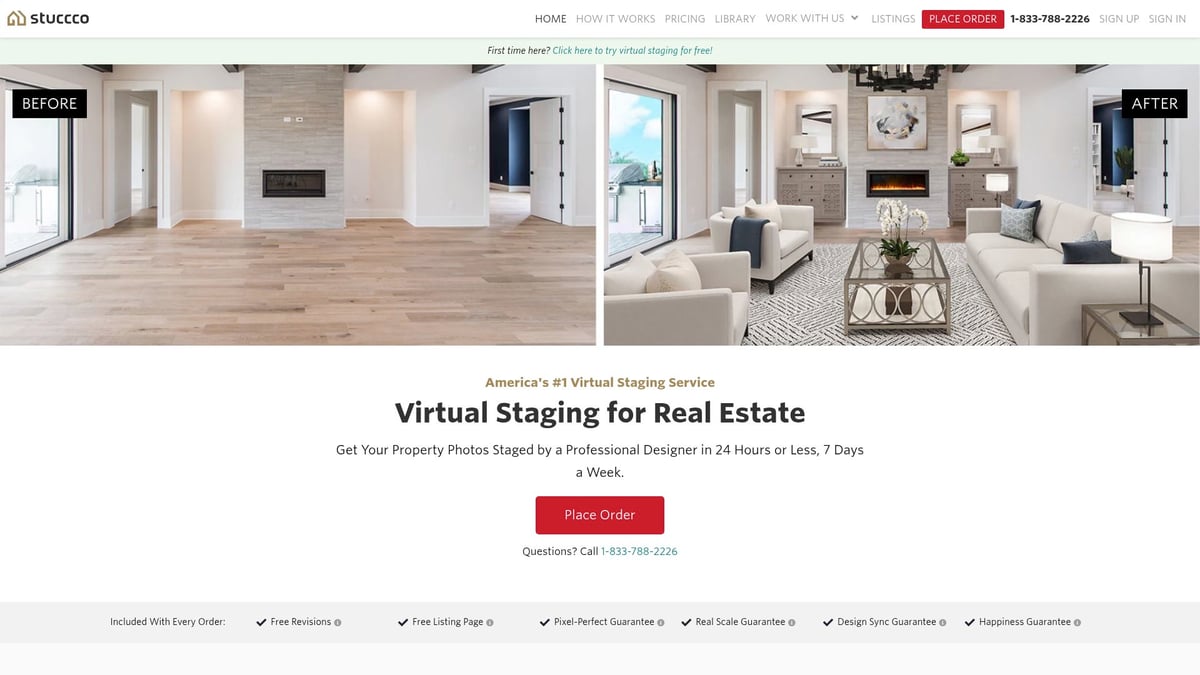
Core features include virtual staging, 3D rendering, photo enhancements, and personalized design services. Stuccco’s team of experienced designers ensures high realism and tailored results for each property type.
Pros are custom designs, fast turnaround, and quality assurance. Fully custom work may be pricier, and the platform is less automated than pure AI solutions. Stuccco is perfect for high-end listings and agents seeking bespoke, high-impact staging solutions.
Quick Comparison Table:
| Company | Starting Price | AI Features | Turnaround | Best For | Unique Benefit |
|---|---|---|---|---|---|
| Try Furnishly | Free trial/$15+ | AI staging, removal | 15 seconds | Agents, developers, sellers | Unlimited edits, fast results |
| Apply Design | Pay-per-image | AI customization | Instant | Teams, franchises, high-end | Trusted by Zillow, Redfin |
| BoxBrownie | $24/image | Limited AI | 24–48 hours | Global agents, multi-service | Wide range of services |
| Trolto | $59/month | AI video, removal | Minutes | Social media, agencies | Cinematic video staging |
| Styldod | $16/image | 3D, Matterport | Fast | Modern, 3D tours | Modern design, 3D integration |
| Collov AI | $16/month | AI, advanced edits | Instant | Bulk, teams | 10 free revisions per photo |
| Stuccco | Custom | Designer-led | Fast | Luxury, bespoke staging | Personalized, high realism |
Choosing among virtual staging companies in 2026 means considering your marketing goals, budget, and need for speed or customization. Each of these leaders brings unique strengths to the table, giving real estate professionals the power to elevate listings and accelerate sales.
How to Choose the Right Virtual Staging Partner in 2026
Selecting among the growing number of virtual staging companies is a pivotal step for agents, sellers, and developers looking to maximize marketing impact in 2026. With so many options, understanding your priorities and workflow can help you confidently choose the most suitable partner.
Assessing Your Needs and Budget
Begin by clarifying the scale of your projects. Are you staging a single listing or managing a portfolio that requires bulk processing? Virtual staging companies offer a range of plans, from pay-per-image to monthly subscriptions, so align your choice with your expected volume.
Consider turnaround times. Fast-paced markets may demand same-day results, making speed a crucial factor. Investigate free trials and unlimited edit policies, as these can offer flexibility and reduce risk. For instance, some virtual staging companies provide unlimited regenerations, while others operate on a pay-per-image model. This helps you match your budget to your workflow needs.
Feature Comparison: What Matters Most?
Not all virtual staging companies provide the same features. Evaluate whether AI-powered automation or designer-led customization aligns better with your property types and branding goals. Key features to compare include:
- Furniture removal and decluttering capabilities
- Style flexibility and variety of design templates
- Integration with 3D tours, social media, and listing platforms
- Image enhancement tools, such as lighting adjustments or day-to-dusk conversions
For example, some virtual staging companies excel in advanced editing, while others focus on creating dynamic video content for social platforms. Prioritize the features that will streamline your marketing efforts and resonate with your target audience.
Evaluating Quality and Realism
Photorealistic results are essential for generating buyer interest and trust. Review before-and-after galleries on the websites of virtual staging companies to assess their ability to deliver natural, appealing visuals. Take note of any recurring issues like visible artifacts or mismatched lighting.
Customer testimonials and case studies can provide additional insights into reliability and style compatibility. It is also helpful to explore resources like the Staged home photo gallery, which showcases real examples and demonstrates the impact of quality staging. Matching the staging style to your target demographic is vital for maximizing appeal.
Support, Scalability, and Workflow Integration
Consider how well virtual staging companies can grow with your business. Responsive customer support and clear revision policies are crucial for a smooth experience. Large brokerages may benefit from bulk upload options, API integrations, and collaboration tools that simplify teamwork.
Look for white-label and branding features that help agencies maintain a consistent identity. Team-focused features, such as user-friendly dashboards and streamlined workflows, can make a significant difference, especially as your marketing needs expand.
The Impact of Virtual Staging on Real Estate Sales and Marketing
Virtual staging companies are reshaping the real estate landscape by delivering measurable results for agents, sellers, and buyers. These innovative solutions streamline marketing, accelerate sales, and create visually appealing listings that stand out in a competitive market.
Faster Sales and Higher Offers
Virtual staging companies enable agents to present properties in their best light, leading to quicker sales and increased offers. Data shows that listings with staged photos sell up to 73 percent faster, as buyers can more easily imagine themselves living in a well-designed space.
Professionals leveraging these services report more inquiries and higher closing prices, demonstrating the value of photorealistic enhancements. Integration with platforms like Zillow and Redfin further streamlines the process, making virtual staging companies a must-have for modern marketing. For a deeper understanding of how the workflow operates in practice, explore this virtual staging process overview.
Enhanced Online Marketing and Social Media Reach
The shift toward visually driven platforms has amplified the impact of virtual staging companies. Social media apps such as Instagram and TikTok prioritize eye-catching content, making staged images and videos essential for engagement.
Video-first solutions and interactive tours boost visibility, while staged images improve SEO by increasing site visit duration. With nearly every real estate agent embracing AI-powered tools, as highlighted in recent surveys, the adoption of virtual staging companies is now standard for maximizing property exposure.
Cost Savings and ROI for Sellers and Agents
One of the most compelling advantages of virtual staging companies is the dramatic reduction in marketing costs. Traditional staging often exceeds $2,000, while digital alternatives range from $15 to $100 per image, allowing agents to stage multiple properties simultaneously.
This affordability shortens vacancy periods and reduces holding costs for sellers. Developers can even market new builds before construction is complete, maximizing return on investment. The flexibility and scalability of virtual staging companies make them an indispensable asset for agents seeking to grow their business efficiently.
Overcoming Common Objections and Misconceptions
Despite the clear benefits, some clients raise concerns about realism and disclosure. Leading virtual staging companies address these issues by following best practices, such as labeling enhanced images and adhering to ethical guidelines.
Educating clients about the advantages and limitations is key to building trust. For answers to common questions and to address typical misconceptions, consult this resource on frequently asked staging questions. Transparent communication ensures everyone involved understands the process and the value virtual staging companies provide.
The Future of Virtual Staging: Trends to Watch in 2026 and Beyond
The landscape of virtual staging companies is rapidly evolving, bringing new levels of sophistication and opportunity to the real estate industry. As we look ahead to 2026 and beyond, several key trends are shaping how properties are marketed, experienced, and sold.
AI Advancements and Hyper-Personalization
Artificial intelligence is now central to the evolution of virtual staging companies. Advanced algorithms generate tailored designs that match buyer personas, optimizing property appeal for different markets. With AI, agents can instantly update staging styles based on predictive analytics and real-time feedback.
Widespread adoption is accelerating innovation. In fact, AI adoption in real estate reaches 97%, reflecting how deeply virtual staging companies are embedded in daily workflows. Ongoing updates to design libraries ensure that every listing feels fresh and relevant.
These advancements help agents deliver truly personalized experiences, making virtual staging companies a preferred tool for top performers.
Integration with AR, VR, and Interactive Experiences
Virtual staging companies are expanding their offerings beyond static images. Today, buyers can explore staged homes through immersive VR headsets or interact with AR apps on mobile devices. This interactivity allows users to swap furniture styles or colors in real time, creating a deeper sense of engagement.
Many platforms now merge virtual staging with 3D digital twins and interactive floor plans. These innovations empower clients to visualize every detail, from lighting changes to potential renovations.
As AR and VR adoption grows, virtual staging companies are positioned as essential partners for agents who want to stand out in a crowded digital market.
Sustainability and Remote Collaboration
Sustainability is becoming a major driver for virtual staging companies. By eliminating the need for physical furniture, these solutions reduce waste and the environmental impact of traditional staging. This is especially significant for large developments or frequent property turnovers.
Remote collaboration tools further enhance efficiency. Agents, designers, and sellers can work together from anywhere, reviewing and approving staging concepts online. This approach supports global marketing efforts, connecting international buyers with properties in distant markets.
Virtual staging companies are leading the shift toward greener, more connected real estate practices.
The Rise of API-Driven and White-Label Solutions
A new wave of API-driven and white-label offerings is transforming how brokerages and proptech firms deploy virtual staging. These integrations allow agencies to embed staging services directly into their websites, CRMs, or client portals, streamlining workflows and branding the experience as their own.
The demand for scalable, customizable solutions is fueling market growth. According to recent research, the virtual staging market is projected to reach $4.5 billion by 2033. This surge highlights the increasing reliance on virtual staging companies for both niche and enterprise-level needs.
For real estate professionals, these trends mean greater flexibility, efficiency, and the ability to deliver standout marketing at scale.
Leave a Comment